
Sea Foam High Mileage Motor Treatment: 3 Packs Compared

Sea Foam High Mileage HM16, 4-Pack is the best fit for most buyers who want Sea Foam High Mileage motor treatment in four 16-ounce bottles for use in gasoline or motor oil. Choose Sea Foam High Mileage HM16, 2-Pack for a smaller two-bottle supply or Sea Foam High Mileage, 6-Pack if you want six bottles; all three offer the same treatment uses.
We earn a commission if you buy through links on this page. As an Amazon Associate I earn from qualifying purchases. Products are compared on manufacturer specifications, not hands-on testing.
- Best overall: Sea Foam High Mileage HM16, 4-Pack – Four 16-ounce bottles provide the middle pack size among these options.
- Best for a smaller supply: Sea Foam High Mileage HM16, 2-Pack – The two-bottle package contains 32 ounces total.
- Best for a larger supply: Sea Foam High Mileage, 6-Pack – The six-bottle package gives the highest bottle count.
| Product | Best for | Pack count | Shop |
|---|---|---|---|
| Sea Foam High Mileage HM16, 4-Pack | Middle pack size | 4 | Check Price on Amazon |
| Sea Foam High Mileage HM16, 2-Pack | Smaller supply | 2 | Check Price on Amazon |
| Sea Foam High Mileage, 6-Pack | Larger supply | 6 | Check Price on Amazon |
Sea Foam High Mileage Motor Treatment Packs
Compare pack size and the fuel and oil uses to choose the supply that fits your maintenance routine.
Sea Foam High Mileage HM16, 4-Pack

Sea Foam High Mileage HM16, 4-Pack offers four 16-ounce bottles, a middle pack size between the two- and six-bottle options here. Sea Foam says the treatment can be added to gasoline to clean fuel injectors and carburetor jets, or to crankcase oil to help clean and prevent common causes of oil burning. The maker also says it lubricates upper engine areas and is safe for all gasoline fuels and motor oils. This package suits owners who want several bottles on hand; the four-bottle count may be more than needed if you only want to try the treatment once.
Bottom line: Pick this if you want four bottles without choosing the smallest or largest pack.
Sea Foam High Mileage HM16, 2-Pack
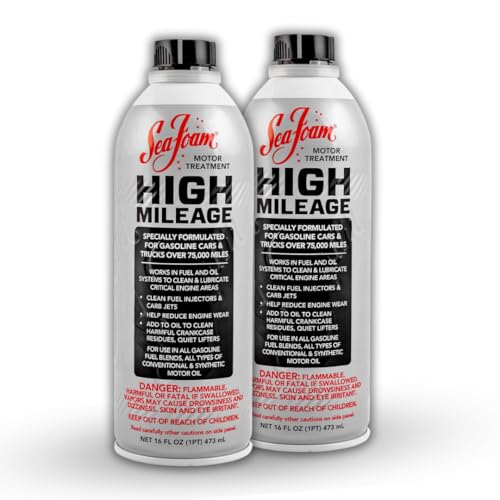
Sea Foam High Mileage HM16, 2-Pack is the smallest package in this comparison, with two 16-ounce bottles and 32 ounces total. Its uses match the other options: adding to fuel to clean injectors and carburetor jets, or to crankcase oil to help clean and address common causes of oil burning. The maker also describes upper-engine lubrication and compatibility with gasoline fuels and motor oils, including conventional and synthetic oil. This pack suits someone who wants fewer bottles on hand. If you intend to maintain more than one vehicle or keep a larger supply, its lower count may not suit your plan.
Bottom line: Choose this when two 16-ounce bottles are enough for your intended use.
Sea Foam High Mileage, 6-Pack

Sea Foam High Mileage, 6-Pack has six 16-ounce bottles, the largest pack count of these otherwise similar options. The applications include gasoline fuel systems and crankcase oil: Sea Foam says the treatment cleans injectors and carburetor jets when added to fuel, and helps clean and prevent common causes of oil burning when added to oil. It is also described as lubricating upper engine areas and as safe for all gasoline fuels and motor oils. The larger count suits someone planning repeated use or keeping bottles available for multiple vehicles. It may be unnecessary if you only need a small supply.
Bottom line: Pick this when you want the highest bottle count in the comparison.
How to choose a high mileage motor treatment
Choose based on the application and label dosing, not the vehicle’s odometer alone. Fuel additives are mixed into gasoline and circulate through fuel-system components; crankcase additives mix with engine oil, so the correct amount depends on oil capacity and the product directions. A bottle intended for a fuel tank is not a substitute for diagnosing a mechanical problem. If oil consumption is increasing or the engine runs roughly, note the oil level and symptoms and have the cause checked rather than relying on an additive. For these options, compare bottle count and make sure your planned use matches the fuel or oil application on the container.
Fuel-system and crankcase use
Fuel treatment and oil treatment reach different parts of an engine. A fuel-system additive is carried with gasoline toward injectors and, in engines with carburetors, carburetor jets; it does not circulate through the crankcase. An oil additive mixes with engine oil and reaches lubricated engine parts, but it does not clean a fuel tank. Direct-injection engines inject fuel into the combustion chamber, so fuel additives generally do not wash deposits from the backs of intake valves. Use the product only in the application and amount on its label, and do not pour a fuel dose into engine oil or vice versa.
What high mileage treatment can and cannot do
High mileage formulas are additives, not replacement parts or a diagnosis. Oil burning can result from worn piston rings, valve seals or other mechanical issues, and a chemical treatment cannot restore worn components. Fuel-system deposits can affect drivability, but rough running can also come from ignition, air, sensor or fuel-delivery faults. Keep a baseline by checking the dipstick on level ground after the engine has been off long enough for oil to drain back; if the level repeatedly falls between checks, investigate the cause. Treat claims about cleaning or wear reduction as the maker’s intended benefits, not a guarantee that an existing fault will be corrected.
Frequently Asked Questions
Can high mileage motor treatment go in both gas and oil?
These Sea Foam products are described for either gasoline or crankcase oil, but each application requires its own label-directed amount. Add a fuel dose to fuel and an oil dose to the crankcase; never combine the applications by pouring one into the other.
Will a fuel additive clean intake valves on a direct-injection engine?
Usually not: direct-injection fuel enters the combustion chamber rather than washing over the backs of intake valves. Fuel additives can still pass through the fuel system, but valve deposits may need a different service approach.
Can an additive stop an engine from burning oil?
An additive cannot reliably stop oil burning caused by worn or damaged engine parts. If the dipstick level drops repeatedly between checks, track the amount and have the engine inspected instead of treating the product as a repair.
How often should I use a high mileage treatment?
Use frequency and dose are product-specific, so follow the container directions rather than estimating from mileage alone. Check the oil level at least monthly and before a long trip, especially if the engine has a history of using oil.