
Shower Door Drip Edge: Seals Compared by Glass Fit

For a frameless door with 1/4-inch glass, Clear Drip-Rail Sweep for 1/4-Inch Glass is the closest match because it has a drip rail and directs water back into the shower. Choose a 3/8-inch-fit sweep instead if that matches your glass; the clamp channel must fit the glass thickness.
A shower door drip edge is a bottom sweep that helps redirect water inward. Measure glass thickness and the floor gap before choosing, since a sweep sized for the wrong glass may not grip or cover the opening correctly.
We earn a commission if you buy through links on this page. As an Amazon Associate I earn from qualifying purchases. Products are compared on manufacturer specifications, not hands-on testing.
- Best overall: Clear Drip-Rail Sweep for 1/4-Inch Glass – Its drip rail is designed to direct water back into the shower, and it fits 1/4-inch glass.
- Best for wider gaps: Two-Pack Vinyl Sweep for 1/4-Inch Glass – The product specifies coverage for gaps up to 13 mm and fits 1/4-inch glass.
- Best for 3/8-inch glass: GEZMR Polycarbonate Sweep for 3/8-Inch Glass – It fits 3/8-inch glass and specifies a floor gap up to 11/32 inch.
| Product | Best for | Glass thickness | Length | Material | Shop |
|---|---|---|---|---|---|
| Clear Drip-Rail Sweep for 1/4-Inch Glass | 1/4-inch glass | 1/4 in. | 36 in. | Polycarbonate | Check Price on Amazon |
| Two-Pack Vinyl Sweep for 1/4-Inch Glass | Gap coverage | 1/4 in. | 39 in. | Clear vinyl | Check Price on Amazon |
| GEZMR Polycarbonate Sweep for 3/8-Inch Glass | 3/8-inch glass | 3/8 in. | 39 in. | Polycarbonate | Check Price on Amazon |
| Two-Pack Butecare Vinyl Seal for 3/8-Inch Glass | 3/8-inch doors | 3/8 in. | 39 in. | Clear PE/vinyl | Check Price on Amazon |
Shower Door Drip Edge Seals
Match the glass thickness first, then compare sweep length, material and any gap coverage.
Clear Drip-Rail Sweep for 1/4-Inch Glass

This is the only option here explicitly described with a drip rail that directs water back into the shower. It fits 1/4-inch glass, measures 36 inches long and uses clear polycarbonate. The no-adhesive sweep can be cut to fit, making it a straightforward choice when the door thickness matches and the sweep needs trimming. Its 36-inch length is shorter than the 39-inch alternatives, so measure the door before selecting it; a sweep that is too short will leave part of the bottom edge uncovered.
Bottom line: Choose this when the door uses 1/4-inch glass and a defined drip rail is the priority.
Two-Pack Vinyl Sweep for 1/4-Inch Glass
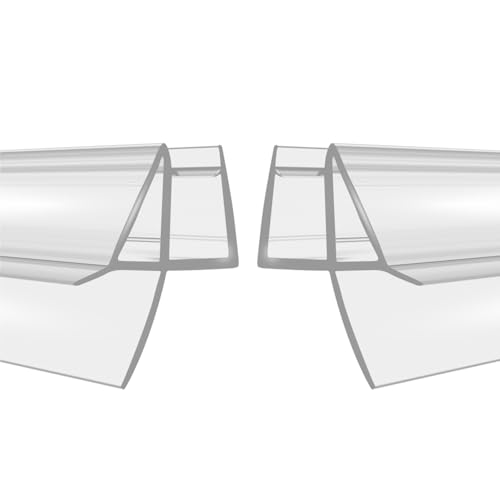
This two-pack is the option that specifies coverage for a gap up to 13 mm, while fitting 1/4-inch glass. Each 39-inch strip is clear vinyl and can be cut to length. The wider stated gap coverage may suit a door with more space beneath it than a standard short fin can bridge, provided the glass thickness also matches. The tradeoff is that the coverage figure does not establish compatibility with thicker glass; measure the door glass and the gap rather than relying on the sweep length alone.
Bottom line: Choose this for a 1/4-inch door when the bottom gap is the deciding measurement.
GEZMR Polycarbonate Sweep for 3/8-Inch Glass

This sweep is sized for 3/8-inch glass, unlike the 1/4-inch options, and specifies a floor gap up to 11/32 inch. Its 39-inch polycarbonate strip has soft fins, and the maker says the material resists compression and deformation. The gap limit makes this a more clearly bounded choice than a sweep with no stated coverage range. It is not the right match for a 1/4-inch door: glass thickness determines whether the channel grips properly.
Bottom line: Choose this when the glass measures 3/8 inch and the floor gap falls within its limit.
Two-Pack Butecare Vinyl Seal for 3/8-Inch Glass

This two-pack offers a 39-inch bottom seal for 3/8-inch glass, with a no-glue installation that grips the glass. The maker identifies the material as clear vinyl and PE, and says it is resistant to corrosion and discoloration. It is a simple fit-specific replacement when the glass thickness matches and the existing sweep can be used as a length reference.
Bottom line: Choose this for a 3/8-inch door when a two-pack and no-adhesive fit matter.
How to Choose a Shower Door Drip Edge
Match the sweep channel to the glass thickness before comparing material or length. Frameless shower doors commonly use 1/4-inch or 3/8-inch glass, and these sizes are not interchangeable for a clamp-on seal. Next measure the gap from the bottom of the closed door to the threshold, because the fin must bridge that space without dragging. A gap limit is more useful than sweep height alone: for example, 11/32 inch is a defined maximum, while a product with no gap figure requires a careful fit check. Finally measure the door width; a longer sweep can be trimmed, but a short one cannot cover the full edge.
Measure Glass Thickness and Bottom Gap
Measure the glass edge with calipers if available, or use a ruler against the exposed glass edge; do not estimate from the door’s overall thickness or frame. Check the gap with the door closed at several points, since a threshold can slope or the door can sit unevenly. Select a sweep channel for the measured glass, then make sure its fin reaches the threshold without buckling or impeding door movement. The table gives a practical starting point, not a substitute for measuring your door.
| Measurement | What to do |
|---|---|
| Glass is 1/4 inch | Choose a 1/4-inch channel |
| Glass is 3/8 inch | Choose a 3/8-inch channel |
| Gap exceeds stated coverage | Choose a sweep with greater coverage or another compatible fix |
Install a Bottom Sweep Without Damaging Glass
Cut-to-fit sweeps are trimmed to the door width, but measure twice and cut conservatively because removing too much material leaves an uncovered edge. Remove the old seal gently and clean the glass before sliding on a replacement; grit trapped in the channel can scratch glass or prevent an even grip. Do not force a sweep onto the panel if the channel feels too tight, since tempered glass edges are vulnerable to impact and concentrated pressure. Seat the strip evenly along the bottom edge, then open and close the door slowly to confirm the fins clear the threshold and the water-directing lip faces into the shower.
Why a Drip Rail Matters
A drip rail is a projecting lip or channel that guides water toward the shower side rather than allowing it to run down the outside of the door. A bottom seal may grip the glass yet lack a specifically described drip rail, so distinguish the channel that holds the glass from the fin that redirects water. Door swing and threshold shape affect which way the lip should point; installing it backward can direct water outward. Check that the door closes without the fin folding under itself, and keep the threshold free of soap residue that can obstruct drainage. A sweep helps manage splash but cannot compensate for a large, uneven gap.
Frequently Asked Questions
How do I measure shower door glass thickness?
Measure the exposed glass edge with calipers or a ruler and match the sweep channel to that value. Frameless doors commonly use 1/4-inch or 3/8-inch glass, and a channel for one size may not grip the other.
Can I trim a shower door bottom seal?
Yes, a cut-to-fit seal can be trimmed to the door width. Measure the full bottom edge first and cut gradually so the strip does not end short.
Which way should the drip rail face?
The water-directing lip should face into the shower so runoff returns toward the pan or threshold. Test the closed door and confirm the fin does not catch or fold when the door moves.
How much floor gap can a shower sweep cover?
Coverage depends on the specific sweep and its fin shape; one option here gives a maximum of 11/32 inch, while another specifies up to 13 mm. Measure the actual gap across the closed door and keep it within the sweep’s coverage.
Can a shower door seal fix a large leak?
A correctly fitted sweep can redirect water that escapes beneath the door, but it cannot reliably bridge a large or uneven opening. If the gap varies along the threshold, measure at multiple points and address the alignment or threshold fit as well.