
Socks to Wear With Clogs: 5 Styles Compared

For clogs and other backless shoes, choose Murmorers Toe-Cover Liners for toe coverage without a full sock; its silicone grips are designed to help keep the liner in place. Choose a crew or boot sock instead when you want visible coverage or warmth, but check that the cuff and fabric do not crowd the shoe opening.
The named toe-cover style is not the only option: ankle and crew socks suit wearers who prefer their socks to show, while thicker winter pairs are better for roomier clogs.
We earn a commission if you buy through links on this page. As an Amazon Associate I earn from qualifying purchases. Products are compared on manufacturer specifications, not hands-on testing.
- Best overall: Murmorers Toe-Cover Liners – Toe-cover design and silicone grips suit clogs and other low-rise, backless shoes.
- Best for a ruffled cuff: Hstyle Ruffle Ankle Socks – Lightweight ankle height and a turn-cuff ruffle add a visible decorative edge.
- Best for cold weather: CLOSEMATE Thick Warm Crew Socks – The thick, fully cushioned crew construction is intended for warmth.
| Product | Best for | Style | Material | Size range | Shop |
|---|---|---|---|---|---|
| Murmorers Toe-Cover Liners | Low-profile coverage | Toe-cover liner | Cotton; blend unspecified | One size | Check Price on Amazon |
| Hstyle Ruffle Ankle Socks | Decorative ankle edge | Ruffle ankle sock | 78% cotton, 16% polyester, 6% spandex | Women’s shoe sizes 5–9 | Check Price on Amazon |
| Women’s Slouchy Cushioned Crew Socks | Soft scrunched crews | Slouchy crew sock | 85% cotton | Women’s shoe sizes 5–11 | Check Price on Amazon |
| CLOSEMATE Thick Warm Crew Socks | Warm winter coverage | Thick crew sock | 43% acrylic, 42% combed cotton, 10% polyester | Women’s shoe sizes 5–11 | Check Price on Amazon |
| BomKinta Thick Boot Socks | Everyday warm socks | Thick crew sock | Material blend unspecified | Women’s shoe sizes 5–11 | Check Price on Amazon |
Socks to Wear With Clogs
Match sock coverage and thickness to the clog opening, season and look you want.
Murmorers Toe-Cover Liners

Unlike full crews, these toe-cover liners leave the rest of the foot uncovered, making them the closest match for clogs when you want a nearly hidden sock. The package has 8 pairs, and silicone grips on the bottom are intended to reduce slipping inside the shoe. The maker describes the fabric as breathable cotton and says the liners wick moisture better than bare feet. They suit low-rise, backless styles and wearers who do not want a visible cuff. The one-size fit may not suit every foot, so check fit before relying on them for a close, secure feel.
Bottom line: Choose these for toe coverage with minimal sock showing.
Hstyle Ruffle Ankle Socks
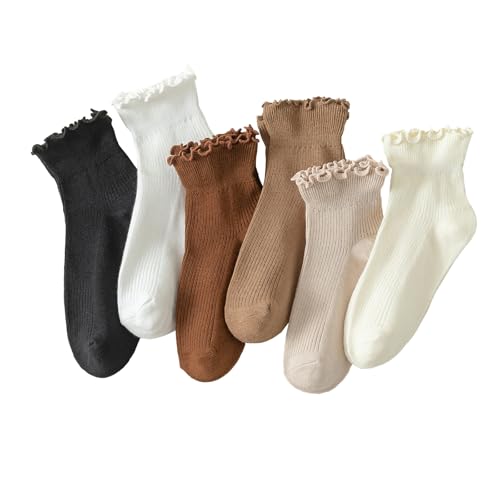
The ruffled turn-cuff makes these ankle socks a more decorative, visible choice than a plain liner. Each set has 6 pairs, with a cotton, polyester and spandex blend and a lightweight design. The maker gives a women’s shoe-size range of 5–9 and says the cuff is loose and non-binding. These suit clogs with enough room above the heel and around the opening for a ruffle to show without rubbing. They are not a hidden option, and their ankle height offers less coverage than a crew sock in cool weather.
Bottom line: Pick these when you want a visible, ruffled cuff with clogs.
Women’s Slouchy Cushioned Crew Socks
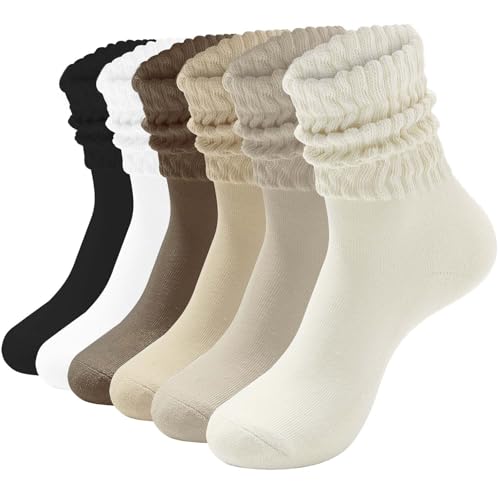
These slouchy crews offer more foot coverage and a cushioned footbed than the toe-cover liners, with a mid-calf height that can be worn scrunched. The 6-pair mix uses an 85% cotton blend, and the wide ribbed cuff is designed to stretch without tight pressure. They suit clogs with a roomy upper and enough space at the heel for a taller sock. The source describes sizes 5–9 as comfortable and 10–11 as snug, so the upper end of the range may feel less relaxed; the higher cuff is also more visible than a liner.
Bottom line: Choose these for a soft, visible crew with extra foot coverage.
CLOSEMATE Thick Warm Crew Socks
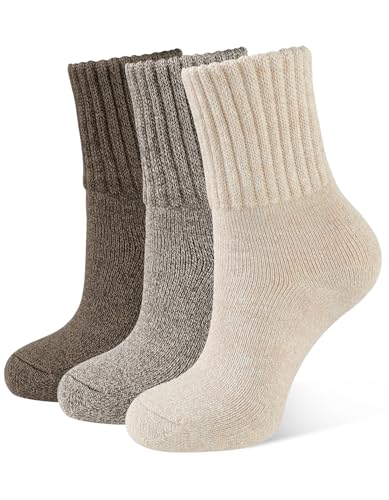
These are the warmest, thickest-feeling option in this group, with full cushioning and a blend led by acrylic and combed cotton. The 3-pair set is intended for winter wear, and its elastic opening is designed to avoid tight pressure. They suit roomy clogs or slippers when warmth matters more than a low-profile fit. Thick cushioning takes up space, however, so a close-fitting clog may feel crowded or press on the foot. Their crew construction also shows above the shoe rather than disappearing inside it.
Bottom line: Pick these for winter warmth with clogs that have spare room.
BomKinta Thick Boot Socks

These above-ankle boot socks are a simpler warm, visible alternative to the full-cushion winter crews. The 5-pair set is offered for women’s shoe sizes 5–11, and the maker describes the ankle bands as non-compressing. They suit low-cut boots, slides and roomier clogs when you want a thicker sock for everyday or indoor wear.
Bottom line: Choose these for above-ankle coverage in a roomy clog.
How to choose socks for clogs
Start with how much sock you want visible, then account for the space inside the clog. A toe-cover liner keeps the ankle bare, an ankle sock adds a short cuff, and a crew covers more of the lower leg. Thick cushioning uses more shoe volume than a lightweight knit, so choose a thinner sock if the clog already fits closely. Cotton absorbs moisture but typically dries more slowly than synthetic fibers, making a blend or a change of socks useful for long, warm wear. Use a simple fit rule: if a sock bunches at the toes or heel when you walk, switch to a lower-bulk style or a roomier clog rather than folding extra fabric inside the shoe.
Clog sock coverage and style
Coverage determines whether a sock works with the clog opening and the look you want. Toe-cover liners are suited to open-backed or low-rise shoes when you want toes covered without a visible cuff; ankle socks add a decorative edge; crew socks provide visible coverage and more warmth. Clog designs vary: some have enclosed toes and open heels, while others have a back strap or more enclosed upper. Check the opening and heel area before choosing a tall or ruffled cuff, because fabric that rubs or bunches can distract from a comfortable fit. The table compares the main trade-off by sock style.
| Style | Coverage | Best match |
|---|---|---|
| Toe-cover liner | Toes only | Low-rise, backless shoes |
| Ankle sock | Foot and ankle | Visible cuff with limited height |
| Crew sock | Foot to lower calf | Warmth or a visible scrunched look |
How thick should clog socks be
Choose the thinnest sock that gives the coverage and warmth you need while leaving toes and heel uncompressed. Lightweight liners and ankle socks take less space than cushioned crews; thick winter socks are a better match for roomy clogs than close-fitting pairs. Try the clog with the sock on and walk a few steps: toes should not press against the front, and the heel should not feel crowded. A sock that slips, wrinkles or pushes the foot upward can change how the shoe sits. If the clog only feels comfortable barefoot, a toe-cover liner is a more sensible starting point than a thick crew.
Keeping socks comfortable in clogs
Keep the fit smooth and dry, especially in backless shoes where the heel is not held in place by a closed counter. Pull socks flat over the toes and heel before putting clogs on; folds can rub at pressure points. Cotton-rich socks absorb moisture but may stay damp longer than synthetic blends, so let damp pairs dry fully before rewearing. Wash socks according to their care label and avoid bleach when the maker advises against it. If a liner’s grip or a sock cuff shifts during walking, stop and adjust rather than letting the fabric bunch inside the shoe.
Frequently Asked Questions
Can you wear socks with backless clogs?
Yes, socks work with backless clogs if the fit stays secure. Toe-cover liners leave the heel uncovered, while full socks can add friction or bulk; check that the shoe does not slip or press when you walk.
Are toe-cover socks good for clogs?
Toe-cover socks suit low-rise clogs when you want toe coverage without a full sock. Their grip placement and opening fit matter, so check that the liner stays put after several steps.
Do thick socks make clogs too tight?
Thick socks can crowd a close-fitting clog because cushioning takes up interior space. Try the clog on with the sock and ensure the toes are not pressed against the front and the heel is not crowded.
How high should socks be with clogs?
Sock height is a style and coverage choice: toe covers stay hidden, ankle socks show a short cuff, and crews extend higher on the leg. With a low clog opening, choose a cuff that does not rub against the shoe edge.
Should you wear cotton socks with clogs?
Cotton socks can be comfortable for everyday wear, but cotton absorbs moisture and typically dries more slowly than synthetic fibers. For warm or extended wear, choose a blend or change into a dry pair if the sock becomes damp.