
Solar Chicken Water Heater: Options Compared

For warming chicken water, the 62-watt heated base is the closest match because it is designed for 1- to 5-gallon waterers; the solar-powered panel heater is for coop or pet-space warmth, not a waterer. Choose the 3-gallon heated drinker for an integrated option, or the insulated drinker if you need no powered heating.
We earn a commission if you buy through links on this page. As an Amazon Associate I earn from qualifying purchases. Products are compared on manufacturer specifications, not hands-on testing.
- Best overall: 62W Metal Waterer Heater Base – A heated base for 1- to 5-gallon poultry waterers, with 62 watts of power.
- Best integrated waterer: GIFANK 3-Gallon Heated Waterer – A 3-gallon drinker with a built-in heater and adjustable height.
- Best solar-powered heater: Solar Panel Heater with Battery Compartment – A solar panel heater with battery compartment, though it heats spaces rather than water.
| Product | Best for | Heating type | Capacity or fit | Power | Shop |
|---|---|---|---|---|---|
| 62W Metal Waterer Heater Base | Existing waterers | Heated base | 1–5 gallons | 62 watts | Check Price on Amazon |
| GIFANK 3-Gallon Heated Waterer | Integrated heating | Built-in heater | 3 gallons | Powered; wattage — | Check Price on Amazon |
| Solar Panel Heater with Battery Compartment | Coop warmth | Solar panel heater | — | Solar; 3 batteries required | Check Price on Amazon |
| Omlet Insulated Chicken Drinker, 3 Gallon | Unpowered waterer | Insulated drinker | 3 gallons | No heater | Check Price on Amazon |
Chicken water heaters and solar options
Match the heater to whether you need warmed water, a full heated drinker or heat for the coop itself.
62W Metal Waterer Heater Base

This 62-watt base heats poultry waterers rather than supplying a water container of its own. It fits metal or plastic waterers from 1 to 5 gallons and measures 11 inches across. The maker says it is built for outdoor weather and prevents water from freezing in cold conditions. Choose it when you already have a compatible drinker and want to keep using that vessel. The power source is not solar, so it does not meet a solar-only setup; check the base diameter against the waterer before ordering.
Bottom line: Choose this for an existing 1- to 5-gallon waterer when solar power is not required.
GIFANK 3-Gallon Heated Waterer

Unlike a heater base that sits beneath a separate drinker, this is a 3-gallon automatic waterer with its heater built in. The maker says a temperature-control chip aims to keep the water from dropping below 32°F, though ambient conditions affect the water temperature. Height adjustment offers flexibility for flock access, and the heating base can be removed or switched off for use in other seasons. This is a powered heated-water option, not a solar product, and the product facts do not establish its wattage. Confirm the power arrangement and height range before ordering.
Bottom line: Pick this for a single integrated heated drinker when solar power is not a requirement.
Solar Panel Heater with Battery Compartment
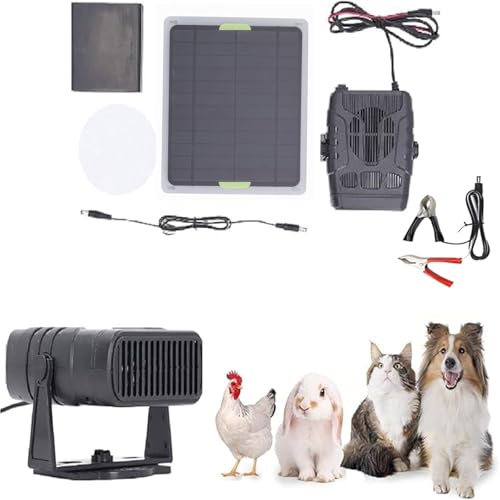
This solar-powered panel heater is aimed at warming a coop, dog house or other small space, rather than heating poultry drinking water. The kit includes a solar panel, battery compartment, heater and connecting cable; the maker says three 18650 batteries are needed, but they are not included. Dual USB outputs can charge 5V devices, according to the maker. Choose it only if your goal is space warmth and you can supply the batteries; it is not a substitute for a waterer heater. The panel dimensions are 435 × 200 × 5 mm.
Bottom line: Choose this for solar-assisted coop warmth, not for preventing water from freezing.
Omlet Insulated Chicken Drinker, 3 Gallon

This 3-gallon insulated drinker offers passive temperature buffering rather than active heating. Its 5 cups and 5 nipples allow a choice of drinking method, while the domed lid is designed to discourage roosting; the drinker also has raised legs. The maker says the insulation helps keep water cool in summer and helps prevent freezing in winter, and that the plastic blocks 99% of light to help keep water clearer between cleanings. It can suit a backyard flock seeking a non-electric dispenser, but it cannot provide solar or powered heat when temperatures are low.
Bottom line: Choose this for an insulated, unpowered drinker rather than a heater.
How to choose a chicken water heater
Start by deciding whether you need heated water or warmth for the coop: a waterer base warms the vessel, while a panel heater warms a space. A solar panel can power a resistive heating load only when its output and storage match the heater’s draw; a small USB output is not automatically suitable for a waterer. For an overnight load, estimate watt-hours as watts multiplied by hours, then allow extra capacity for conversion losses and cloudy conditions. With less than 12 hours of useful sun in a winter day, battery storage and panel size become especially important. Of these options, only one is explicitly solar powered, and it is for space heating rather than water.
Matching a heater to the waterer
Measure the waterer base before choosing a separate heater: a mismatch can leave the vessel unstable or prevent the heater from making proper contact. The 11-inch base is identified for 1- to 5-gallon metal or plastic waterers, while an integrated heated drinker avoids separate base compatibility but gives you a fixed 3-gallon capacity. A capacity estimate can start at about 1 quart of water per adult chicken per day, then rise with heat, dry feed and flock activity. Do not assume that a heater’s gallon range guarantees a fit; verify vessel diameter and stability, especially when birds can perch or crowd around it.
Solar heat versus electric water heating
Solar heating has two parts: the panel harvests energy and the battery stores it for periods without sun. A 62-watt heater running continuously for 12 hours would use 744 watt-hours before losses, so a modest USB battery pack may not cover a cold night. A coop panel heater is not equivalent to an anti-freeze waterer base; position and output determine what it warms. For water, use a purpose-made poultry heater and keep cords protected from pecking, moisture and bedding. Avoid improvised heat lamps near straw or wood because hot bulbs and combustible litter create a fire hazard.
| Need | Type to consider | Key fit check |
|---|---|---|
| Heat an existing drinker | Heated base | Diameter and vessel material |
| Integrated heated water | Heated drinker | Capacity and power arrangement |
| Solar coop warmth | Panel heater | Battery and intended heating area |
| Passive temperature buffering | Insulated drinker | Capacity and drinking outlets |
Winter waterer safety and care
Check water daily in freezing weather: even a heated vessel can develop ice where wind exposure or low water levels overwhelm its heat output. Keep electrical connections above wet ground, use outdoor-rated equipment, and inspect cords for damage before each winter season. Place waterers on a stable, level surface so birds cannot tip them, and keep bedding clear of heating surfaces. Clean drinkers regularly because cups and nipples can collect feed debris; narrow nipples also need a daily flow check. If water freezes despite heat, reduce drafts around the waterer or move it to a sheltered location rather than adding an unapproved heat source.
Frequently Asked Questions
Can a solar panel heater keep chicken water from freezing?
Only if it is designed and sized to heat the waterer; a panel heater intended for coop warmth is not a waterer base. A continuous 62-watt load for 12 hours needs 744 watt-hours before conversion losses.
How many gallons should a chicken waterer hold?
A practical starting estimate is about 1 quart per adult chicken per day, with more needed in hot weather or for larger birds. For a flock of 12, that baseline is 3 gallons for one day, before adding a reserve.
How do I size a heater base for a waterer?
Match the base diameter to the waterer’s footprint and confirm that the vessel is stable on it. A base specified for 1- to 5-gallon waterers may still require checking the actual vessel diameter.
Is a heated chicken waterer safe to leave on overnight?
Use only equipment intended for outdoor poultry watering, with cords and connections kept dry and protected from pecking. Inspect for frayed insulation and keep bedding away from hot surfaces before leaving any heater powered.
Do chicken waterers need cleaning in winter?
Yes; cold weather does not prevent feed debris and biofilm from collecting in cups, nipples or reservoirs. Rinse and scrub the drinker regularly, and check nipple flow every day so an outlet has not clogged or frozen.