
Solder Glue for Electronics: 3 Options Compared

For low-voltage AC or DC connections, Electrically Conductive Wire Glue is the clearest fit because its maker specifies those uses and an overnight cure. Choose another option if you need a larger container or prefer a silver paste format.
Conductive glue bonds components while providing an electrical path; it is not the same process as melting solder onto a joint.
We earn a commission if you buy through links on this page. As an Amazon Associate I earn from qualifying purchases. Products are compared on manufacturer specifications, not hands-on testing.
- Best overall: Electrically Conductive Wire Glue – The maker explicitly identifies low-voltage AC and DC circuits and says the bond cures overnight.
- Best for a larger jar: Nanotechnology Conductive Glue, 1 fl oz – The 1 fl oz container is larger than the 0.3 oz and 0.2 ml options.
- Best for silver paste: Silver Conductive Paste Pen, 0.2 ml – This 0.2 ml option is a silver conductive paste intended for electronics repair.
| Product | Best for | Form | Amount | Maker-stated use | Shop |
|---|---|---|---|---|---|
| Electrically Conductive Wire Glue | Low-voltage wiring | Clear glue | 0.3 oz / 9 ml | Low-voltage AC/DC | Check Price on Amazon |
| Nanotechnology Conductive Glue, 1 fl oz | Larger container | Dark gray glue | 1 fl oz | Low-voltage electronics | Check Price on Amazon |
| Silver Conductive Paste Pen, 0.2 ml | Small repair work | Silver paste | 0.2 ml | Electronics repair | Check Price on Amazon |
Solder Glue for Electronics
These conductive adhesives differ in container size, application form and the uses their makers identify.
Electrically Conductive Wire Glue
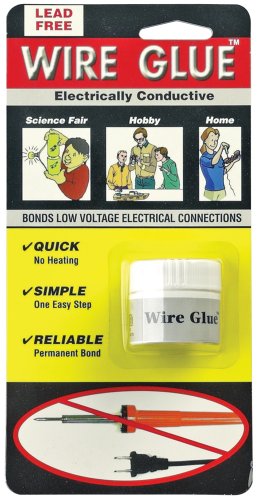
Electrically Conductive Wire Glue is the only option here whose maker explicitly calls out both low-voltage AC and DC circuits. The clear glue comes in a 0.3 oz (9 ml) jar, and the maker says it forms a permanent bond and cures overnight. A toothpick is suggested for applying the glue, which can help place a small amount at a connection. This option suits simple low-voltage wiring where a soldering iron is unavailable or impractical. Its use is limited to low voltage, so choose another connection method for mains wiring or applications requiring a conventional solder joint.
Bottom line: Pick this for a low-voltage connection when a jar-and-toothpick application works for the job.
Nanotechnology Conductive Glue, 1 fl oz
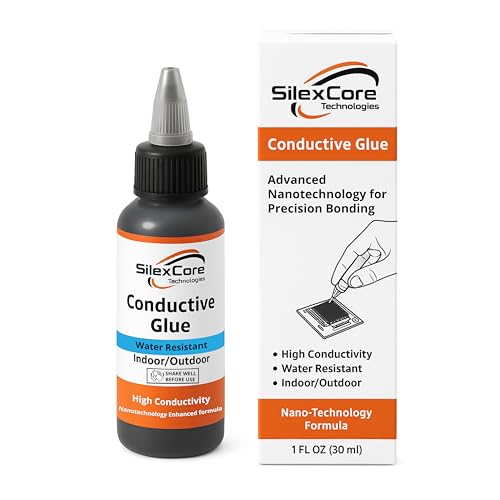
Nanotechnology Conductive Glue, 1 fl oz comes in a 1 fl oz container, more than three times the volume of the 0.3 oz jar in Electrically Conductive Wire Glue. Its maker describes it as a room-temperature cold-solder alternative for low-voltage electronics and reports through-glue resistance as low as 0.1 Ω/sq. That figure is a maker claim, not a guarantee for every joint; contact area and adhesive layer thickness can affect an electrical path. The dark gray glue may suit buyers who want more material for PCB repair or electronic bonding. The maker frames it for low voltage, so it is not a substitute for a mains-rated connection.
Bottom line: Choose this when a 1 fl oz container and a room-temperature application matter.
Silver Conductive Paste Pen, 0.2 ml

Silver Conductive Paste Pen, 0.2 ml is the smallest-format option, a 0.2 ml silver conductive paste intended for electronics repair. Its maker says the material adheres to ABS, PC and ABS/PC plastics and claims an electromagnetic shielding effect greater than 80 dB. Those material and shielding claims set it apart from the two jar adhesives, but the small quantity is better suited to limited application than repeated or broad coverage. The maker also describes abrasion and moisture resistance; neither claim replaces checking whether the cured bond fits a particular circuit or enclosure. This is a paste-format choice, not a conventional solder alloy.
Bottom line: Pick this for a small repair where silver paste and the named plastic substrates fit.
How to choose solder glue for electronics
Start with the circuit voltage and the connection’s job: the makers of Electrically Conductive Wire Glue and Nanotechnology Conductive Glue, 1 fl oz limit their uses to low-voltage circuits or projects. Conductive adhesive must make both a physical bond and an electrical path, so a clean, dry surface and a small, even application matter. More adhesive is not automatically better: a thicker layer or smaller contact area can change resistance. Apply with the circuit disconnected, and let the material cure as directed before reconnecting power. For a connection that carries mains voltage, supports a load, or must meet a specified resistance, do not assume a conductive glue is suitable; confirm the rating and requirements before choosing one.
What conductive glue can and cannot replace
Conductive glue joins surfaces with adhesive while allowing current through conductive material; solder joins metal surfaces with a heated solder alloy. That difference matters when a circuit needs a particular joint geometry or dependable mechanical support. The available glues here are presented for low-voltage circuits, PCB repair or electronic bonding, not as universal replacements for soldering. Conductive glue can be useful where heat near a sensitive component is a concern, but the bond’s suitability depends on the surfaces, contact area and electrical demands. Choose a glue only when its intended use matches the job; for mains or safety-critical wiring, use a connection method rated for that application.
Applying conductive glue to a circuit
Disconnect power before applying conductive adhesive; a wet conductive material can create an unintended short if it bridges neighboring contacts. Clean and dry the target surfaces, then place only enough material to connect the intended points without touching adjacent traces or pins. Electrically Conductive Wire Glue’s maker suggests a toothpick for application and says the glue cures overnight. Cure timing is product-specific, so do not treat that timing as universal for other formulas. Keep the circuit unpowered until the adhesive has cured, and inspect for stray material before restoring power. Small gaps between contacts are especially important on dense boards, where a misplaced conductive bead can connect two separate paths.
Choosing the right amount and application form
Container size and form affect control as much as total quantity. A 0.2 ml paste pen offers much less material than a 0.3 oz jar or a 1 fl oz container, making it suited to a limited repair rather than covering a broad area. Jar glue can be picked up with a fine applicator, while paste can be placed more directly depending on its format. Match the amount to the repair, and avoid leaving excess conductive material near neighboring contacts. The larger container is useful only if the intended task needs that volume; for one small joint, precise placement and compatibility matter more than having extra product.
Frequently Asked Questions
Can conductive glue replace solder on every circuit?
No. The glues here are positioned for low-voltage or electronic repair uses, while a solder joint is made by heating solder alloy. Do not use conductive glue for mains or safety-critical wiring unless its rating explicitly supports that application.
How long should conductive glue cure before power is restored?
The maker of Electrically Conductive Wire Glue says its wire glue cures overnight. Cure time is specific to each formula, so keep power disconnected until the chosen adhesive has reached its cure.
Does a thicker layer of conductive glue improve conductivity?
Not necessarily; electrical resistance can depend on the contact area and adhesive layer thickness. Use a controlled, even application rather than adding excess material.
Can conductive glue short nearby PCB contacts?
Yes. Conductive adhesive can bridge separate traces or pins if it spreads beyond the intended joint. Disconnect power during application and inspect the area before reconnecting the circuit.
Which conductive glue works on plastic substrates?
The maker of Silver Conductive Paste Pen, 0.2 ml names ABS, PC and ABS/PC as compatible substrates. Confirm that the actual surface matches one of those materials and that the intended electrical use fits the product.