
SPIEZ Men’s Slip Resistant Shoes: 5 Styles Compared

For food-service shifts without toe hazards, SPIEZ Men’s Mesh Work Shoes is the clearest fit because its oil-resistant outsole and breathable mesh target spill-prone floors. Choose a safety-toe option instead when your job requires impact or compression protection; the composite toe styles add puncture protection, too.
We earn a commission if you buy through links on this page. As an Amazon Associate I earn from qualifying purchases. Products are compared on manufacturer specifications, not hands-on testing.
- Best overall: SPIEZ Men’s Mesh Work Shoes – Its oil-resistant outsole and breathable mesh suit spill-prone kitchen and healthcare shifts.
- Best for puncture protection: SPIEZ Composite Toe Air Cushion Shoes – It pairs a composite toe with a puncture-resistant midsole.
- Best for arch support: SPIEZ Air Cushion Composite Toe Shoes – It combines a composite toe, puncture-resistant midsole and arch-support insole.
- Best for ASTM-rated protection: SPIEZ Composite Toe Work Sneakers – Its composite toe and puncture-resistant midsole are identified with ASTM F2413-18.
| Product | Best for | Toe protection | Puncture protection | Cushioning | Shop |
|---|---|---|---|---|---|
| SPIEZ Men’s Mesh Work Shoes | Kitchen shifts | None specified | None specified | EVA midsole | Check Price on Amazon |
| SPIEZ Composite Toe Air Cushion Shoes | Warehouse shifts | Composite toe | Puncture-resistant midsole | Heel air cushion | Check Price on Amazon |
| SPIEZ Air Cushion Composite Toe Shoes | Arch support | Composite toe | Puncture-proof midsole | Rubber outsole; air-cushioned heel | Check Price on Amazon |
| SPIEZ Unisex Composite Toe Shoes | Smaller sizes | Composite toe | Puncture-proof midsole | Slip-resistant; cushioning unspecified | Check Price on Amazon |
| SPIEZ Composite Toe Work Sneakers | Long shifts | Composite toe | Puncture-resistant midsole | Air cushioning; EVA midsole | Check Price on Amazon |
SPIEZ Men’s Slip Resistant Shoes
Compare each pair by toe hazards, puncture protection and the cushioning or upper features that matter for your shift.
SPIEZ Men’s Mesh Work Shoes

For food-service floors, this pair is distinguished by an oil-resistant outsole and a breathable flying-weave mesh upper. The maker says the upper resists light splashes, while the EVA midsole is intended to cushion long periods of standing and walking. The size is men’s 8.5. This is the most direct option here for spill-prone kitchen or healthcare work when toe protection is not a requirement. Its features do not identify a safety toe or puncture-resistant midsole, so workers with those hazards should choose a protective style instead.
Bottom line: Pick this for kitchen shifts where oil resistance and airflow matter more than safety-toe protection.
SPIEZ Composite Toe Air Cushion Shoes

Unlike the mesh work shoe, this style adds a composite toe and a puncture-resistant midsole for jobs involving falling objects or sharp debris. SPIEZ says the shoe meets ASTM F2413-18, and describes the heel air cushion as impact-absorbing. The size is women’s 13/men’s 11.5. That combination makes it relevant to warehouse, construction and factory work where both toe and underfoot hazards matter.
Bottom line: Choose this when your job calls for composite toe and puncture protection.
SPIEZ Air Cushion Composite Toe Shoes

This pair stands out for its arch-support insole in addition to a composite toe, puncture-proof midsole and slip-resistant rubber outsole. SPIEZ says the heel air cushion is designed to reduce impact during walking, running or stair climbing. The range is US women’s 4–12, and its variant is women’s 13/men’s 11.5, so check the size and your fit before choosing.
Bottom line: Choose this if arch support and a rubber outsole are priorities alongside toe protection.
SPIEZ Unisex Composite Toe Shoes

The variant is women’s size 6/men’s size 4, distinguishing this pair from the larger listed options. It combines a composite toe with a puncture-proof midsole and breathable fabric; SPIEZ identifies the shoe as ASTM F2413-18 certified. The maker also recommends women with wider or fuller feet go up half a size. That fit note is useful when comparing sizes, but a size adjustment cannot replace checking the correct length and width. Choose another style if you need a documented outsole material or a specified cushioning type, since neither appears among this pair’s features.
Bottom line: Consider this for the smaller size if its fit and protection match your job.
SPIEZ Composite Toe Work Sneakers
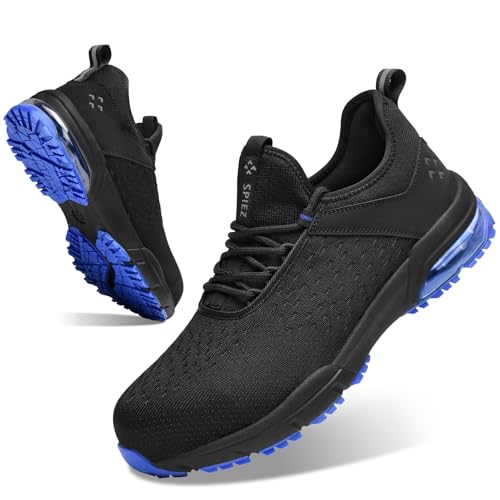
Among these options, this pair specifically combines air cushioning and an EVA midsole with an arch-support insole. SPIEZ says its composite toe meets ASTM F2413-18 for impact and compression, and describes the midsole as puncture-resistant. The variant is men’s 10, and the features also identify the shoes as slip resistant. This mix is aimed at work that needs both protective components and cushioning during long shifts.
Bottom line: Pick this for long shifts when you need the ASTM toe protection and cushioning.
How to choose SPIEZ slip-resistant work shoes
Start with the hazards, not the sneaker-like appearance: falling-object or compression risks call for the safety toe required by your workplace, while sharp underfoot debris calls for puncture protection. ASTM F2413 is the standard specification commonly used for protective footwear, but a shoe’s specific markings and protection categories should match the job’s hazard assessment. The products here describe several composite toe styles, while SPIEZ Men’s Mesh Work Shoes is positioned for kitchen work without identifying a safety toe. For wet or oily floors, look for an outsole feature aimed at the actual contaminant; an oil-resistant claim does not establish performance on every floor or spill. Ask the employer which protective features are mandatory before choosing a comfort feature.
Compare toe and puncture protection
Composite toe shoes use a nonmetallic protective cap, while puncture-resistant midsoles are a separate layer intended to guard against sharp objects coming up through the sole. One feature does not substitute for the other: select both when the worksite presents both hazards. ASTM F2413-18 is a protective-footwear specification; verify that a required designation matches the workplace’s hazard assessment instead of relying on the words “safety shoe” alone. The table compares the features named for these SPIEZ styles, not a guarantee that any pair satisfies a particular employer’s rules.
| Need | Feature to look for | SPIEZ option |
|---|---|---|
| Spills in kitchen work | Oil-resistant outsole | SPIEZ Men’s Mesh Work Shoes |
| Falling-object hazards | Composite toe | SPIEZ Composite Toe Air Cushion Shoes, SPIEZ Air Cushion Composite Toe Shoes, SPIEZ Unisex Composite Toe Shoes, or SPIEZ Composite Toe Work Sneakers |
| Sharp debris underfoot | Puncture-resistant midsole | SPIEZ Composite Toe Air Cushion Shoes, SPIEZ Air Cushion Composite Toe Shoes, SPIEZ Unisex Composite Toe Shoes, or SPIEZ Composite Toe Work Sneakers |
Fit and sizing for work sneakers
Work shoes should leave about a thumb’s width—roughly ½ inch—of space in front of the longest toe while holding the heel securely. Try them with the socks worn on shift, and check that toes do not press against a safety cap when standing; a tight protective toe can become uncomfortable over a long day. Sizes in this group vary by variant, including a men’s 4, 8.5, 10 and 11.5, so use the size that corresponds to the exact option you select rather than comparing the numbers alone. SPIEZ Unisex Composite Toe Shoes specifically advises some women with wider or fuller feet to consider a half-size increase; fit still depends on foot shape and sock thickness.
Keep slip-resistant shoes effective
Slip resistance depends on the tread contacting the floor, so grease, food residue and worn tread can undermine grip even when a shoe is sold for slippery workplaces. Remove buildup from the outsole regularly, especially from grooves, and replace shoes when tread is visibly worn or damaged. Do not assume “oil-resistant” means the same thing as resistance to every liquid: water, grease and cleaning chemicals create different floor conditions. For kitchen or healthcare use, follow workplace rules for cleaning and footwear replacement, and avoid walking into a spill as a test. SPIEZ Men’s Mesh Work Shoes names oil resistance specifically; compare the hazard named by your employer with the footwear feature before relying on it.
Frequently Asked Questions
How much toe room should work shoes have?
Leave roughly ½ inch between the longest toe and the front of the shoe when standing. Wear your usual work socks while checking, and ensure toes do not press into a protective cap.
Do composite toe shoes protect against punctures?
A composite toe protects the front of the foot, while a puncture-resistant midsole addresses sharp objects underfoot. Look for both features if the work area has both hazards.
How often should work shoe tread be replaced?
Replace work shoes when outsole tread is visibly worn, damaged or no longer clears residue from its grooves. There is no single mileage interval that fits every job because floor contaminants and hours worn differ.
Can oil-resistant shoes prevent every workplace slip?
No outsole feature guarantees traction on every surface or contaminant. Oil resistance is specific to oily conditions, and grease, water, cleaning residue and worn tread can still affect grip.
What does ASTM F2413 mean for work shoes?
ASTM F2413 is a protective-footwear specification used for safety footwear. Match the shoe’s required protection category to the workplace hazard assessment, since a toe-protection claim alone does not address every hazard.