
Spiked Roller for Self Leveling: 5 Options Compared

For most self-leveling projects, QWORK 9- and 20-Inch Roller Kit is the most versatile choice because it includes both 9- and 20-inch rollers plus a scraper and shoes. Choose a narrower standalone roller for smaller areas or a bundle with spiked shoes if you need to move across fresh material.
A spiked roller is a finishing tool rolled across freshly poured compound to release trapped air; match its spike reach to the layer depth and work before the material begins to set.
We earn a commission if you buy through links on this page. As an Amazon Associate I earn from qualifying purchases. Products are compared on manufacturer specifications, not hands-on testing.
- Best overall: QWORK 9- and 20-Inch Roller Kit – Includes 9- and 20-inch rollers, an 11 mm needle height, scraper, rake and shoes.
- Best for epoxy floors: ROLLINGDOG 9-Inch Spike Roller – Its 9-inch roller has 12 mm plastic spikes and a frame that connects to threaded extension poles.
- Best for shoes included: 9-Inch Roller with Spiked Shoes – Bundles a 9-inch roller with a pair of solvent-resistant spiked shoes.
| Product | Best for | Roller width | Spike height | Included tools | Shop |
|---|---|---|---|---|---|
| QWORK 9- and 20-Inch Roller Kit | Larger floor areas | 9 and 20 in | 11 mm | Scraper, rake, shoes | Check Price on Amazon |
| ROLLINGDOG 9-Inch Spike Roller | Epoxy coating work | 9 in | 12 mm | Roller frame and cover | Check Price on Amazon |
| 9-Inch Roller with Spiked Shoes | Shoes included | 9 in | 13 mm | Roller and shoes | Check Price on Amazon |
| GRGTHDS Self-Leveling Tool Kit | Splash control | — | — | Roller, rake, shoes, scraper | Check Price on Amazon |
| 23 cm Aeration Latex Roller | Simple roller setup | 9 in | 13 mm | Roller | Check Price on Amazon |
Spiked Rollers for Self Leveling
Compare roller dimensions and kit contents to find a tool set that matches your pour and working area.
QWORK 9- and 20-Inch Roller Kit
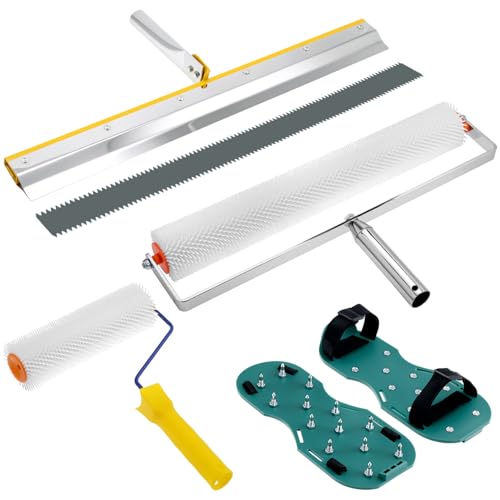
The two roller widths set this kit apart: it includes 9- and 20-inch rollers, along with a scraper, rake and spiked shoes. The rollers have 11 mm needles, and the PE roller parts detach for cleaning. The 12-by-5.6-inch shoes have 1-inch spikes. This is a useful choice when a larger work area calls for a wider roller and the job also needs spreading tools. The kit does not include an extension rod, so it may be less convenient if you need extra reach without buying one separately.
Bottom line: Pick this set when you want two roller widths and multiple floor-prep tools.
ROLLINGDOG 9-Inch Spike Roller

The corrosion-resistant single-rod frame and replaceable-style roller cover distinguish this 9-inch option. Its cover has 12 mm plastic spikes, and the rubber-gripped handle connects to threaded extension poles for added reach. The maker positions it for rolling freshly applied epoxy to help remove trapped air while spreading the coating. It suits compact coating jobs where a pole-compatible frame is useful. The package is a roller and frame rather than a broader leveling kit, so buyers who also need shoes or a scraper should look for a bundled set.
Bottom line: Choose it for a pole-compatible 9-inch roller focused on epoxy coating.
9-Inch Roller with Spiked Shoes

The included pair of spiked shoes makes this set different from the standalone rollers. The 9-inch roller has 13 mm teeth, while the shoes use a snap-lock buckle and have 13 spikes apiece, each 3/4 inch long. The maker describes the roller as a way to release bubbles and smooth edges during self-leveling and epoxy work. This bundle suits a buyer who needs footwear for moving over fresh material as well as a roller. Its roller width is fixed at 9 inches, so it offers less coverage per pass than a wider roller.
Bottom line: Pick this bundle when you need both a roller and spiked footwear.
GRGTHDS Self-Leveling Tool Kit

A splash guard is the distinguishing feature of this tool kit’s defoaming roller brush, intended to limit material splashing toward walls. The kit also includes a stainless-steel scraper, self-leveling rake and spiked shoes with reinforced mesh bottoms. The maker describes the roller as suitable for bubble removal in epoxy resin and floor-paint work. This set may suit a job where controlling splatter is a concern and several spreading tools are needed together.
Bottom line: Choose it when splash control and a bundled scraper and rake matter.
23 cm Aeration Latex Roller

The compact roller-only setup makes this option distinct from kits that add shoes, scrapers or multiple roller widths. Its roller measures 9 by 2.8 inches, has 13 mm teeth and comes with a 6-inch handle. A round hole in the plastic handle allows connection to a compatible telescopic rod or cylindrical wood extension. The maker describes it for removing bubbles when brushing paint and for epoxy floor-paint construction. It suits a buyer who already has other floor tools. The short supplied handle is a limitation if you need extended reach and do not have a compatible pole.
Bottom line: Pick this roller when you want a basic 9-inch tool and have other gear.
How to Choose a Spiked Roller for Self Leveling
Choose spike reach and working width before comparing extras. The rollers have 11–13 mm spike heights, while their widths include 9-inch and 20-inch options. A wider roller covers more floor per pass, but a narrower one is easier to maneuver around edges and obstacles. As a practical rule, choose spikes that extend beyond the planned compound layer so they can pass through its full depth; if the layer is as deep as or deeper than the spikes, verify the roller’s suitability before pouring. Also check whether you need extension reach, shoes, or spreading tools. A roller alone removes one task from the kit; it does not replace substrate preparation, mixing or placing the compound.
When to Roll Fresh Leveling Compound
Roll freshly placed compound while it remains workable, before it begins to stiffen. Spike rollers help release entrained air and can support a more even surface, but timing depends on the product’s working time, room temperature, batch size and substrate conditions. Prepare the whole work area and tools before mixing so rolling does not become a delay. Keep roller passes controlled and avoid prolonged rolling after the material starts to set, which can disturb the surface. For large areas, plan the pour and work path in advance; a second person can manage placement while another handles the roller. The compound manufacturer’s coverage and working window should govern the pace.
Spiked Shoes and Safe Movement on Fresh Floors
Spiked shoes let a worker cross freshly placed material while reducing the broad contact area of a flat sole. Shoe spikes still penetrate the surface, so avoid unnecessary steps and keep a clear route to prevent marks or uneven patches. The shoe spikes in these options range from 3/4 inch to 1 inch; shoe length and buckle fit are separate considerations from spike height. Wear gloves and eye protection when handling cement-based compound, and avoid skin contact because wet cementitious materials can irritate or burn skin. Keep footwear clean and inspect buckles before walking over the pour; a loose shoe can shift and make it harder to maintain controlled movement.
Prepare the Floor Before Using a Spike Roller
Surface preparation starts before the leveling compound is mixed. Remove dust, loose material, oil and other bond-breaking contaminants, then use the primer required by the selected compound and substrate. Seal gaps where liquid compound could escape, and mark the planned fill depth so the pour stays within the product’s permitted thickness. Mix only the amount that can be placed and rolled within its working window; adding extra water to make a stiff batch flow more easily can weaken the finished layer. Keep a clean roller ready, because dried compound can obstruct spikes and drag across the surface. These steps matter as much as roller choice when seeking a smooth, bonded floor.
Frequently Asked Questions
How long should spikes be for leveling compound?
Choose spikes longer than the planned layer depth so they can reach through the material. These options span 11–13 mm, so compare that reach with the pour depth before starting.
Can I use a spiked roller on epoxy flooring?
Yes, these products include rollers described for epoxy floor work. Roll while the coating remains workable, and use the epoxy maker’s instructions for timing and compatible tools.
When should I use a spiked roller after pouring?
Roll while the compound is still fluid enough to work, before it begins to stiffen. The usable window changes with the compound, temperature and batch size, so prepare tools and work area before mixing.
Do spiked shoes prevent marks in wet compound?
No footwear can guarantee a mark-free surface; shoe spikes penetrate the compound. Limit steps, keep the route clear and move deliberately to reduce surface disturbance.
How do I clean a spike roller after use?
Clean the roller promptly before compound hardens, following the compound maker’s cleanup directions. Dried residue between spikes can interfere with later passes and is harder to remove.