
Sponge Face Wash Tools: 5 Cleansing Options Compared

For most face-washing routines, 100-Count Compressed Facial Sponges stands out for its 100-count pack of compressed facial sponges, which gives you more individual pieces than the 50-count options. Choose a different format if you prefer reusable puffs or pads instead of compressed sponges.
Facial cleansing sponges are water-activated or washable tools used with cleanser to wipe the face; gentle pressure matters more than aggressive scrubbing.
We earn a commission if you buy through links on this page. As an Amazon Associate I earn from qualifying purchases. Products are compared on manufacturer specifications, not hands-on testing.
- Best overall: 100-Count Compressed Facial Sponges – Its 100-piece pack offers the largest count among the compressed sponge options.
- Best for measured sizing: Kickleen 50-Count Cellulose Sponges – The sponge is listed at 2.9 × 0.3 inches after it expands with water.
- Best for reusable puffs: AKOAK 4-Piece Pearl Sponge Puffs – The set has four washable, water-absorbent pearl sponge puffs.
- Best for face pads: IMPRESA 10-Piece Facial Sponge Pads – The 10-pad set uses a flat, single-sided format.
| Product | Best for | Pack count | Format | Shop |
|---|---|---|---|---|
| 100-Count Compressed Facial Sponges | Large multipack | 100 | Compressed sponge | Check Price on Amazon |
| Kickleen 50-Count Cellulose Sponges | Size-conscious buyers | 50 | Compressed cellulose | Check Price on Amazon |
| GAINWELL 50-Count Compressed Sponges | Fast expansion | 50 | Compressed wooden cellulose | Check Price on Amazon |
| AKOAK 4-Piece Pearl Sponge Puffs | Reusable puff format | 4 | Wet-soft pearl puffs | Check Price on Amazon |
| IMPRESA 10-Piece Facial Sponge Pads | Flat scrub pads | 10 | Single-sided pads | Check Price on Amazon |
Sponge Face Wash Tools Compared
Compare each face-washing sponge by pack size and form before choosing a tool for your routine.
100-Count Compressed Facial Sponges
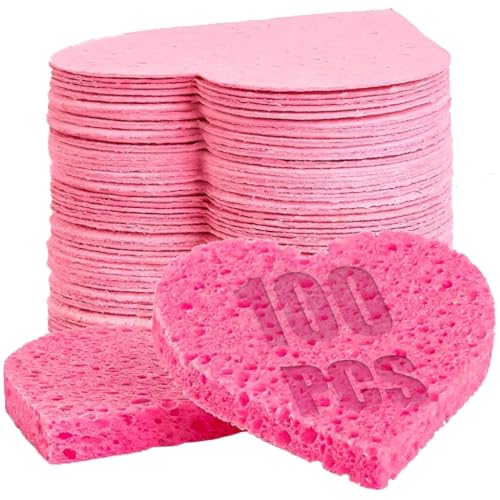
The 100-piece count separates this compressed facial sponge pack from the smaller compressed sets. The maker describes the sponges as soft, reusable, and suitable for cleanser, toner, or masks; their compact form is intended to expand when wet. That makes the pack a fit for households that want many individual sponges or a travel supply.
Bottom line: Choose this if having the largest count of compressed sponges matters most.
Kickleen 50-Count Cellulose Sponges
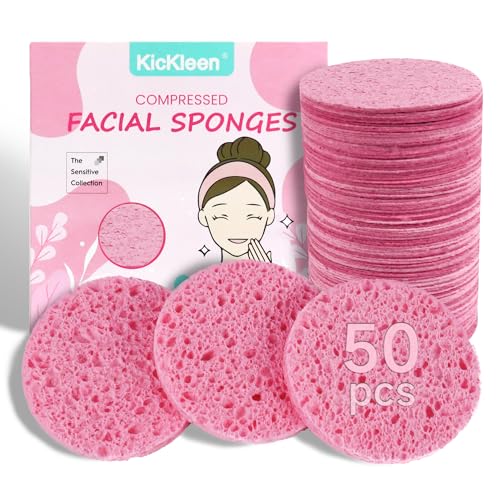
The Kickleen set is the only option with compressed and expanded dimensions: 2.5 × 0.03 inches compressed and 2.9 × 0.3 inches after water expansion. The maker identifies the material as natural cellulose made from wood pulp and describes it for daily cleansing, makeup removal, and mask removal. Those measurements help buyers estimate how a sponge fits in the hand and storage space. The pack has 50 pieces rather than the 100 in 100-Count Compressed Facial Sponges, so it may suit buyers who prefer a smaller supply.
Bottom line: Choose this if stated dimensions and cellulose material guide your choice.
GAINWELL 50-Count Compressed Sponges

The distinguishing claim for this 50-piece set is that each compressed sheet expands to 20 times its original thickness in seconds, according to the maker. It is described as wood-pulp cellulose and intended for cleansing, makeup removal, and removing facial masks. The yellow color also distinguishes it from the pink 50-count set.
Bottom line: Choose this if quick, pronounced expansion is the feature you want.
AKOAK 4-Piece Pearl Sponge Puffs

Unlike the compressed cellulose rounds, the AKOAK set contains four soft pearl sponge puffs in random colors. The maker says they absorb water, clean easily, and work with regular soap or face wash; the palm-sized format is intended for handling and travel. This is the clearest match for someone who wants reusable puffs rather than a stack of thin compressed pieces.
Bottom line: Choose this if you want a small set of washable cleansing puffs.
IMPRESA 10-Piece Facial Sponge Pads

The IMPRESA set uses 10 flat, single-sided exfoliating pads rather than the round compressed-sponges format. The maker positions them for normal-to-oily skin and says they are made in the USA; the dimensions are 4 inches long, 2.75 inches wide, and 0.75 inches high. The larger, flat shape may appeal to someone who wants a pad to wipe across the face. Its skin-type positioning is narrower than the other options, so buyers seeking a tool described for sensitive skin may prefer a different format.
Bottom line: Choose these if you prefer flat exfoliating pads and have normal-to-oily skin.
How to choose a face-washing sponge
Choose first by format: compressed sponges expand when wet, while puffs and pads are ready-shaped tools. A cellulose sponge can hold water and soften for wiping; a flat pad covers a broader contact area, while a compact puff is easier to grip. For daily cleansing, use light pressure and let cleanser do the cleaning rather than rubbing hard. If exfoliation is part of the routine, start no more than once or twice a week and reduce frequency if skin feels irritated. Avoid abrasive scrubbing on broken or inflamed skin. Pick a pack count based on how often you plan to replace or rotate pieces, not just the number in the package.
The table groups the main formats represented by these choices.
| Format | Typical use | Decision point |
|---|---|---|
| Compressed sponge | Wet to expand, then wipe | Check pack count and dimensions |
| Reusable puff | Use with cleanser | Consider grip and cleaning routine |
| Flat pad | Wipe or exfoliate | Check skin suitability and texture |
How to use compressed facial sponges
Wet a compressed sponge until it softens and expands, then squeeze out excess water before using it with cleanser. The Kickleen sponge’s expanded size is 2.9 × 0.3 inches, while the other compressed options do not give an expanded measurement, so check the fit in your palm before committing to a format if size is important. Sweep gently over the face rather than scrubbing back and forth. Rinse the sponge thoroughly after each use, squeeze out water, and let it air-dry fully in a clean, ventilated place. Do not keep a damp sponge sealed in a pouch between uses, since trapped moisture encourages microbial growth.
How often to replace or clean a face sponge
Rinse a facial sponge after every use and allow it to dry completely; replace it when it develops an odor, discoloration, tears, or a persistently rough surface. A damp sponge can support microbial growth, so storage matters as much as the material: avoid leaving it in a wet shower corner or closed container. Do not share a face sponge, especially when anyone has a skin infection or open blemishes. Rotate between two pieces if one cannot dry before its next planned use, and discard any sponge that no longer rinses clean.
Common mistakes with cleansing sponges
The most common mistake is treating a sponge as a way to intensify exfoliation: added pressure can irritate skin without improving cleansing. Use a smooth, brief pass and stop if stinging, burning, or persistent redness develops. Another mistake is choosing by count alone; compressed sheets, puffs, and pads have different handling and drying needs. If you have sensitive or reactive skin, start with a small area and infrequent use rather than daily exfoliation. Keep tools away from eyes and do not use them on cuts or inflamed areas. Choose a sponge type for the task—gentle cleanser removal is different from deliberate exfoliation.
Frequently Asked Questions
Do compressed facial sponges need water to expand?
Yes, compressed facial sponges soften and expand when wet. Add water before using one, then squeeze out excess so it is damp rather than dripping.
Can I use a face sponge every day?
A soft sponge can be used for cleansing, but exfoliating with it daily may irritate skin. Start with once or twice weekly for exfoliating use and reduce frequency if redness or stinging appears.
How should I dry a facial cleansing sponge?
Rinse it after each use, squeeze out water, and air-dry it fully in a ventilated spot. Avoid storing a damp sponge in a sealed pouch or container.
When should I replace a reusable face sponge?
Replace a sponge when it smells, changes color, tears, or stays rough after rinsing. The right interval depends on use and drying, so inspect it regularly rather than relying on a fixed lifespan.
Can two people share the same face sponge?
No, keep facial sponges personal to reduce transfer of microbes and skin debris. This is especially important when someone has an open blemish, cut, or skin infection.