
Sports Tape for Blisters: Types and Fit Compared

For blister-focused coverage, KT Health Blister Prevention Tape is the closest match because it comes as 30 rounded, 3.5-inch precut strips. Choose another format if you need cushioned foam that stretches around fingers and toes, or conventional rigid athletic tape for joint support.
We earn a commission if you buy through links on this page. As an Amazon Associate I earn from qualifying purchases. Products are compared on manufacturer specifications, not hands-on testing.
- Best overall: KT Health Blister Prevention Tape – Thirty 3.5-inch precut strips are shaped for common blister-prone areas.
- Best for cushioned coverage: Nexcare Blister Prevention Foam Tape – The 1-inch foam roll stretches around hands, fingers, heels and toes.
- Best for joint support: Hampton Adams Zinc Oxide Athletic Tape – Rigid cotton tape tears by hand and is intended for fingers, wrists and ankles.
| Product | Best for | Format | Width or length | Material | Shop |
|---|---|---|---|---|---|
| KT Health Blister Prevention Tape | Precut coverage | 30 precut strips | 3.5-inch strips | Synthetic non-woven fabric | Check Price on Amazon |
| Nexcare Blister Prevention Foam Tape | Cushioned flexibility | 1 roll | 1 inch × 5 yards | Foam | Check Price on Amazon |
| Hampton Adams Zinc Oxide Athletic Tape | Rigid athletic wrapping | 3 rolls | 1.5 inches × 45 feet each | 100% cotton | Check Price on Amazon |
| ADMITRY Cotton Athletic Tape | Multi-roll supply | 5 rolls | 1.5 inches × 10 yards each | 100% natural cotton | Check Price on Amazon |
Sports Tape for Blisters Compared
Match the tape format to the body area and whether you need cushioning or a more general athletic wrap.
KT Health Blister Prevention Tape

Unlike the roll formats, these 30 strips arrive precut for common blister-prone areas, so they suit buyers who want ready-sized pieces rather than trimming tape. KT Health says the synthetic non-woven fabric and strong adhesive are designed to help prevent blisters, chafing and hot spots during training and outdoor activities. Rounded edges are intended to resist fraying. The 3.5-inch strip size gives a fixed coverage length, which can be limiting for larger or irregular areas that call for a longer, custom-cut piece.
Bottom line: Choose the precut format when common trouble spots and quick application matter more than adjustable strip length.
Nexcare Blister Prevention Foam Tape
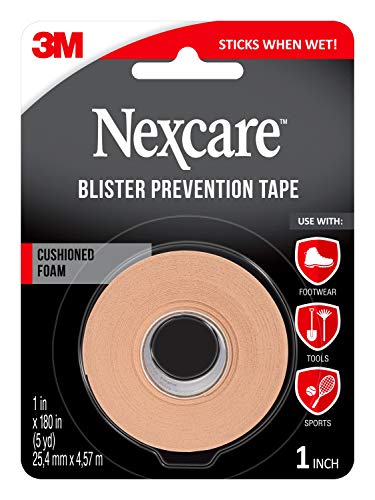
Nexcare differs from the fabric strips by using cushioned foam on a continuous roll, which can be cut to the needed length and flex around fingers, heels and toes. The roll measures 1 inch by 5 yards. Nexcare says the tape is waterproof and sweat-resistant, and that its medical adhesive sticks securely to skin; the foam is breathable and the tape stretches to conform. It is not made with natural rubber latex. The 1-inch width may require careful placement when a broad area needs coverage.
Bottom line: Pick the foam roll when cushioning and a flexible, cut-to-fit wrap are priorities.
Hampton Adams Zinc Oxide Athletic Tape

Hampton Adams is conventional rigid athletic tape rather than a blister-specific cushioned or precut format, so it fits buyers who also want support for fingers, wrists or ankles. Each of the three rolls measures 1.5 inches by 45 feet and is made from 100% cotton. The maker says the tape tears by hand and uses a low-residue adhesive that peels off cleanly. Its rigid construction is useful for a firm wrap but offers no listed foam cushioning, making it less targeted to blister protection than the other choices.
Bottom line: Choose it for rigid sports wrapping when blister-specific cushioning is not the main need.
ADMITRY Cotton Athletic Tape

ADMITRY supplies five cotton athletic tape rolls, making it the multi-roll option for general sport wrapping rather than a dedicated blister barrier. The roll dimensions are 1.5 inches by 10 yards, and the maker says the cotton tape is latex-free, breathable and tearable by hand. Its features describe joint support and sport use, not a foam cushion or precut blister shape. That distinction matters for hot spots: buyers who specifically need cushioning or flexible skin coverage may prefer a blister-focused format instead.
Bottom line: Choose the five-roll cotton pack for general athletic wrapping, not targeted blister cushioning.
How to choose sports tape for blisters
Start with the contact point: a blister barrier needs to cover the rubbing area without bunching inside a shoe or glove. Foam adds cushioning, while a thin fabric strip creates a flatter layer; a rigid athletic wrap is primarily for support. Most blister dressings work best when applied to clean, dry, intact skin before friction builds, not over an open wound. For a small heel or toe hot spot, a precut strip can simplify placement; for a changing shape or curved area, a roll can be cut to fit. Leave enough margin beyond the rubbing spot to help the edges stay down, and avoid tight circumferential wrapping around a finger or toe.
Foam tape, precut strips and athletic tape
Foam tape cushions, precut fabric strips simplify repeat placement, and rigid cotton athletic tape is designed for firmer wraps rather than padding. A practical choice depends on the area and the job: use the table to match those needs before considering roll length or pack size.
| Format | Best use | Trade-off |
|---|---|---|
| Precut fabric strip | Quick coverage of common hot spots | Fixed strip length |
| Foam roll | Cushioning and contouring | Requires cutting and careful positioning |
| Rigid cotton roll | Firm athletic wrap | Less focused on blister cushioning |
Do not assume every tape marketed for sports has the same adhesive or cushioning. Adhesive sensitivity and sweat exposure can change how well any tape stays in place.
Apply tape without creating more friction
Place tape on dry skin and smooth it flat so folds do not become new pressure points. Shoe fit often matters more than the tape: toes should not be crowded, and heel slip can repeatedly rub the same spot. For a blister-prone area, use only enough layers to cover the rubbing zone; bulky overlaps can increase pressure inside footwear. Check the edge after activity, especially where socks or gloves can catch it. Stop using tape if the skin becomes irritated, and do not use adhesive tape as a substitute for care of an open or infected wound.
Know when sports tape is the wrong tool
Sports tape can reduce friction or cushion a hot spot, but it does not correct footwear that repeatedly rubs or fits poorly. A persistent blister, spreading redness, drainage or increasing pain warrants medical advice rather than another layer of adhesive. People with diabetes, circulation problems or reduced sensation should seek clinician guidance before self-treating foot blisters, since a small skin injury can be harder to notice and manage safely. Keep the area clean, avoid popping a blister, and change the activity or footwear causing the rubbing when possible.
Frequently Asked Questions
Should blister tape go on before a workout?
Apply blister tape before activity, on clean, dry skin, where rubbing is predictable. A wrinkled edge or damp skin can make the tape lift or create a new friction point.
Can sports tape cover an open blister?
Avoid applying ordinary sports tape directly to an open blister; it can adhere to the raw surface and cause pain when removed. Use an appropriate sterile dressing and seek care for signs of infection such as spreading redness or drainage.
Is foam tape better for heel blisters?
Foam can provide cushioning, while a thinner fabric strip adds less bulk inside a shoe. If footwear has less than about 1/8 inch of spare room at the heel, a bulky layer can worsen pressure, so address shoe fit first.
How do I keep tape from peeling during exercise?
Apply it to clean, fully dry skin and press the edges down smoothly without stretching the tape. Sweat, lotion and friction from socks can loosen edges, so test the placement before a long session.
When should I replace blister prevention tape?
Replace tape when an edge lifts, the material gets wet or dirty, or it shifts over the rubbing spot. Repeated loosening usually signals that the skin is damp or the shoe is still rubbing.