
Stick-On Eyeglass Nose Pads: 5 Options Compared

Silicone Adhesive Nose Pads, 20 Pairs is a versatile starting point for stick-on eyeglass nose pads, with silicone pads in a 20-pair pack for regular replacement. Choose a different style if you need a slim 1 mm profile, foam cushioning, or extra grip in sweaty conditions.
Stick-on nose pads are adhesive cushions that attach directly to a frame, most often plastic frames without separate screw-mounted pads.
We earn a commission if you buy through links on this page. As an Amazon Associate I earn from qualifying purchases. Products are compared on manufacturer specifications, not hands-on testing.
- Best overall: Silicone Adhesive Nose Pads, 20 Pairs – The silicone pads come in a 20-pair pack for repeated replacements.
- Best for a slim profile: Bloom&Bloom Clear Silicone Pads, 6 Pairs – The clear silicone pads are 1 mm thick.
- Best for soft cushioning: SAIGO Oval Foam Pads, 12 Pairs – The oval foam pads are 1 mm thick and come in 12 pairs.
- Best for sweaty conditions: Setex Gecko Grip Clear Pads, 5 Pairs – The microfiber design is intended to grip in wet, oily or sweaty conditions.
| Product | Best for | Material | Thickness | Pack | Shop |
|---|---|---|---|---|---|
| Silicone Adhesive Nose Pads, 20 Pairs | Everyday replacements | Silicone | — | 20 pairs | Check Price on Amazon |
| Bloom&Bloom Clear Silicone Pads, 6 Pairs | Slim clear profile | Silicone | 1 mm | 6 pairs | Check Price on Amazon |
| SAIGO Oval Foam Pads, 12 Pairs | Soft foam feel | Foam | 1 mm | 12 pairs | Check Price on Amazon |
| Setex Gecko Grip Clear Pads, 5 Pairs | Wet-condition grip | Gecko-inspired microfiber | 1 mm | 5 pairs | Check Price on Amazon |
| Silicone Nose Pads, 20 Pairs | Mixed-color supply | Silicone | — | 20 pairs | Check Price on Amazon |
Stick-On Eyeglass Nose Pads Compared
Compare the materials, profiles and pack sizes to find pads suited to your frames and comfort needs.
Silicone Adhesive Nose Pads, 20 Pairs
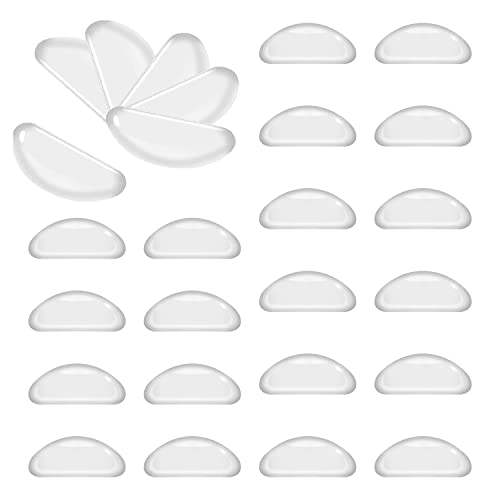
For shoppers who want a larger supply of conventional adhesive pads, this set has 20 pairs of transparent silicone cushions. Each pad measures 1.9 × 0.8 cm, giving you a defined elongated shape to compare with the available flat area on your frame. The peel-and-stick format is meant for eyeglasses, sunglasses and other suitable plastic frames. Clean the application area with rubbing alcohol and let it dry thoroughly before attaching a pad, as the maker recommends. The limitation is that thickness is not provided, so buyers who need a particular amount of lift should choose a product with a profile.
Bottom line: Choose this set if you want transparent silicone pads and multiple replacement pairs.
Bloom&Bloom Clear Silicone Pads, 6 Pairs

The 1 mm profile is the defining difference here: these clear silicone pads are aimed at buyers who want cushioning without a thicker, more visible lift. A six-pair set gives several replacements, and the teardrop shape is intended to follow the contour of the nose bridge. The maker says the adhesive can last up to three times longer than ordinary nose-pad adhesive and peel away cleanly; actual hold depends on a clean, dry frame surface and wear conditions. The smaller pack is less suited to someone prioritizing a large supply over a slim profile.
Bottom line: Choose these when a clear, 1 mm silicone pad is the priority.
SAIGO Oval Foam Pads, 12 Pairs

Unlike the silicone options, these are oval foam pads with a skin-color finish, for buyers who prefer a softer-feeling cushion. The version is 1 mm thick and includes 12 pairs; the maker also describes a 1.5 mm thickness option. The adhesive back is applied by peeling and sticking, and the maker says one or more pads can be layered. Layering changes the lift and can affect frame position, so start with one pad on each side and assess the fit before adding more. Foam is the trade-off for shoppers who specifically want the feel or appearance of silicone.
Bottom line: Choose these if you prefer oval foam cushioning and a skin-color finish.
Setex Gecko Grip Clear Pads, 5 Pairs

These pads stand apart through their gecko-inspired microfiber surface rather than a conventional smooth silicone cushion. Each is 1 mm thick, and the set contains five clear pairs. The maker says 3,500 microstructures per pad provide grip in wet, sweaty or oily conditions without sticky residue, and describes them for full plastic frames, including acetate and TR90. The adhesive format is intended for plastic frames, not a universal replacement for screw-mounted nose pads. The five-pair pack is smaller than the 20-pair sets, which matters if you want many replacements on hand.
Bottom line: Choose these if grip in sweat or humidity matters more than a larger pack.
Silicone Nose Pads, 20 Pairs

This set is distinguished by its mix of 10 clear and 10 black pairs, giving buyers two color choices in one 20-pair supply. The silicone pads have self-adhesive backs and are intended for reading glasses, sunglasses and prescription glasses. The maker describes a soft feel and an anti-slip surface for daily wear and activities. Its color mix is useful when clear pads would stand out against a dark frame.
Bottom line: Choose this set if you want both clear and black silicone replacements.
How to Choose Stick-On Eyeglass Nose Pads
Start with frame compatibility, then choose the pad material and profile that suit your fit. Stick-on pads attach to a flat frame surface; many plastic frames have this area, while wire frames commonly use replaceable screw-mounted pads. A pad cannot correct every fit problem, especially if the bridge shape or temple length is wrong. Measure the usable flat area on each side and compare it with the pad footprint; a pad that overhangs the frame can catch or peel. For a subtle change, a 1 mm pad gives less lift than a thicker cushion. Pick foam for a softer surface, silicone for a conventional cushion, or a textured surface when slip resistance is the priority.
How to Apply Adhesive Nose Pads
Clean, dry contact surfaces are the key to getting an adhesive pad to hold. Remove old adhesive residue, wipe the frame area with rubbing alcohol if the frame material permits it, and let the surface dry completely before application. Avoid letting alcohol run onto lenses, since coatings can be sensitive to solvents. Align both pads at matching positions on the left and right sides; uneven placement can tilt the glasses or create uneven pressure. Press each pad firmly into place, then avoid shifting it while the adhesive settles. Replace a pad when an edge lifts, the surface collects grime, or it no longer holds its position; do not layer pads unless you are willing to change the frame’s lift and fit.
Foam, Silicone and Microfiber Pads Compared
Material changes how a stick-on pad feels and grips, while thickness affects how far the frame sits from the nose. Silicone is a common cushion material, foam offers a softer-feeling surface, and microfiber pads use a textured contact face. No material compensates for a poorly fitted frame, and a thicker pad can change how the lenses sit relative to your eyes. Use this comparison to narrow the material based on your main need.
| Type | Consider when | Trade-off |
|---|---|---|
| Silicone | You want a conventional cushion | Thickness may vary by model |
| Foam | You prefer a softer-feeling pad | May look more noticeable |
| Microfiber grip | Sweat or moisture makes glasses slide | Confirm that the frame surface suits adhesive attachment |
Fit and Safety Checks Before Use
Use one matching pad on each side and check that the glasses sit level before wearing them for extended periods. Nose pads should not obstruct the lens area or force the frame into an uncomfortable angle; persistent pressure or poor alignment calls for an optician’s frame adjustment rather than adding more adhesive layers. Stick-on pads are small parts, so keep spare pairs away from young children and pets. Check the frame surface before applying alcohol or adhesive, especially on delicate finishes, and keep solvents away from lenses. For frames with screw-mounted nose pads, replacing the proper pad is usually a better fit than covering the mount with an adhesive cushion.
Frequently Asked Questions
How long do stick-on eyeglass nose pads last?
Adhesive life varies with skin oils, sweat, cleaning and surface preparation. Replace a pad when its edge starts lifting or it shifts during normal wear rather than waiting for it to fall off.
Can stick-on nose pads go on metal frames?
They work best where a frame has a clean, flat surface for the adhesive to contact. Many metal frames use screw-mounted pads instead, so check the frame design before choosing an adhesive style.
How do I stop adhesive nose pads from peeling off?
Remove residue, clean the frame contact area, and let it dry fully before applying the pad. Oils, moisture and touching the adhesive face can reduce the contact area and cause early lifting.
Can I stack two eyeglass nose pads together?
Some adhesive pads can be layered, but doubling them increases lift and can alter the glasses’ angle. Try one matching pad on each side first and add a layer only if the resulting position remains level and comfortable.
When should I replace stick-on nose pads?
Replace them when the adhesive edge lifts, the pad moves, or dirt buildup makes the contact surface uncomfortable. A pad that no longer holds securely can let glasses slide and should not be relied on.