
Strongest Elastic Beading Cord: 5 Options Compared

PAMIR TONG 1.5 mm Elastic Cord is the strongest elastic beading cord pick here for projects with large bead holes: its 1.5 mm diameter is the thickest single-size option, and its maker says it is designed to resist snapping. For small-hole beads, choose a thinner cord such as Stretch Magic 0.5 mm Clear Cord or JULIMAIDONG 0.8 mm Clear Cord instead.
We earn a commission if you buy through links on this page. As an Amazon Associate I earn from qualifying purchases. Products are compared on manufacturer specifications, not hands-on testing.
- Best overall: PAMIR TONG 1.5 mm Elastic Cord – At 1.5 mm, it is the thickest single-size option and is marketed for added strength.
- Best for long projects: Paxcoo 0.8 mm Elastic String – Its 0.8 mm cord comes in a 393.7-foot roll.
- Best for small holes: Stretch Magic 0.5 mm Clear Cord – Its 0.5 mm diameter suits projects where thicker cord will not pass through the beads.
| Product | Best for | Diameter | Length | Color | Shop |
|---|---|---|---|---|---|
| PAMIR TONG 1.5 mm Elastic Cord | Large-hole beads | 1.5 mm | 210 ft | 20 colors | Check Price on Amazon |
| Paxcoo 0.8 mm Elastic String | Long clear strands | 0.8 mm | 393.7 ft | Crystal clear | Check Price on Amazon |
| JULIMAIDONG 0.8 mm Clear Cord | Hidden knots | 0.8 mm | 200 ft | Clear | Check Price on Amazon |
| FIVEIZERO Mixed Elastic Cord Set | Multiple thicknesses | 1.0, 1.2, 1.5 mm | 330 ft total | Black and white | Check Price on Amazon |
| Stretch Magic 0.5 mm Clear Cord | Small bead holes | 0.5 mm | 32.8 ft | Clear | Check Price on Amazon |
Strongest Elastic Beading Cord Options
Compare cord thickness, spool length and color before matching a strand to your beads.
PAMIR TONG 1.5 mm Elastic Cord

PAMIR TONG 1.5 mm Elastic Cord has the largest single diameter in this group at 1.5 mm, making it the choice to consider when larger bead holes can accommodate a thicker strand. The set includes 70 yards, or 210 feet, in 20 colors. Its maker says the elastic material is designed to resist breaking and maintain stretch, and the cord is intended for bracelets, necklaces and craft uses.
The tradeoff is fit: 1.5 mm cord will not pass through many small-hole beads, so measure the hole before planning a design. Choose a thinner cord when the beads have narrow openings.
Bottom line: Choose it for larger-hole beads when thickness and color variety matter.
Paxcoo 0.8 mm Elastic String
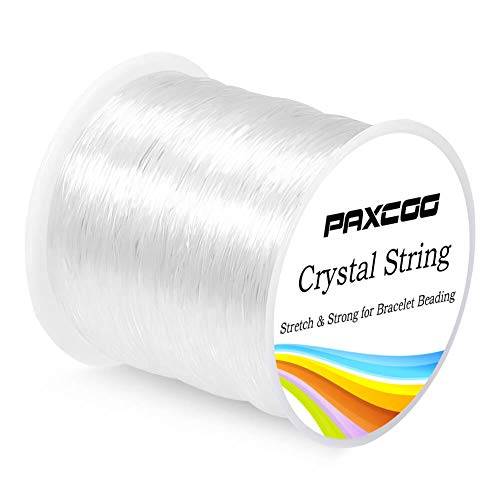
Paxcoo 0.8 mm Elastic String pairs a common midrange diameter, 0.8 mm, with the longest single roll here: 120 meters, or about 393.7 feet. Its crystal-clear elastic plastic cord is intended for bracelets, necklaces and bead weaving, including projects with seed, gemstone and glass beads. The maker describes it as hard to break.
The limitation is that 0.8 mm will not fit every bead hole, and the clear appearance may be less useful when a visible cord is part of the design. Check hole clearance before stringing a full piece; for especially small openings, 0.5 mm is thinner.
Bottom line: Pick it when you need a long clear 0.8 mm spool.
JULIMAIDONG 0.8 mm Clear Cord

JULIMAIDONG 0.8 mm Clear Cord is another 0.8 mm clear option, but its 200-foot roll is about half the length of Paxcoo 0.8 mm Elastic String. The elastic polyester-spandex cord is described by its maker as fine, strong and easy to tie, with a profile intended to help hide knots inside beads. It is suited to bracelet, necklace and other beading projects.
That knot-hiding benefit depends on the bead’s hole and shape; a knot may remain visible if the opening is shallow or narrow. This is a better match for projects where a 0.8 mm strand fits and a clear finish is wanted, rather than designs needing the extra length of Paxcoo 0.8 mm Elastic String.
Bottom line: Choose it for clear 0.8 mm projects where knot concealment matters.
FIVEIZERO Mixed Elastic Cord Set

FIVEIZERO Mixed Elastic Cord Set is the only set here that combines several stated diameters—1.0, 1.2 and 1.5 mm—with two rolls totaling 330 feet. The black-and-white assortment gives makers a choice of visible cord colors, and the set includes a beading needle. Its uses include bracelets, necklaces, sewing and crafts.
The total length is shared across two rolls, and the product name does not say how much belongs to each diameter. Plan around the thicknesses and colors, not an assumed equal split; if one specific diameter and its exact spool length are essential, a single-size cord is easier to plan.
Bottom line: Pick it when you want several diameters and both black and white cord.
Stretch Magic 0.5 mm Clear Cord

Stretch Magic 0.5 mm Clear Cord is the thinnest cord in the comparison at 0.5 mm, which can make it a better fit for beads with narrow holes. The 10-meter spool is about 32.8 feet, and its polyurethane cord is clear and latex-free. The maker says the material is non-fraying, resilient and consistent in diameter; it is intended for beaded jewelry and other craft projects.
The shorter spool is a constraint for large batches or long projects compared with the 200-foot-plus options. Choose it when bead-hole clearance is more important than bulk length, and move to a thicker cord only if the holes allow it.
Bottom line: Choose it for small-hole beads and short clear cord projects.
How to Choose Elastic Beading Cord Strength
Choose cord by bead-hole fit first, then by the thickness your design can use. A thicker strand has more material across its diameter, but it cannot help if it will not pass through the beads. For many stretch bracelets, 0.7 to 1 mm cord is a common starting range; bead size, hole size and how often the jewelry will be stretched all affect the choice.
Measure the bead opening or test a short cord offcut before stringing a full strand. Leave room for the cord to move through the hole without scraping, and remember that knots need more space than a single strand. With bead holes under about 1 mm, start with 0.5 mm cord; reserve 1.5 mm cord for larger-hole beads.
Elastic Cord Diameter and Bead-Hole Fit
Bead-hole clearance determines whether a cord can be strung and whether its knot can be hidden. A cord must pass through every bead, and a finished knot is bulkier than the cord itself. A bead with a 1 mm hole may accept a 0.8 mm strand but leave little clearance for threading or a knot, so test the actual beads rather than relying on nominal size alone.
Use this quick match as a starting point, not a guarantee: hole shape and manufacturing tolerances differ. If a design uses small beads or multiple passes, go thinner. For example, a bracelet that doubles the cord through each bead needs more clearance than a single-strand design.
| Starting cord diameter | Useful bead-hole condition | Best reason to choose |
|---|---|---|
| 0.5 mm | Narrow holes or multiple passes | Small beads |
| 0.8–1.0 mm | Clearance for one strand | General stretch bracelets |
| 1.2–1.5 mm | Large, smooth holes | Thicker visible strand |
Knotting and Finishing Stretch Bracelets
A secure knot and a clean finish help elastic jewelry stay together. Tie a square knot or surgeon’s knot, then pull each cord end firmly to seat the knot; a surgeon’s knot adds an extra pass that can help resist loosening while you finish. Tuck the knot into a bead with a hole large enough to cover it, and trim the ends only after checking that the knot holds.
Do not use a brittle adhesive as a substitute for knotting; a flexible jewelry adhesive is more appropriate if you choose to add glue, and it should be compatible with the cord material. Avoid pulling elastic cord to its maximum while stringing. Repeated hard stretching can fatigue elastic and shorten the life of a bracelet.
Common Elastic Beading Cord Mistakes
The most common sizing mistake is choosing the thickest cord without checking bead-hole clearance. A strand that scrapes through the holes can be difficult to string and may be damaged during assembly. Another mistake is using a short roll for a large batch: calculate the strand length for each piece, add allowance for knots and handling, and keep extra cord for restringing.
Elastic jewelry also needs gentle wear. Take bracelets off by rolling them over the hand rather than pulling one side sharply, and keep them away from prolonged heat, which can affect elastic materials. For daily-wear jewelry, inspect the cord near the knot and beads periodically; replace a strand that shows fraying, thinning or loss of recovery.
Frequently Asked Questions
What cord diameter works for most stretch bracelets?
A 0.7 to 1 mm cord is a common starting range for many stretch bracelets. Choose thinner cord for smaller bead holes and thicker cord only when every bead has enough clearance.
How much bigger should a bead hole be than the cord?
A bead hole should be wider than the cord, with enough clearance for easy threading and any planned extra pass. Test a short sample through the actual beads because hole shape and finish can reduce usable space.
How do you keep an elastic bracelet knot from loosening?
Tie a snug square or surgeon’s knot and pull the ends to seat it before trimming. Tuck the knot into a bead when its opening allows, and avoid relying on adhesive instead of a properly tightened knot.
Can elastic beading cord go through a washing machine?
Remove elastic jewelry before washing; heat and agitation can stress the cord and loosen knots. Handwashing a bracelet is also risky if soap or repeated stretching reaches the cord.
When should a stretch bracelet be restrung?
Restring a bracelet when its cord looks frayed, thinned, or no longer returns to shape after stretching. Inspect around the knot and bead holes, where rubbing and strain are concentrated.