
Swimming Pool Silicone Sealant: 3 Options Compared

BOSS 802 Clear Silicone, 2-Pack is the closest match for general pool and spa sealing because it is explicitly intended for pool surfaces and includes two 280 mL tubes.
Silicone sealant forms a flexible barrier at joints and edges, while an adhesive-sealant may also bond materials. Match the product to the surface and whether the joint will be submerged.
We earn a commission if you buy through links on this page. As an Amazon Associate I earn from qualifying purchases. Products are compared on manufacturer specifications, not hands-on testing.
- Best overall: BOSS 802 Clear Silicone, 2-Pack – Its maker identifies pool and spa uses, and the two tubes provide 560 mL total.
- Best for a small pool repair: BOSS 801 Pool & Spa Silicone, 3 oz – The clear neutral-cure pool and spa silicone comes in a 3-ounce tube.
- Best for clear RTV silicone: BOSS 315 RTV Pool & Spa Silicone, 3 oz – This clear BOSS RTV pool and spa silicone adhesive/sealant is supplied in a 3-ounce tube.
| Product | Best for | Package size | Color | Product type | Shop |
|---|---|---|---|---|---|
| BOSS 802 Clear Silicone, 2-Pack | Pool and spa joints | 2 × 280 mL | Clear | Silicone sealant | Check Price on Amazon |
| BOSS 801 Pool & Spa Silicone, 3 oz | Small clear repairs | 3 fl oz | Clear | Neutral-cure silicone adhesive | Check Price on Amazon |
| BOSS 315 RTV Pool & Spa Silicone, 3 oz | RTV sealant jobs | 3 fl oz | Clear/transparent | RTV silicone adhesive/sealant | Check Price on Amazon |
Swimming Pool Silicone Sealant Options
Compare intended use, cure type and package size before choosing sealant for a pool joint or repair.
BOSS 802 Clear Silicone, 2-Pack

Unlike the smaller single tubes, this two-pack supplies 560 mL total for multiple pool, spa or household sealing jobs. The maker identifies pool tiles and spa components among its intended uses, alongside sinks and baths, and describes the seal as water-resistant. The clear silicone suits repairs where a visible colored bead would stand out. Choose it when the work involves more than one joint or requires a larger supply. Its limitation is that the specifications do not identify a cure chemistry, so buyers with a surface-specific compatibility requirement should confirm it before ordering.
Bottom line: Pick this for pool or spa sealing when you want a clear silicone and two tubes.
BOSS 801 Pool & Spa Silicone, 3 oz
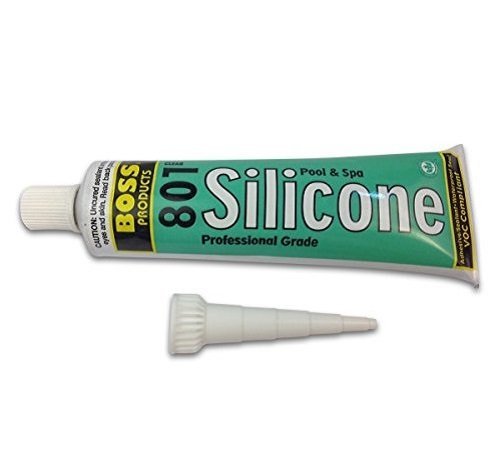
Unlike the two-tube option, this is a single 3-ounce tube of clear neutral-cure silicone adhesive specifically named for pool and spa use. Neutral-cure silicone is often selected around sensitive metals because it does not release acetic acid during cure; surface compatibility still depends on the material and manufacturer guidance. Its compact package is a practical match for one small joint or a touch-up rather than several repairs. The specifications give no surface-specific application guidance, so confirm compatibility for the exact tile, metal or plastic before applying.
Bottom line: Choose this for a small repair needing clear, neutral-cure pool and spa silicone.
BOSS 315 RTV Pool & Spa Silicone, 3 oz

BOSS 315 RTV Pool & Spa Silicone, 3 oz is the clear RTV option among these pool-specific products, supplied in a single 3-ounce tube. RTV means room-temperature vulcanizing: the silicone cures without oven heat, which suits many in-place sealing jobs. The name identifies it as a pool and spa adhesive/sealant, so it differs from general-purpose household silicone and the marine product. It fits a localized repair where a smaller tube is enough.
Bottom line: Pick this for a small pool or spa job that calls for a clear RTV silicone.
How to choose swimming pool silicone sealant
Start with the surface and whether the joint will be underwater; a product labeled for pool and spa use is the most direct match in this group. Silicone stays flexible after curing, which helps accommodate small movements at joints, while adhesive-sealants can also bond parts together. Neutral-cure silicone is often preferred near metals sensitive to acidic cure byproducts, but it is not automatically compatible with every finish. For a single short joint, a 3-ounce tube is easier to manage; for multiple joints, the 560 mL two-pack supplies more material. Do not use the pool until the sealant has fully cured: cure time changes with bead thickness, temperature, humidity and ventilation, so follow the manufacturer’s cure guidance for immersion.
Pool sealant type and use comparison
Choose a pool-specific silicone when the job is primarily sealing a joint; choose a marine adhesive-sealant only when its bonding properties and material compatibility fit the repair. A pool tile joint and a pump O-ring are different sealing problems: the former uses a cured bead, while an O-ring seal depends on an intact gasket and correct seating. This distinction prevents a common mistake—substituting grease for a cured sealant or using a bonding product where a removable seal is needed.
The table separates the product types by their intended use, not by assumed performance.
| Repair need | Product type | What to match |
|---|---|---|
| Pool or spa joint | Pool-specific silicone | Surface and immersion cure guidance |
| Bond and seal marine hardware | Marine adhesive-sealant | Material compatibility and white color |
| Pump or filter O-ring | O-ring grease | Correct gasket fit and condition |
Preparing a pool joint for sealant
Preparation determines whether a bead can adhere: remove loose old material, dirt and soap residue, then let the joint dry before application unless the sealant specifically permits otherwise. Keep the bead continuous and sized to bridge the gap rather than smearing a thin film across the surface. Masking both sides of a joint helps create a cleaner edge, and removing the tape before the bead skins avoids tearing. A useful decision rule is to choose a smaller tube for one short seam and a larger supply when the repair spans multiple joints; do not stretch a bead beyond the product’s specified joint dimensions. Pool water should remain out of contact until the cure guidance allows immersion.
Pool sealant safety and common mistakes
Keep uncured sealant away from skin and eyes, ventilate the work area, and follow the product label for protective equipment and cleanup. Pool chemicals and wet surfaces can interfere with adhesion, so isolate and dry the repair area before applying sealant. Do not assume that “water-resistant” means ready for immediate submersion: curing is different from surface drying, and a thicker bead takes longer to cure through. Another frequent error is applying new silicone over residue; remove failed sealant fully because fresh silicone may not adhere reliably to cured silicone. Verify material compatibility before sealing acrylic, painted surfaces or metals, especially when the joint is submerged.
Frequently Asked Questions
How long should pool silicone cure before swimming?
Wait until the sealant has fully cured before refilling or swimming. Many silicone products cure at roughly 1/8 inch of depth per 24 hours under typical conditions, and thick beads, cool temperatures or limited airflow can extend that time; use the product’s immersion guidance.
Can silicone sealant be applied underwater?
Ordinary silicone sealant generally needs a clean, dry surface to bond properly. Drain or lower the water below the repair and dry the joint unless the product explicitly permits underwater application.
How much sealant does a pool tile joint need?
A 3-ounce tube is typically suited to a small, localized repair, while longer or multiple joints may need more material. Bead consumption depends on joint width and depth, so estimate using the joint dimensions and the product’s coverage guidance.
Should I remove old silicone before resealing?
Yes, remove failed or loose silicone before applying a new bead because new silicone may not bond reliably to cured silicone. Scrape residue carefully without damaging the tile, then clean and dry the joint before resealing.
Is pool silicone safe for every pool surface?
No single silicone formulation suits every surface. Check compatibility for the specific tile, metal, plastic or coating, and confirm that the product is intended for immersion before using it below the waterline.