
Table Legs for Glass Tops: 4 Bases Compared

28-Inch Round Metal Table Legs suits most glass-top tables because it includes suction cups and offers a second mounting method for other surfaces. Choose a different base if you need a specific height or crossed-leg design; these bases differ in mounting and dimensions.
Table legs for glass tops support a separate tabletop, so the top’s weight, shape and attachment surface all matter.
We earn a commission if you buy through links on this page. As an Amazon Associate I earn from qualifying purchases. Products are compared on manufacturer specifications, not hands-on testing.
- Best overall: 28-Inch Round Metal Table Legs – Suction cups are included for glass, plus pre-drilled holes for screw mounting on wood.
- Best for 30-inch height: BOTAOYIYI 30-Inch Metal Table Legs – The product specifies 30-inch legs and integrated suction cups.
- Best for a 29-inch base: Modern Black Table Base, 29-Inch – The product name specifies a 29-inch base with detachable, reusable suction cups.
| Product | Best for | Height | Mounting | Shop |
|---|---|---|---|---|
| 28-Inch Round Metal Table Legs | Flexible mounting | 28 in | Suction cups; screw holes | Check Price on Amazon |
| BOTAOYIYI 30-Inch Metal Table Legs | 30-inch tables | 30 in | Suction cups | Check Price on Amazon |
| sumatos Metal Table Base, Silver | Crossed-leg style | 28 in | Base; adjustable footpads | Check Price on Amazon |
| Modern Black Table Base, 29-Inch | Reusable suction cups | 29 in | Detachable suction cups | Check Price on Amazon |
Table Legs for Glass Tops
Compare the base height, attachment method and stated capacity before pairing legs with a glass tabletop.
28-Inch Round Metal Table Legs

28-Inch Round Metal Table Legs stands out for offering both suction cups for glass and pre-drilled holes for screw mounting on wood. The steel legs are 28 inches tall, and the maker claims a combined capacity of 1,000 pounds. Four adjustment pads are included, according to the product name.
This base suits buyers who may use different tabletop materials. The capacity claim does not establish whether a particular glass top and table configuration are compatible, so confirm the tabletop’s weight and dimensions before ordering.
Bottom line: Pick this if you want suction-cup placement for glass and a screw-mount option for wood.
BOTAOYIYI 30-Inch Metal Table Legs

BOTAOYIYI 30-Inch Metal Table Legs is the 30-inch option among these glass-compatible bases, with integrated suction cups between the metal legs and tabletop. The set of four is presented for dining tables, desks and other custom furniture, and its clean black finish suits modern or industrial rooms.
This base is a fit when 30 inches is the height you need and the glass surface can hold the cups.
Bottom line: Choose this when a 30-inch leg height and suction-cup contact are the deciding requirements.
sumatos Metal Table Base, Silver

sumatos Metal Table Base, Silver uses crossed steel legs rather than the individual suction-cup legs offered by some alternatives. It is silver, has adjustable footpads, and is described for glass, marble and wood tops, including dining and office tables.
The size fields give a height of 28 inches, while the product name calls it 30 inches; verify the actual height before choosing it for a particular table. This base may suit buyers focused on a crossed-leg look, but the specifications do not give a load capacity or explain how the glass top is retained.
Bottom line: Choose this for a silver crossed-leg look, after confirming its height and glass-top retention.
Modern Black Table Base, 29-Inch
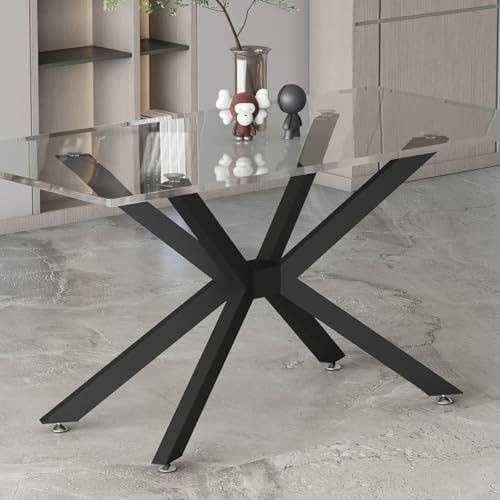
Modern Black Table Base, 29-Inch is the 29-inch option and specifies detachable, reusable suction cups for glass, metal, marble and wood surfaces. Its black finish and thick steel-tube construction are presented for dining, desk and occasional tables.
The maker describes the tubes as enhancing stability but gives no numerical capacity, so this is harder to assess for a particularly heavy tabletop.
Bottom line: Pick this if reusable suction cups and a 29-inch height match your project.
How to choose table legs for glass tops
Start with attachment, then match the base to the tabletop’s dimensions and weight. Suction cups are intended to hold a smooth, nonporous surface in position; dust, grease or a textured finish can interfere with contact. A screw-mounted base is not a glass mounting method unless the top is specifically made for that hardware.
Measure the tabletop and the intended table height before choosing legs. The heights here range from 28 to 30 inches, and one product has conflicting height fields. Glass tops can be heavy, so do not treat a maker’s capacity as proof that every top shape or base arrangement is safe. Confirm compatibility and support requirements for the exact top before ordering.
Glass-top attachment and stability
A stable glass table needs a level base and secure, evenly placed contact points. Suction cups work best when both the cup and glass are clean, dry and smooth; a dusty cup can lose grip. Position cups consistently and avoid placing the top where a person may bump or pull an unsupported edge.
Do not drill or cut tempered glass: altering it can cause it to shatter. A glass top can slide or tip if the base is poorly matched, so check tabletop size, weight, shape and the base’s contact footprint before assembly. For tables where children may climb or pull on the edge, use a design with a positive, manufacturer-approved retention method rather than relying on an assumed grip.
Compare table leg mounting styles
Mounting style determines which tabletop materials a base can sensibly support. Suction cups suit smooth glass surfaces, while screw holes are for compatible wood tops; a crossed-leg pedestal may use a different contact arrangement. The comparison below separates those approaches and notes the capacity only where a number is supplied.
| Mounting approach | Typical use | Buyer check |
|---|---|---|
| Suction cups | Smooth glass | Clean contact surface and secure fit |
| Screw holes | Wood tops | Compatible thickness and screw placement |
| Base with footpads | Leveling the base | Top retention and support footprint |
Do not assume that footpads under a base attach the tabletop; they level the legs at the floor. Check how the top is held in place before selecting any base that does not explicitly include cups or another approved attachment.
Measure before installing glass table legs
Measure the finished height from the floor to the top surface, not just the leg length. A tabletop adds height, and floor unevenness can change the result; adjustable feet help level the base but do not correct a height mismatch. Also measure the base’s footprint against the tabletop so the support points sit where the design intends.
Use the top’s actual weight when comparing it with a capacity claim, and account for anything placed on the table. Capacity numbers are not interchangeable if one maker gives a combined rating and another gives none. Confirm the lift or leg height and the permitted top dimensions before ordering, especially where product measurements conflict.
Frequently Asked Questions
Can suction cups hold a glass tabletop securely?
Suction cups can grip smooth, clean, nonporous glass when they make full contact. Dust, oil or texture can weaken that contact, so clean both surfaces and check the fit before use.
Can I screw table legs directly into glass?
No; screws should not be installed directly into ordinary glass tabletops. Tempered glass can shatter if drilled or cut, so use a base designed to support glass without drilling.
How do I choose the right table leg height?
Measure from the floor to the finished tabletop surface, including the thickness of the top. The options here specify 28 to 30 inches, and the sumatos fields conflict, so verify that model’s height before committing.
How can I stop a glass table from wobbling?
Place the table on a level floor and adjust the base’s feet if provided. A wobble can also point to an uneven top or poor contact, so recheck the base level and the tabletop’s seating.
How much weight can glass table legs support?
Use the maker’s capacity only for the configuration and compare it with the tabletop’s actual weight and intended load. One option here claims 1,000 pounds combined; the other presented products have no numerical capacity in their specifications.