
Thermal Insoles for Boots: 5 Warmth Options Compared

For most boot wearers, Yaktrax Thermal Insoles is the clearest starting point because its maker rates it to -13°F and says it trims to fit women’s sizes 6 through men’s 12. Choose a different style if you need multiple pairs, prefer a thin profile, or have room for a thick fleece insert.
Thermal insoles add insulation underfoot, but a boot that is too tight can compress insulation and restrict toe movement.
We earn a commission if you buy through links on this page. As an Amazon Associate I earn from qualifying purchases. Products are compared on manufacturer specifications, not hands-on testing.
- Best overall: Yaktrax Thermal Insoles – Its maker gives a -13°F rating and a trim-to-fit range from women’s 6 to men’s 12.
- Best for a low profile: JobSite Warm Feet Thinsulate Insoles – The maker describes a thin, lightweight design and supplies two pairs.
- Best for multiple pairs: Kaps Alu Super Thermal Insoles, 6 Pairs – The six-pair set combines fabric, foam and an aluminum-foil layer.
- Best for roomy boots: riemot Sheepskin Insoles, US 9 Men – The maker describes a roughly 17 mm lofted wool-fleece profile for boots with extra interior room.
| Product | Best for | Insulation or material | Thickness | Size or fit range | Shop |
|---|---|---|---|---|---|
| Yaktrax Thermal Insoles | Cold-weather versatility | Blended wool felt; Radiantex layer | — | Women’s 6–men’s 12; trim-to-fit | Check Price on Amazon |
| JobSite Warm Feet Thinsulate Insoles | Lower-profile fit | 3M Thinsulate insulation | Thin, low profile | Men’s 8–13; women’s 6–11 | Check Price on Amazon |
| Kaps Alu Super Thermal Insoles, 6 Pairs | Multi-pair coverage | Fabric, polyethylene foam, aluminum foil | — | Up to 11.8 in; men’s US 13 | Check Price on Amazon |
| Wool Felt Insoles, 6 mm | Slim wool felt | 80% wool felt | 6 mm | Men’s 8; women’s 9 | Check Price on Amazon |
| riemot Sheepskin Insoles, US 9 Men | Roomy winter boots | Australian wool fleece, sheepskin, wool felt | About 17 mm lofted | Men’s US 9; women’s US 11 | Check Price on Amazon |
Thermal insoles for boots compared
Compare the insulation materials, thicknesses and sizing before choosing an insert for your boots.
Yaktrax Thermal Insoles
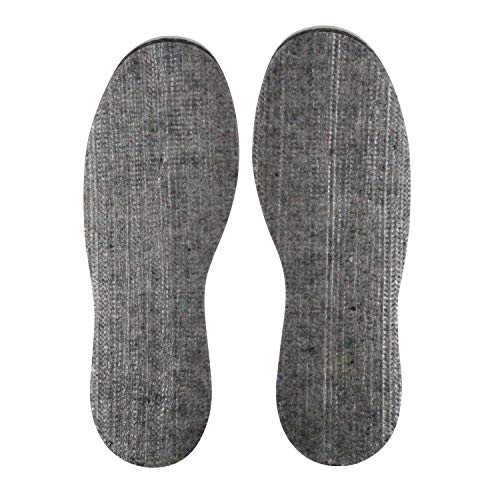
Yaktrax Thermal Insoles stands apart with a maker-rated temperature of -13°F and a trim-to-fit range that spans women’s 6 through men’s 12. The pair combines blended woolen polar felt, recycled felt cushioning and a Radiantex layer that the maker says redirects body heat. Its moisture-wicking and fray-resistant materials suit boots used for outdoor work or recreation in cold weather. The wide size range makes it a flexible choice when one cut-to-fit insole is desired. The specifications do not give a thickness, so buyers with snug boots should confirm that the insert leaves enough room before ordering.
Bottom line: Choose this pair for a broad trim-to-fit range and a maker-stated -13°F rating.
JobSite Warm Feet Thinsulate Insoles

JobSite Warm Feet Thinsulate Insoles is the low-profile option, with a thin, lightweight construction intended to fit without making most shoes and boots tight. Its maker says 3M Thinsulate microfibers trap body heat while allowing moisture to escape, and the pillow-top cover adds cushioning. The two-pair pack suits someone outfitting more than one pair of footwear, and the size range covers men’s 8–13 and women’s 6–11. Unlike a trim-to-fit insert, the sizes are fixed, so this choice matters most when your boot size falls within its range.
Bottom line: Pick these if your boots have limited spare room and your size is in range.
Kaps Alu Super Thermal Insoles, 6 Pairs

Kaps Alu Super Thermal Insoles, 6 Pairs is the multiple-pair choice, with six pairs and a three-layer construction: warm fabric, polyethylene foam and an aluminum-foil bottom layer. The maker says the foil helps block cold from below, making the layered design relevant for boots exposed to cold ground. The inserts are cut-to-fit, with a maximum length of 11.8 inches and a upper limit of men’s US 13. The materials and layered design distinguish this set from wool-only choices. Because trimming only reduces length, measure the boot’s existing footbed before cutting each pair.
Bottom line: Choose this set when you need several cut-to-fit pairs with a layered base.
Wool Felt Insoles, 6 mm

Wool Felt Insoles, 6 mm has a 6 mm wool felt profile, making it the thinnest option here with a thickness and a useful choice when a boot has modest extra room. Its maker describes the material as 80% wool and says the insert can be hand-washed, air-dried flat and trimmed to fit. The size is men’s 8/women’s 9, so check that the starting size corresponds to your footwear before cutting. This is a simpler wool felt replacement rather than a multi-layer foil design or a multi-pair pack.
Bottom line: Pick this pair if you want a 6 mm wool felt insert and can trim its size.
riemot Sheepskin Insoles, US 9 Men
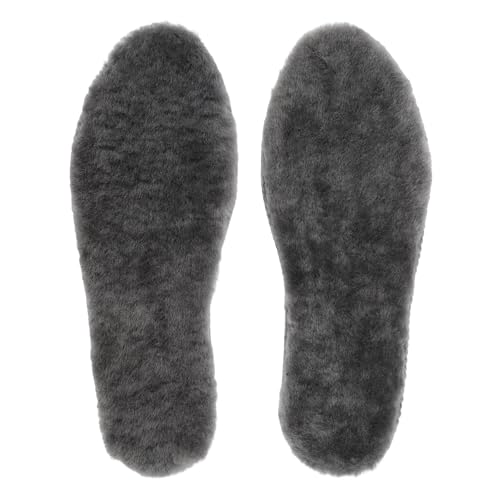
riemot Sheepskin Insoles, US 9 Men is the thickest-profile choice, with approximately 17 mm of thickness when the wool is fully lofted, according to its maker. The construction combines Australian wool fleece, genuine sheepskin leather and a wool felt base for a plush underfoot feel in roomy winter, work or snow boots. The size is men’s US 9/women’s US 11, which is narrower than the trim-to-fit ranges elsewhere in this group. A thick insert can crowd the toe box, so it is a poor match for close-fitting boots or footwear with little spare volume.
Bottom line: Choose these for a roomy boot that can accommodate a lofted 17 mm insert.
How to choose thermal insoles for boots
Start with the boot’s interior room, then compare insulation material and intended fit. A 6 mm felt insert adds less bulk than a roughly 17 mm lofted fleece insert; the thicker option needs more space above the foot. Wool felt, synthetic insulation and foil-backed layers work differently, but no insert can compensate for a boot that is already tight or damp. Match fixed-size inserts to your footwear size, and cut trim-to-fit insoles gradually using the original footbed as a template. Avoid stacking a new thermal insert over a removable factory footbed unless the boot still allows normal toe movement and heel hold. A cramped fit can compress the insulating layer, reducing its loft, and can make walking uncomfortable.
How to check boot fit with an added insole
Check fit with the socks you expect to wear, because a thicker winter sock takes up room just as an insert does. Remove the boot’s original footbed if it is removable, then compare its outline with the new insert before trimming. Leave enough space for toes to move and ensure the heel remains seated; if either changes noticeably, the insert is too thick or the boot is too small. A practical rule is to favor a 6 mm insert when space is tight, and reserve a roughly 17 mm fleece profile for a roomy boot. Trim a little at a time, since cutting too much cannot be reversed. Do not fold or curl an insert to force it into a boot.
Thermal insole materials compared
Material affects bulk, construction and care, but the boot fit remains the deciding factor. Felt and wool-fleece styles use fibrous layers; the fleece style here has a notably thick loft, while the 6 mm felt option is slimmer. Thinsulate is synthetic microfiber insulation, and the maker of the low-profile pair says it allows moisture to escape. The Kaps set layers fabric, polyethylene foam and aluminum foil, with the foil facing the ground side. Use this table to narrow the type by need, not as a guarantee of warmth in every boot.
| Need | Type to consider | Fit consideration |
|---|---|---|
| Limited boot volume | Thin Thinsulate or 6 mm felt | Preserve toe movement |
| Roomy boot, plush feel | Lofted wool fleece | Allow roughly 17 mm |
| Several pairs to outfit | Six-pair layered set | Trim each footbed separately |
Keeping feet warm and dry in boots
Dry footwear matters because moisture can make feet feel colder, and insulating layers work best when their loft is not compressed. Let damp boots and removable insoles dry thoroughly between uses; the wool felt option here is hand-washable and should be air-dried flat according to its maker. Avoid placing an insole against a direct heat source, which can damage materials or adhesives. Check the whole boot system: a thermal insert adds insulation beneath the foot, while socks, boot fit and exposure affect comfort too. In freezing conditions, pay attention to numbness or unusual discomfort and move to a warm place rather than relying on an insole as protection from cold injury.
Frequently Asked Questions
Can thermal insoles make tight boots fit warmer?
No; a tight boot can compress insulation and restrict toe movement. Choose a thinner insert, such as a 6 mm profile, or use a roomier boot.
How thick should winter boot insoles be?
Choose thickness based on available boot volume rather than warmth claims alone. A 6 mm insert needs less room than a roughly 17 mm lofted fleece style.
Should I remove the original boot insole first?
If the factory footbed is removable, test the thermal insole in its place before stacking layers. Keep enough toe room and heel hold for a secure walking fit.
How do you trim thermal insoles to fit?
Use the boot’s original footbed as a template and cut gradually along the outline. Test the insert in the boot before making additional cuts.
Can wool felt insoles be washed?
The wool felt option here is described by its maker as hand-washable and air-dried flat. Let insoles and boots dry fully before wearing them again.
Do thermal insoles protect against frostbite?
An insole is not a guarantee against cold injury. In freezing weather, limit exposure, keep footwear dry, and get to warmth if numbness or unusual discomfort develops.