
Thermostat for Gas Fireplace: 3 Options Compared

For a gas fireplace with a millivolt valve, Honeywell Home CT33A1009/E1 Millivolt Thermostat is a straightforward thermostat choice because it is specifically identified as millivolt-compatible. Choose WTC401 Fireplace Thermostat Remote Kit instead if you want a remote and your fireplace uses a supported millivolt valve or 24VAC electronic ignition system.
Gas fireplace thermostats control heat by opening or closing a compatible circuit; a thermostat made for a different system may not operate the fireplace.
We earn a commission if you buy through links on this page. As an Amazon Associate I earn from qualifying purchases. Products are compared on manufacturer specifications, not hands-on testing.
- Best overall: Honeywell Home CT33A1009/E1 Millivolt Thermostat – Its millivolt designation directly matches a common gas fireplace control system.
- Best for remote control: WTC401 Fireplace Thermostat Remote Kit – It combines thermostat control and a remote, with compatibility stated for millivolt and 24VAC systems.
- Best for adjustable temperature range: Durablow TR1003 Thermostat Remote Kit – Its thermostat range is 45°F to 99°F, with selectable 1°F, 2°F or 3°F room-temperature swings.
| Product | Best for | System compatibility | Control type | Shop |
|---|---|---|---|---|
| Honeywell Home CT33A1009/E1 Millivolt Thermostat | Millivolt fireplaces | Millivolt | Non-programmable thermostat | Check Price on Amazon |
| WTC401 Fireplace Thermostat Remote Kit | Remote operation | Millivolt or 24VAC | Remote; thermostat | Check Price on Amazon |
| Durablow TR1003 Thermostat Remote Kit | Temperature adjustment | Millivolt valve; IPI module | Remote; thermostat; timer | Check Price on Amazon |
Thermostats for a gas fireplace
Match the thermostat to the fireplace’s valve or ignition system before choosing a control style.
Honeywell Home CT33A1009/E1 Millivolt Thermostat
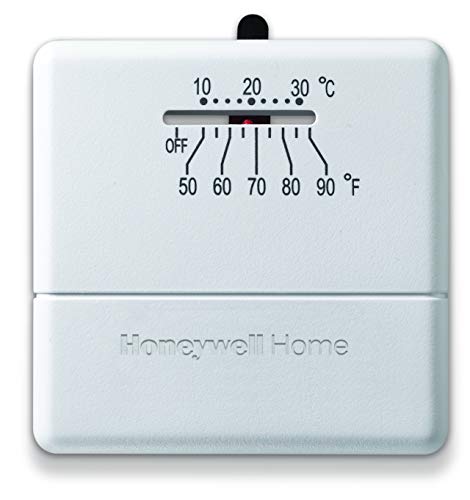
For a millivolt fireplace, this Honeywell Home thermostat is the directly matched wall-control option among these choices. It is a non-programmable millivolt thermostat, so it suits buyers who want room-temperature control without a wireless remote or timer. Millivolt systems use power generated by a fireplace thermopile rather than the standard 24VAC control circuit used by many central HVAC systems. The main limitation is that this thermostat does not add remote operation or timed control; choose a remote kit if controlling the fireplace from across the room is important.
Bottom line: Pick this for a simple wall thermostat on a compatible millivolt fireplace.
WTC401 Fireplace Thermostat Remote Kit

For buyers who want wireless control, this fireplace kit combines a thermostat with a remote rather than providing only a wall thermostat. Its compatibility covers most millivolt gas valves through TH/TP terminals and electronic spark ignition systems using 24VAC. The kit also offers ON, AUTO and OFF modes, a timer and child lock. Compatibility still depends on the fireplace’s actual control circuit and terminal layout, so verify those against the fireplace manual before installation. The manufacturer recommends installation by a qualified gas technician or electrician.
Bottom line: Choose this when remote control matters and the fireplace matches its supported circuit.
Durablow TR1003 Thermostat Remote Kit

For a millivolt valve or IPI module, this Durablow kit adds remote thermostat control and a timer, with a setting range from 45°F to 99°F. The transmitter can switch the fireplace as room temperature changes, and its temperature swing can be set to 1°F, 2°F or 3°F. That adjustable swing can help determine how much the room temperature changes before the fireplace cycles. The kit is not a power supply or ignitor; it passes voltage from the fireplace thermopile, so it is not a substitute for a compatible control circuit.
Bottom line: Pick this if its millivolt or IPI compatibility and temperature settings fit your fireplace.
How to choose a gas fireplace thermostat
Choose by the fireplace’s control system first, then decide whether you need a wall thermostat or a remote. Millivolt fireplaces use a thermopile-generated control circuit, while many electronic ignition systems use 24VAC; those systems do not automatically share thermostat compatibility. A thermostat labeled for standard heating equipment is not a safe assumption for a fireplace. Check the appliance manual for the valve or ignition type and the permitted thermostat terminals. A practical rule: if the manual identifies TH/TP terminals, select a control explicitly rated for millivolt operation; for 24VAC ignition, use a control that expressly supports that circuit. Never connect a thermostat to line voltage unless the fireplace maker specifies that arrangement.
Millivolt and 24VAC fireplace controls
Millivolt and 24VAC controls use different power sources, so the label on the fireplace’s valve or ignition system matters more than the thermostat’s appearance. A thermopile produces the small voltage used by a millivolt valve; the thermostat acts as a switch in that circuit. Electronic ignition systems may instead rely on a 24VAC control connection. Some remote kits support both types, but their terminal connections are not interchangeable just because both operate a gas fireplace. Use the appliance wiring diagram to identify the control circuit before buying or connecting a thermostat. If the wiring diagram is unclear, have a qualified gas technician confirm the system rather than trial-fitting terminals.
Remote thermostat or wall control
A wall thermostat is a simple choice when you want room-temperature control from a fixed location; a remote kit adds control from elsewhere in the room and may add timer or mode settings. Those convenience features do not override system compatibility: a remote receiver still has to connect to the fireplace’s approved control circuit. Child-lock functions can help prevent unintended remote changes, but they are not a substitute for keeping children away from hot fireplace surfaces. Decide whether you need only temperature switching or also remote access and timed operation, then compare the supported ignition type and included functions. A remote with more settings is not automatically the better fit for a fireplace that needs a basic compatible switch.
Safe installation and thermostat placement
Install a fireplace thermostat only where the appliance manual permits, because placement affects when the control senses room temperature and cycles the burner. Avoid locations exposed to direct sun, drafts, or heat from the fireplace; those conditions can make the sensed temperature differ from the occupied room. Gas controls and wiring should remain consistent with the fireplace wiring diagram, and a remote receiver must be located and connected as its maker directs. Gas appliances create fire and carbon-monoxide risks if incorrectly installed or operated, so stop if the wiring, valve type, or terminals are uncertain and use a qualified technician. Keep combustible materials clear of hot fireplace surfaces and maintain working carbon-monoxide alarms as directed by their manufacturers.
Frequently Asked Questions
Will a regular HVAC thermostat work on a gas fireplace?
Only if the fireplace’s control circuit is compatible with that thermostat. Many fireplaces use millivolt controls, while some electronic ignition systems use 24VAC; verify the appliance wiring diagram before connecting anything.
What does millivolt mean on a fireplace thermostat?
A millivolt fireplace control uses a small voltage generated by the appliance’s thermopile to operate its valve circuit. The thermostat must be designed for that millivolt circuit rather than assumed compatible based on a heating-only label.
Where should a fireplace thermostat be installed?
Place it only in a location permitted by the fireplace manual, away from direct sunlight, drafts and heat radiated by the fireplace. Those conditions can distort the temperature it senses and affect burner cycling.
What temperature swing should I choose for a fireplace remote?
A smaller swing, such as 1°F, makes the thermostat respond to a smaller room-temperature change; a larger swing such as 3°F allows a wider change before switching. Choose among settings supported by the control and acceptable for your comfort.
Can I install a gas fireplace thermostat myself?
Only proceed if the fireplace manual permits it and you can identify the correct control circuit and terminals. Because incorrect gas-appliance wiring can create fire or carbon-monoxide hazards, use a qualified gas technician or electrician when uncertain.