
ToLife Air Purifier: Models and Filters Compared

For a ToLife air purifier, choose ToLife Large-Room Air Purifier if you want a purifier for a large room: its maker says it covers up to 1,095 square feet. Choose a different option if you need a replacement filter rather than a complete unit, or if you need a smaller-room purifier.
We earn a commission if you buy through links on this page. As an Amazon Associate I earn from qualifying purchases. Products are compared on manufacturer specifications, not hands-on testing.
- Best overall: ToLife Large-Room Air Purifier – A complete ToLife purifier with maker-rated coverage up to 1,095 square feet.
- Best for TZ-K1 owners: TZ-K1 Compatible Filter, 2-Pack – A two-pack replacement filter compatible with ToLife TZ-K1 and several other models.
- Best for bedrooms: AROEVE MK01A Bedroom Purifier – A compact purifier rated for rooms up to 287 square feet with a 22 dB noise claim.
- Best for TZ-K2 owners: ToLife TZ-K2 Replacement Filter, 2-Pack – A two-pack filter made for the ToLife TZ-K2 purifier.
| Product | Best for | Room coverage | Filter or filtration | Unit height | Shop |
|---|---|---|---|---|---|
| ToLife Large-Room Air Purifier | Large rooms | Up to 1,095 sq ft | H13 filtration; washable pre-filter | 16.34 in | Check Price on Amazon |
| TZ-K1 Compatible Filter, 2-Pack | TZ-K1 owners | — | 3-in-1: pre-filter, HEPA, carbon | — | Check Price on Amazon |
| AROEVE MK01A Bedroom Purifier | Smaller bedrooms | Up to 287 sq ft | Particle filter | 9.7 in | Check Price on Amazon |
| ToLife TZ-K2 Replacement Filter, 2-Pack | TZ-K2 owners | — | 3-stage; activated carbon | — | Check Price on Amazon |
| YARIKI P280 Air Purifier | Large-room alternative | Up to 1,500 sq ft | H13 HEPA; washable pre-filter | 15.4 in | Check Price on Amazon |
ToLife Air Purifiers and Compatible Filters
Start by distinguishing complete air purifiers from replacement filters, then match coverage or filter compatibility to your need.
ToLife Large-Room Air Purifier

ToLife Large-Room Air Purifier is the complete ToLife purifier in this group, unlike the replacement filters and other-brand purifiers. Its maker says the H13 filtration captures particles as small as 0.3 microns and rates room coverage up to 1,095 square feet; a washable pre-filter catches larger debris such as pet hair. A filter reminder and sleep mode are also included. This suits buyers seeking one unit for a larger room or open area. The limitation is that coverage is a maker claim, not a guarantee for every layout; use the room-sizing guidance below before choosing.
Bottom line: Choose this if you want a complete ToLife purifier for a large room.
TZ-K1 Compatible Filter, 2-Pack

TZ-K1 Compatible Filter, 2-Pack is a replacement filter pack, not an air purifier, and its compatibility list includes ToLife TZ-K1 along with several FreAire, MK, Kloudi, and VOOPNU models. The maker describes a three-part setup with a pre-filter, HEPA filter, and activated carbon filter. It suits someone replacing a filter in a confirmed compatible unit. The key limitation is fit: the maker expressly excludes ToLife TZ-K2 and K1 Plus. Check the model label on the purifier before ordering, because a similar brand name or appearance is not enough to establish compatibility.
Bottom line: Pick this only for a confirmed compatible TZ-K1 or other model.
AROEVE MK01A Bedroom Purifier
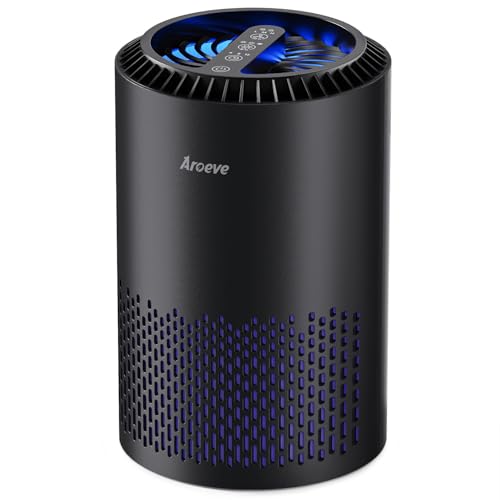
AROEVE MK01A Bedroom Purifier is a compact AROEVE purifier rather than a ToLife model, and its room coverage is much smaller than ToLife Large-Room Air Purifier. Its maker gives a 287-square-foot room rating, 360-degree air inlets, sleep mode, and a 22 dB noise figure; the filter is described for particles including smoke, pollen, dander, and hair. This is a better match for a smaller bedroom when the ToLife brand is not essential. Its limitation is reach: a room larger than its rating or an open-plan space may call for a higher-capacity unit.
Bottom line: Choose this for a smaller room if ToLife branding is not essential.
ToLife TZ-K2 Replacement Filter, 2-Pack

ToLife TZ-K2 Replacement Filter, 2-Pack is a ToLife replacement filter for the TZ-K2, not a complete purifier. Its maker describes three filtration stages, including a pre-filter for larger debris and activated carbon for household odors, and claims at least 99.97% capture for airborne particles 0.3 microns in size. Choose it when the model label on your purifier says TZ-K2 and you need replacement filters. The limitation is model-specific fit: unlike TZ-K1 Compatible Filter, 2-Pack, this is the TZ-K2 option, so it is not a general substitute for other ToLife purifier models.
Bottom line: Choose this for a ToLife TZ-K2 that needs replacement filters.
YARIKI P280 Air Purifier

YARIKI P280 Air Purifier is a different-brand complete purifier and its maker claims coverage up to 1,500 square feet, making it the largest coverage among these complete units. It also claims H13 filtration, a washable pre-filter, and 22 dB quiet sleep operation. This may suit buyers comparing large-room coverage who are open to a non-ToLife unit. Its limitation is that the area alone does not establish performance in every room; actual fit depends on room dimensions, ceiling height, and how much air circulation the space needs.
Bottom line: Consider this if you want a different-brand purifier with a larger stated coverage area.
How to size an air purifier for a room
For a useful starting point, choose a smoke CADR at least two-thirds of the room’s floor area when ceilings are 8 feet high. A 300-square-foot room therefore calls for about 200 CADR; taller ceilings or open doorways increase the air volume and can call for more capacity. CADR is a clean-air delivery measure, while a maker’s square-foot coverage figure may rely on a particular air-change assumption, so those numbers are not automatically interchangeable. Measure the room’s length and width, multiply them, and compare the result with the purifier’s coverage. For a room above the maker’s rating, choose a higher-rated unit or use more than one purifier.
How to choose between a purifier and a filter
A replacement filter cannot clean air by itself; it needs a compatible purifier to pull air through it. Identify the complete model number on the purifier’s label before choosing a replacement, since TZ-K1, K1 Plus, and TZ-K2 are distinct fit checks here. A HEPA-style filter captures particles, while activated carbon is used for gases and odors; carbon effectiveness depends on the amount and type of carbon. For a full-room device, compare room coverage and CADR rather than relying only on the word “large.” Never run a purifier without the filter configuration the manufacturer requires, because airflow and filtration depend on the installed parts.
What room coverage and CADR tell you
CADR measures the volume of filtered air delivered for smoke, dust, and pollen, and smoke is generally the smallest-particle category. For an 8-foot ceiling, the common two-thirds rule links smoke CADR to room area for about five air changes per hour; increase the target for higher ceilings or heavy particle sources. A coverage number in square feet cannot be compared fairly unless its assumed air-change rate and ceiling height are clear. Use the measurable rule: for an 8-foot room of 450 square feet, aim for smoke CADR around 300 or higher. In larger or connected spaces, the air purifier may not circulate evenly through every corner.
When to replace an air purifier filter
Many portable purifier filters need replacement about every 6 to 12 months, but actual intervals vary with filter design, run time, and particle load. Homes with pets, smoke, or dusty conditions can load a pre-filter faster; cleaning a washable pre-filter as directed can help keep airflow from being blocked. A filter reminder is a useful prompt, but it does not measure every household’s dust load. Do not wash a HEPA or carbon layer unless its manufacturer specifically says it is washable. Turn the purifier off before opening the filter compartment, and seat the replacement filter in the correct orientation before restarting the unit.
Frequently Asked Questions
How often should an air purifier run each day?
For ongoing particle removal, many households run a purifier continuously at a tolerable fan setting. At five air changes per hour, a room’s air volume is nominally processed once about every 12 minutes, though real rooms have mixing losses.
What size purifier works for a 300-square-foot room?
For an 8-foot ceiling and about five air changes per hour, target smoke CADR of roughly 200 or higher. A taller ceiling, open plan, or frequent smoke and dust sources calls for more capacity.
Does a HEPA filter remove household odors?
A HEPA filter captures particles but does not by itself remove most gases or odors. An activated-carbon layer can adsorb some odor compounds, and its effectiveness depends on the quantity and condition of the carbon.
Can I wash a HEPA air purifier filter?
Usually no: washing can damage the fine filter media, while washable pre-filters are designed to catch larger debris. Wash only a component the manufacturer identifies as washable, and let it dry fully before reinstalling.
Where should an air purifier sit in a room?
Leave roughly 6 to 12 inches of open space around the air intake and outlet when possible. Avoid wedging the unit behind furniture or curtains, which can restrict airflow and reduce circulation.