
Tommy Copper Bras for Women: 5 Options Compared

The Tommie Copper Zip Up Shoulder Support Bra is the closest match for women seeking a Tommy Copper bra, with a front zipper and shoulder support panels. Choose another style if you want adjustable cross-back straps, a racerback, or a bra intended for post-surgical wear.
A support bra uses its band, straps, and panels to hold the garment in place; fit and intended use help determine which design is right.
We earn a commission if you buy through links on this page. As an Amazon Associate I earn from qualifying purchases. Products are compared on manufacturer specifications, not hands-on testing.
- Best overall: Tommie Copper Zip Up Shoulder Support Bra – The only Tommie Copper option, with a zip front and shoulder support panels.
- Best for cross-back support: DELIMIRA Front Closure Posture Support Bra – Its adjustable front closure and X-shape back set it apart.
- Best for removable pads: WANAYOU Zip Front Racerback Bra – The racerback bra has removable cup pads and a front zipper.
| Product | Best for | Closure | Support design | Size shown | Shop |
|---|---|---|---|---|---|
| Tommie Copper Zip Up Shoulder Support Bra | Shoulder support | Front zipper | Shoulder panels | XL | Check Price on Amazon |
| DELIMIRA Front Closure Posture Support Bra | Adjustable cross-back | Front closure | X-shape back | 44D | Check Price on Amazon |
| WANAYOU Zip Front Racerback Bra | Removable cup pads | Front zipper | Racerback | L | Check Price on Amazon |
| BRABIC Zip Front Compression Bra | Post-procedure wear | Front zipper | Adjustable straps | S | Check Price on Amazon |
| Xcutting Full Coverage T-Shirt Bra | Full coverage | Rear closure | Wide straps | 2XL | Check Price on Amazon |
Tommy Copper Bras for Women and Alternatives
Compare the named Tommie Copper bra with related wireless and front-closure styles by their design and stated size.
Tommie Copper Zip Up Shoulder Support Bra

The Tommie Copper bra is the only option here with shoulder support panels and a named posture-support purpose. Its low-profile front zipper is designed for easier on-and-off, while ergonomic seaming and multi-layer panels are intended to support the upper back and shoulders without limiting mobility. The manufacturer says its 4D stretch compression fabric is designed for all-day comfort. The white bra is size XL. Its design focuses on shoulder support rather than removable pads or adjustable cross-back straps, so choose another style if those are your priority.
Bottom line: Choose this style if shoulder panels and a front zip are your priorities.
DELIMIRA Front Closure Posture Support Bra
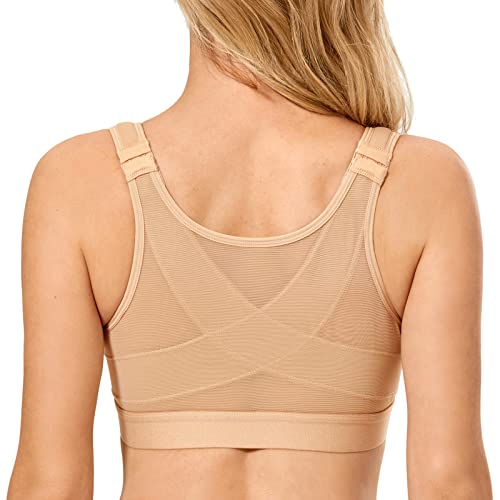
The DELIMIRA bra differs from the zip-front options with an adjustable front closure and X-shape back. It is wireless and non-padded, with thickened lining, an elastic underband, and wide padded adjustable straps. The manufacturer positions the back design for posture support; the adjustable straps and closure also let the wearer change the fit. This taupe-tan style is size 44D. It does not have a zipper or removable pads, so it is a less direct match for someone specifically seeking those features.
Bottom line: Choose it if adjustable cross-back support matters more than a zipper.
WANAYOU Zip Front Racerback Bra

The WANAYOU bra stands out for its racerback and removable pads, unlike the shoulder-panel design of the Tommie Copper option. It has a front zipper with a self-locking feature, an inner fabric layer over the zipper, and a 92% nylon and 8% spandex fabric blend. The brand describes it as a medium-support style for activity and post-surgery use. This three-pack includes black, gray, and flesh-colored bras in size Large. The racerback shape may not suit someone who prefers conventional shoulder straps.
Bottom line: Choose it if a racerback and removable pads suit your needs.
BRABIC Zip Front Compression Bra

The BRABIC bra is designed for post-procedure wear and differs from the other zip-front option with adjustable straps and double-layered cups. Its fabric is 84% cotton and 16% spandex, and the white style is size Small. The manufacturer describes it for post-surgical support as well as sleep, everyday wear, and activity. Its post-procedure purpose makes it a different choice from a general shoulder support bra. For recovery, confirm with your care team that a compression garment is appropriate and that this style meets their guidance.
Bottom line: Choose it only when its post-procedure design fits your care plan.
Xcutting Full Coverage T-Shirt Bra

The Xcutting bra is the only rear-closure style here, with a four-row, five-button closure rather than a front zip. It has a wireless U-back, wide adjustable straps, and semi-fixed padding; its straps can also be removed. The black bra is size 2XL. These features suit someone seeking a full-coverage everyday style, but it lacks the front access of the Tommie Copper and other zip-front bras. Choose it for its adjustable rear closure and coverage, not for a shoulder-panel or posture-support design.
Bottom line: Choose it if you want full coverage and do not need a front closure.
How to choose a support bra
Start with the feature that matters most: closure, back shape, coverage, or intended use. A front closure can be easier to reach than a rear hook closure, while a racerback joins the straps across the upper back. A bra’s band provides much of its support, so it should sit level around the torso rather than ride up. Cups should contain breast tissue without gaps or spillage, and straps should stay in place without digging. If you are between sizes, compare the brand’s sizing guidance and try nearby sizes when possible; size labels are not perfectly consistent between brands. For recovery garments, use the clinician’s instructions rather than selecting compression by appearance alone.
Front-closure, racerback, and posture designs compared
Front-closure bras fasten at the front, but the closure alone does not determine support or fit. Zippers, adjustable closures, and rear hook closures each work differently. Racerback straps meet or cross between the shoulder blades, which can reduce strap slippage for some wearers. Posture-support bras use paneling or a structured back; they are not interchangeable with a medical brace. The table groups common design features with the situations they may suit, rather than ranking one type for every wearer.
| Design | Useful when | Fit point |
|---|---|---|
| Front zipper | You prefer front access | Check that the zipper lies smoothly |
| Racerback | Straps tend to slip | Check for comfortable shoulder movement |
| Adjustable cross-back | You want to alter strap placement | Set straps evenly |
| Rear hook closure | You prefer adjustable band fastening | Fasten without pulling the band upward |
Getting the right bra size and fit
A good fit begins with a snug, level band and cups that lie smoothly without gaping or cutting in. Measure around the rib cage directly under the bust and around the fullest part of the bust while wearing a lightly lined, non-compressive bra; use the brand’s size chart because cup and band sizing can vary. Recheck the fit when the band rides up, the straps need constant tightening, or the cups wrinkle. The sizes here range from Small to 2XL and include a 44D, but size labels alone do not establish fit across different brands. When ordering, confirm the size chart and return or exchange terms before choosing.
When compression bras need extra care
Post-surgical compression is a care decision, not simply a preference for a snug bra. The amount and duration of compression depend on the procedure and clinician’s instructions; ask the treating team before substituting an everyday support bra. For regular wear, a band that restricts breathing, causes persistent discomfort, or leaves deep marks is too tight. Wash bras according to their care label, and fasten hooks before washing to reduce snagging; air-drying helps avoid heat stress on elastic fibers. Replace a bra when the band no longer stays level or the elastic has lost recovery, since worn-out elastic can change the fit and support.
Frequently Asked Questions
How should a support bra band fit?
A support bra band should feel snug and stay level around the torso without restricting breathing. If it rides up in back, try a smaller band or a different cut.
How do I measure for a bra at home?
Measure your rib cage just below the bust and the fullest part of the bust with a soft tape, keeping it level. Use the specific brand’s chart because sizing can vary.
Are front-zip bras easier to put on?
A front-zip closure can be easier to reach than a rear closure, but comfort depends on the garment’s fit and zipper placement. Check that the zipper lies flat and does not press uncomfortably.
Can I wear a compression bra after surgery?
Only if the treating clinician recommends that type of garment for your procedure. Ask about the required compression and wear schedule before choosing a bra.
When should I replace an everyday bra?
Replace a bra when its band stretches enough to ride up or its elastic no longer returns to shape. A level, snug band is important because the band provides much of the garment’s support.