
Torch L7T Spark Plug: Fit and Specs Compared

TORCH L7T is the direct choice for someone seeking a Torch L7T plug, with a 14 mm thread and 9.5 mm reach as the key fit measurements. Choose another option if a multi-plug pack or broader 2-stroke engine range better matches your needs.
An L7T is a spark plug format used in small engines; confirm thread dimensions and the engine maker’s required plug before installation.
We earn a commission if you buy through links on this page. As an Amazon Associate I earn from qualifying purchases. Products are compared on manufacturer specifications, not hands-on testing.
- Best overall: TORCH L7T – Direct Torch L7T option with a 14 mm thread, 9.5 mm reach, and 19 mm hex.
- Best for two plugs: ANPTGHT L7T 2-Pack – The package contains two plugs and is aimed at several 33cc–49cc 2-stroke engines.
- Best for three plugs: L7T 3-Pack – Includes three plugs and gives a 0.7 mm gap measurement.
| Product | Best for | Thread size and reach | Hex size | Shop |
|---|---|---|---|---|
| TORCH L7T | Direct Torch match | 14 mm × 9.5 mm | 19 mm | Check Price on Amazon |
| ANPTGHT L7T 2-Pack | Two-plug pack | — | — | Check Price on Amazon |
| L7T 3-Pack | Three-plug pack | 14 mm × 9.5 mm | 19 mm | Check Price on Amazon |
Torch L7T Spark Plugs
Compare the plug dimensions, stated engine range, and pack format before choosing a match.
TORCH L7T

TORCH L7T is the direct Torch-branded L7T option, with dimensions given for checking against the engine’s required plug. It lists a 14 mm thread diameter, 9.5 mm reach, and 19 mm hex, and names several replacement plug codes including Champion CJ7Y and NGK BPM7A. Those cross-references can help narrow a match, but the engine’s specified plug and measurements should agree before installation.
The product name also associates it with chainsaw applications. Its package count is not clear from the fields, so choose it for the Torch L7T identity and measured fit rather than assuming a particular quantity.
Bottom line: Pick this when you want the Torch-branded L7T and its dimensions match your engine.
ANPTGHT L7T 2-Pack
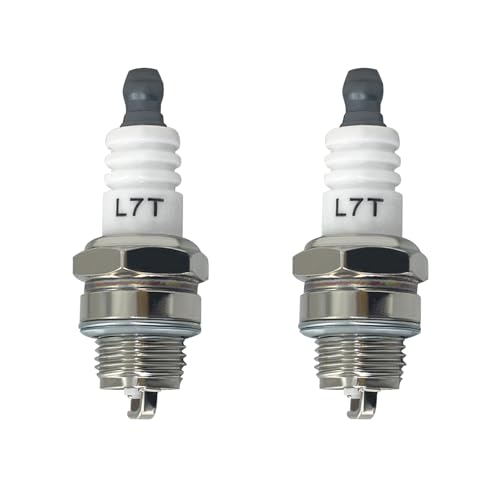
ANPTGHT L7T 2-Pack stands apart with a two-plug package and compatibility aimed at 33cc–49cc 2-stroke engines. The product names replacement codes including BPM7A, BM6A, RCJ6Y, RCJ7Y, and WSR5F, and describes uses such as chainsaws, trimmers, blowers, and mini bikes. The maker claims a yttrium/copper core and corrosion resistance, but those claims do not replace a dimensional fit check.
Choose this option when the engine falls within its range and you want two plugs. It does not give thread and hex measurements here, so confirm those against the old plug or engine specification before buying.
Bottom line: Choose this if a two-plug pack suits your engine and its dimensions are confirmed.
L7T 3-Pack

L7T 3-Pack is the only option here that gives a spark gap measurement, 0.7 mm, alongside a three-plug pack. Its thread is 14 mm in diameter with 9.5 mm reach, and its hex is 19 mm. It lists use in 36cc–52cc 2-stroke small engines and cross-references NGK BPMR7A and BPM7A as well as Champion RCJ6Y and RCJ7Y.
This range and pack quantity make it a practical match to consider for a compatible trimmer, blower, chainsaw, or mower. The gap may not be the engine’s required setting, so compare it with the engine specification before fitting.
Bottom line: Choose this for a compatible small engine when three plugs and a gap are useful.
How to choose an L7T spark plug
Start with the engine maker’s specified plug code, then compare thread diameter, reach, and seat style; matching the name alone is not enough. The Torch option and the three-pack give a 14 mm thread and 9.5 mm reach, while the two-pack’s matching dimensions need confirmation before purchase. Hex size affects tool access, not whether the plug seals correctly. A practical rule is to reject any plug whose reach differs from the specified reach: a plug that protrudes too far can contact engine parts, while a shorter one can sit too far from the chamber. Cross-reference codes are useful only when the engine specification agrees.
Thread reach, gap, and installation
Reach is the length of threaded section that enters the cylinder head; the 9.5 mm reach is about 0.37 inch. A gap of 0.7 mm is about 0.028 inch, but small-engine gap settings vary by engine and ignition system. Use the exact engine specification rather than treating a product’s gap as universal. Install a plug only in a cool engine, start the threads by hand to avoid cross-threading the aluminum head, and tighten to the engine maker’s torque guidance. Keep the plug boot disconnected while servicing, and do not force a plug that binds before seating.
Which L7T option fits your need
Pack quantity and documented dimensions separate these choices more clearly than their shared L7T name. The table pairs each option with the most useful deciding factor; it does not replace checking the engine’s specified plug code and physical fit.
| Option | Useful distinction | Best fit check |
|---|---|---|
| TORCH L7T | Torch brand; dimensions given | 14 mm thread, 9.5 mm reach |
| ANPTGHT L7T 2-Pack | Two plugs; 33cc–49cc range | Confirm thread and hex |
| L7T 3-Pack | Three plugs; 0.7 mm gap given | Confirm engine gap setting |
Common small-engine spark plug mistakes
The most common fit mistake is matching only the plug code while overlooking reach, thread diameter, seat type, or required gap. A 14 mm thread does not establish that two plugs are interchangeable if their seats or reaches differ. Another mistake is assuming a gap measurement applies to every engine: use a wire-style gap tool and adjust only when the engine specification calls for it. Avoid dropping a plug, since a bent electrode can alter the gap, and keep oil and debris out of the plug opening during removal. Replace a damaged boot or cracked ceramic rather than continuing to run the engine with a compromised ignition connection.
Frequently Asked Questions
What gap should an L7T spark plug use?
One option gives a 0.7 mm gap, approximately 0.028 inch, but that is not a universal setting. Small-engine gaps vary, so use the exact engine specification.
Can an L7T replace a BPM7A plug?
The Torch and three-pack specifications name BPM7A as a replacement reference. Confirm thread reach, seat type, and the engine maker’s specified plug before substituting.
How often should a small-engine spark plug be changed?
Many small engines use an annual inspection interval, with replacement commonly tied to the engine maker’s hour schedule or visible wear. Heavy use, fouling, or damaged electrodes can warrant attention sooner.
Should a spark plug be tightened with the engine hot?
No; install or remove a plug with the engine cool to reduce burn risk and protect the cylinder-head threads. Start threading by hand so a plug that does not turn freely is not forced.