
Toyota DOT 3 Brake Fluid: OEM and Alternatives Compared

Toyota Genuine Brake Fluid 00475-1BF03 is the direct match for Toyota DOT 3 brake fluid because it is the Toyota OEM formula and meets DOT 3 performance specifications. Choose another option if you need a larger bottle or a fluid labeled for multiple DOT grades, but match the fluid to your vehicle’s manual.
We earn a commission if you buy through links on this page. As an Amazon Associate I earn from qualifying purchases. Products are compared on manufacturer specifications, not hands-on testing.
- Best overall: Toyota Genuine Brake Fluid 00475-1BF03 – Toyota OEM brake fluid that meets DOT 3 performance specifications.
- Best for a 32-ounce bottle: Valvoline DOT 3 Synthetic Brake Fluid – A 32-fluid-ounce synthetic formula labeled for DOT 3 systems.
- Best for multi-grade compatibility: Bosch ESI6 Low Viscosity Brake Fluid – Labeled as a DOT 3, DOT 4, and DOT 5.1 replacement, but not for DOT 5.
| Product | Best for | DOT grade | Package size | Compatibility | Shop |
|---|---|---|---|---|---|
| Toyota Genuine Brake Fluid 00475-1BF03 | Toyota OEM match | DOT 3 | — | Brake and hydraulic clutch systems | Check Price on Amazon |
| Valvoline DOT 3 Synthetic Brake Fluid | Larger DOT 3 bottle | DOT 3 | 32 fl oz | DOT 3 systems | Check Price on Amazon |
| Prestone AS401 DOT 3 Synthetic Brake Fluid | ABS disc or drum | DOT 3 | 32 oz | ABS, disc, and drum systems | Check Price on Amazon |
| Bosch ESI6 Low Viscosity Brake Fluid | Multi-grade replacement | DOT 3/4/5.1 | 1 qt | DOT 3, DOT 4, or DOT 5.1 systems | Check Price on Amazon |
Toyota DOT 3 Brake Fluid Options
Compare the Toyota OEM fluid with alternatives by grade, package size, and stated compatibility.
Toyota Genuine Brake Fluid 00475-1BF03

Toyota Genuine Brake Fluid 00475-1BF03 is the Toyota-specific choice in this group, with a formula developed for brake and hydraulic clutch systems. Toyota says it meets or exceeds DOT 3 performance specifications and is intended for use in the master brake cylinder. The product also emphasizes metal-component protection and corrosion and leakage prevention. Choose it when you want a Toyota-branded DOT 3 fluid rather than a broadly marketed alternative.
Bottom line: Pick this when Toyota OEM branding and a DOT 3 specification are your priorities.
Valvoline DOT 3 Synthetic Brake Fluid

Valvoline DOT 3 Synthetic Brake Fluid offers a 32-fluid-ounce bottle, a larger container than the 12-ounce amount named for the Toyota option. Valvoline describes its synthetic formula as exceeding DOT 3 requirements and providing corrosion protection and resistance to moisture absorption. That makes it a straightforward alternative when the vehicle calls for DOT 3 and you prefer this larger size. The product is not the Toyota OEM fluid, so buyers seeking the Toyota-branded formulation should choose Toyota Genuine Brake Fluid 00475-1BF03 instead. Use only fluid from a sealed container; brake fluid absorbs moisture after opening.
Bottom line: Choose this for a DOT 3 system when a 32-fluid-ounce bottle suits the job.
Prestone AS401 DOT 3 Synthetic Brake Fluid

Prestone AS401 DOT 3 Synthetic Brake Fluid stands out for its suitability for ABS, disc, and drum brake systems, along with a 32-ounce container. Prestone says its wet and dry boiling points exceed minimum government standards, and its polyglycol ether blend is intended to keep hot brake systems from producing vapor. This is a non-Toyota alternative for vehicles whose manuals specify DOT 3. It does not carry the Toyota OEM identity, so it is less suitable for a buyer specifically seeking Toyota-branded fluid. Keep the cap closed between uses to limit moisture uptake.
Bottom line: Choose this when the vehicle calls for DOT 3 and the ABS, disc, or drum compatibility fits.
Bosch ESI6 Low Viscosity Brake Fluid
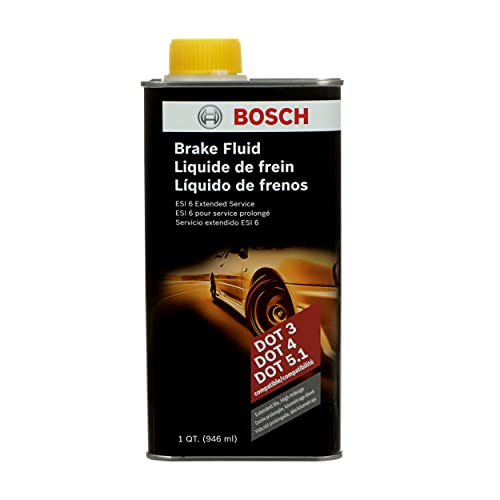
Bosch ESI6 Low Viscosity Brake Fluid is the multi-grade option, labeled as a replacement for systems designed for DOT 3, DOT 4, or DOT 5.1 fluid. Bosch gives a wet boiling point of 365°F and describes the formula as low viscosity with an extended replacement interval. This differs from the single-grade DOT 3 alternatives and may suit a vehicle whose manual permits one of the grades. It is explicitly not compatible with DOT 5, which is a different silicone-based fluid. Check the vehicle manual for the required grade before choosing a multi-grade replacement.
Bottom line: Choose this only when the vehicle specifies DOT 3, DOT 4, or DOT 5.1 and not DOT 5.
How to Choose Toyota DOT 3 Brake Fluid
Choose fluid by the exact DOT grade in the vehicle manual, then decide whether Toyota OEM branding or a different package size matters more. DOT 3 glycol-based fluid has federal minimum boiling points of 401°F dry and 284°F wet; wet performance reflects moisture absorbed over time. Higher boiling claims do not change the grade your vehicle calls for. A measurable decision rule is simple: if the manual says DOT 3, select a product expressly labeled DOT 3 unless the manual also approves another grade. Do not assume an alternative brake fluid is right because it fits the reservoir or is marketed for modern systems. Brake fluid can damage painted surfaces, so protect bodywork and clean spills promptly according to the vehicle manual.
DOT 3, DOT 4, DOT 5.1, and DOT 5 Differences
DOT 3, DOT 4, and DOT 5.1 are glycol-based grades, while DOT 5 is silicone-based and must not be mixed with them. DOT 4 and DOT 5.1 have higher minimum boiling-point thresholds than DOT 3, but a higher grade is not automatically an approved substitute for every vehicle. Use the grade named in the manual; only consider another grade when the manufacturer permits it. The table summarizes the practical distinction when selecting among brake fluid types.
| Fluid type | Base family | Selection rule |
|---|---|---|
| DOT 3 | Glycol-based | Use when specified |
| DOT 4 | Glycol-based | Use if vehicle permits |
| DOT 5.1 | Glycol-based | Use if vehicle permits |
| DOT 5 | Silicone-based | Do not mix with glycol grades |
When to Replace Brake Fluid
Brake fluid service intervals are vehicle-specific; many manufacturers set a time-based interval around every two to three years, while others specify inspection or a different schedule. Follow the vehicle’s maintenance schedule rather than waiting for a change in pedal feel, because moisture can lower a glycol fluid’s boiling point without an obvious visual warning. Some shops measure moisture or boiling point, but the acceptable limit depends on the vehicle and service procedure. A brake fluid flush replaces old fluid throughout the hydraulic circuit; topping up the reservoir does not. If the fluid level is low, look for a leak or worn components instead of treating a refill as a complete repair.
Brake Fluid Handling and Mixing Mistakes
Brake fluid should stay in a clean, tightly sealed container because glycol formulas absorb moisture from air, which can reduce boiling performance. Use a fresh, unopened container for service and do not pour drained fluid back into the system. Keep fluid off paint, and avoid contaminating the reservoir with dirt, oil, or petroleum products; contamination can damage hydraulic seals. Never substitute DOT 5 silicone fluid for DOT 3, DOT 4, or DOT 5.1, and never rely on a fluid grade solely because its label lists broad compatibility. For brake work involving air in the lines, use the vehicle’s specified bleeding sequence and proper equipment.
Frequently Asked Questions
Can DOT 4 replace DOT 3 in a Toyota?
Only if the specific Toyota manual permits DOT 4; otherwise use the specified DOT 3 grade. Both are glycol-based, but the vehicle’s approved fluid grade is the deciding condition.
Can DOT 3 and DOT 5 brake fluid be mixed?
No. DOT 3 is glycol-based and DOT 5 is silicone-based, so they should not be mixed. DOT 5.1 is glycol-based and is a different grade from DOT 5.
How often should Toyota brake fluid be changed?
Use the maintenance interval for the specific Toyota model; many manufacturers use roughly two- to three-year intervals, but schedules vary. Time matters because glycol fluid absorbs moisture even when the vehicle is driven little.
Why does brake fluid need to stay sealed?
Glycol-based brake fluid absorbs moisture from air, and moisture can lower its boiling performance. Keep the cap tightly closed and use fresh fluid during service.
Does topping off the brake reservoir replace old fluid?
No. A top-off only raises the reservoir level; it does not exchange fluid throughout the hydraulic circuit. A low level can indicate a leak or component wear, so determine the cause before simply adding fluid.