
True Fit Posture Corrector: 5 Models Compared

For an upper-back posture brace, ComfyBrace Upper-Back Posture Corrector is the closest match to the True Fit posture corrector search because it adjusts for 30- to 43-inch chests. Copper Fit Max Back Support, L/XL is a different, full-back support style for shoppers who want broader coverage and waist-based sizing.
Posture correctors use straps or panels to cue a more upright position; they do not replace diagnosis or treatment for persistent pain. Choose by the body measurement and coverage area that match your needs.
We earn a commission if you buy through links on this page. As an Amazon Associate I earn from qualifying purchases. Products are compared on manufacturer specifications, not hands-on testing.
- Best overall: ComfyBrace Upper-Back Posture Corrector – Adjustable upper-back design with a chest fit of 30 to 43 inches.
- Best for full-back coverage: Copper Fit Max Back Support, L/XL – Reinforced panels and a waist sizing range of 34 to 48 inches for L/XL.
- Best for flexible support: Fit Geno Upper-Back Brace, Medium – Four fiberglass stays combine upper-back support with flexibility for movement.
| Product | Best for | Coverage | Fit measurement | Support structure | Shop |
|---|---|---|---|---|---|
| ComfyBrace Upper-Back Posture Corrector | Chest-adjustable fit | Upper back | 30–43 in chest | Adjustable straps | Check Price on Amazon |
| sundpik Adjustable Upper-Back Brace | Daily posture cue | Upper back | — | Adjustable brace | Check Price on Amazon |
| BraceTop Full-Back Posture Brace, L | Added lumbar support | Full back | L size | Removable support strip | Check Price on Amazon |
| Copper Fit Max Back Support, L/XL | Broader back coverage | Full back | 34–48 in waist | Reinforced panels | Check Price on Amazon |
| Fit Geno Upper-Back Brace, Medium | Flexible stay support | Upper back | Medium | Four fiberglass stays | Check Price on Amazon |
True fit posture correctors
Compare coverage and sizing first, then choose the support style that suits your daily routine.
ComfyBrace Upper-Back Posture Corrector

Among these upper-back braces, ComfyBrace is the one with an explicit chest measurement range: 30 to 43 inches. The adjustable, breathable design is intended to be worn under clothing, and the maker recommends starting with 5 to 10 minutes of wear. That gradual start may suit someone new to posture support who wants a short cue during desk work or standing tasks. The fit range is the key limit: shoppers outside it should choose a model with a matching body measurement rather than assuming the straps will accommodate them.
Bottom line: Choose this if your chest measures 30 to 43 inches and you want adjustable upper-back support.
sundpik Adjustable Upper-Back Brace

sundpik differs from the other upper-back options by suggesting 1 to 2 hours of daily wear, rather than a brief starting session. Its adjustable brace is intended to encourage the shoulders to open during sitting, standing, and walking, making it relevant to shoppers seeking a daily posture reminder. The maker also describes breathable materials. No body measurement range accompanies this model, so fit is harder to judge in advance; prioritize a returnable fit check if exact chest sizing is important to you.
Bottom line: Choose this for a daily posture cue if you can confirm the brace fits your torso.
BraceTop Full-Back Posture Brace, L

BraceTop adds a support strip and storage bag, setting it apart from the simpler shoulder-strap designs. The L-size model is described as full-back support, with a withdrawable strip that can be removed for pressure adjustment or cleaning. That broader construction may suit someone looking beyond a shoulder cue toward support across the back and waist. The size is only L, however, so it is a less flexible choice for anyone whose measurements do not align with that size; check fit before relying on it for routine wear.
Bottom line: Choose this if you want a full-back style with a removable support strip.
Copper Fit Max Back Support, L/XL
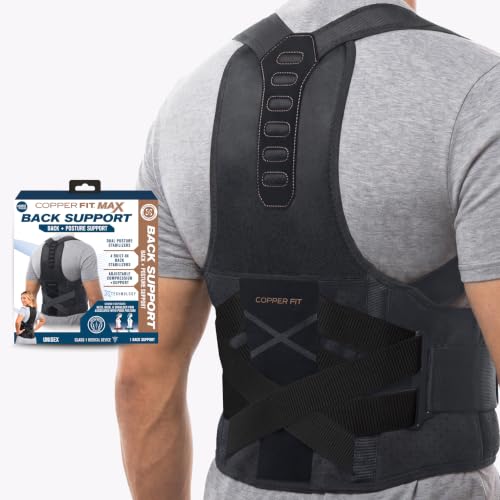
Copper Fit Max is the only option here with a waist-based fit chart and reinforced panels for full-back coverage. Its L/XL size fits a 34- to 48-inch waist measured at belly-button level, and the maker recommends sizing up when between sizes. That makes it a more measurable choice for shoppers who prefer a broader support area rather than shoulder straps alone. The chart describes waist sizes, not chest sizes, so it may not be the right match when an upper-back brace with chest-specific sizing is the priority.
Bottom line: Choose this for full-back coverage if your waist is 34 to 48 inches.
Fit Geno Upper-Back Brace, Medium

Fit Geno stands out for its four fiberglass support stays, which are intended to stabilize the upper-back while allowing movement. The maker frames the brace as a posture-awareness aid for desk work, studying, driving, and other light daily activities rather than rigid correction. That flexible approach may appeal to people who want support without a stiff full-back panel. The available model here is Medium, and no body measurement range is given, so it is not as easy to match precisely as a brace with a numerical fit chart.
Bottom line: Choose this if you want flexible upper-back support with stays for light daily activity.
How to choose a posture corrector
Choose a posture corrector by matching its coverage and measurement method to your body and intended use. Upper-back braces generally use shoulder straps to cue the shoulders back; full-back supports add panels or stays that cover more of the torso. A cue should allow normal breathing and arm movement, not pull the shoulders into a painful position. Start with short wear periods and increase only if the brace stays comfortable; the maker’s 5-to-10-minute starting recommendation for one model is a cautious example, not a universal schedule. A simple decision rule: if you want upper-back cueing and can measure your chest, prefer a brace with a chest range; if you need broader coverage, compare waist sizing and panel placement.
Posture corrector sizing and fit
Measure the body area named by the sizing guide, because chest and waist measurements are not interchangeable. One upper-back brace here gives a 30- to 43-inch chest range, while the full-back L/XL option uses a 34- to 48-inch waist measured at belly-button level. Wear a thin shirt for the measurement and keep the tape level without pulling it tight. A brace that is too small can restrict movement or breathing; one that is too loose may shift instead of providing a useful cue. When a size chart uses only a letter size, do not infer a measurement range from the letter—check the actual fit before wearing it for extended periods.
Upper-back braces and full-back supports
Upper-back posture braces and full-back supports differ mainly in coverage and structure. Shoulder-strap models cue shoulder positioning; models with broader panels or stays extend support down the torso. Stays may provide more structure, while flexible straps are generally less bulky under clothing. The table separates these types by the kind of support they provide, not by a promise of pain relief.
| Type | Typical construction | Useful when |
|---|---|---|
| Upper-back brace | Shoulder straps | You want a shoulder-position cue |
| Full-back support | Panels or stays | You want coverage beyond the shoulders |
Choose the least restrictive style that provides the coverage you actually want, and confirm that it allows comfortable breathing and ordinary movement.
Safe wear and common mistakes
A posture brace should cue position, not force the body into a painful posture. Use a short initial session, then stop if you notice numbness, tingling, skin irritation, or restricted breathing; those are reasons to remove it and reassess the fit. A common mistake is tightening straps until the shoulders are pinned back, which can make normal movement uncomfortable. Another is wearing a brace all day as a substitute for movement: change positions regularly and take breaks from prolonged sitting. Persistent or worsening back, neck, or shoulder pain warrants guidance from a qualified clinician, especially before using a brace as part of a treatment plan.
Frequently Asked Questions
How long should I wear a posture corrector each day?
Start with a short session, such as 5 to 10 minutes, and increase gradually only if the brace remains comfortable. Some makers suggest longer daily wear, but a tight or painful fit is a reason to stop rather than extend the session.
Should a posture corrector feel tight around my shoulders?
A posture corrector should feel secure without restricting breathing or arm movement. Loosen or remove it if it causes numbness, tingling, pain, or skin irritation.
Can I wear a posture brace under my clothes?
A low-bulk strap design may fit under clothing, but clothing thickness can affect comfort and strap placement. Check that the brace does not rub or shift when you move.
How do I measure for a posture corrector?
Use the body area named by the sizing chart: chest for a chest-fit brace and waist for a waist-fit support. Keep the tape level and snug but not tight; a 34- to 48-inch waist range, for example, is not equivalent to a chest range.
Can posture correctors fix back pain?
A brace may provide a posture cue, but it should not be treated as a cure for back pain. Seek clinical advice for persistent or worsening pain, and remove the brace if it increases discomfort.