
Tuna Fish Can Strainers: Compare Fit and Materials

For a standard can and a dishwasher-safe metal design, the 3.15-inch stainless steel press strainer is the clearest match for most shoppers. A can strainer presses over canned food to drain liquid through perforations; choose a two-pack or a plastic option if those fit your can and routine better.
The product named in the search is not identified as a distinct brand or model among these options, so compare the sizes, materials and pack counts before choosing.
We earn a commission if you buy through links on this page. As an Amazon Associate I earn from qualifying purchases. Products are compared on manufacturer specifications, not hands-on testing.
- Best overall: 304 Stainless Steel Tuna Strainer – Its 3.15-inch diameter and dishwasher-safe 304 stainless steel match standard-can use.
- Best for two steel strainers: Patelai 2-Piece Stainless Steel Strainers – The set includes two 304 stainless steel strainers and gives a size of 4.5 by 3.7 inches.
- Best for BPA-free plastic: Two-Pack BPA-Free Plastic Can Strainers – This two-pack uses BPA-free plastic and lists a 3.12-inch bottom diameter.
| Product | Best for | Material | Size | Pack count | Shop |
|---|---|---|---|---|---|
| 304 Stainless Steel Tuna Strainer | Standard cans | 304 stainless steel | 3.15-in diameter | 1 | Check Price on Amazon |
| Patelai 2-Piece Stainless Steel Strainers | Two-piece set | 304 stainless steel | 4.5 × 3.7 × 1 in | 2 | Check Price on Amazon |
| Two-Pack BPA-Free Plastic Can Strainers | Plastic pair | BPA-free plastic | 3.12-in bottom diameter | 2 | Check Price on Amazon |
| Bcautay Stainless Steel Can Strainer | Multi-use draining | Stainless steel | 4.7 × 3.6 × 1 in | 1 | Check Price on Amazon |
Tuna Fish Can Strainers Compared
Compare material, stated dimensions and quantity to find a strainer suited to your can and kitchen routine.
304 Stainless Steel Tuna Strainer

The 3.15-inch diameter distinguishes this single 304 stainless steel press strainer, sized for most standard cans. The maker says it has 97 holes, non-slip handles and is dishwasher safe, and describes pressing it into the can to drain liquid while keeping hands away from the contents. It suits shoppers who want metal and straightforward cleanup. Its single-piece quantity is less useful for households that want a spare or need to strain two cans at once; confirm the can opening diameter if your can is not standard.
Bottom line: Pick this for a single stainless steel press strainer sized for most standard cans.
Patelai 2-Piece Stainless Steel Strainers
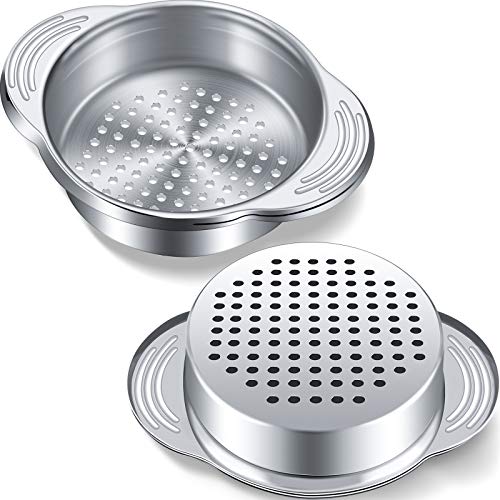
The two-piece count sets this 304 stainless steel option apart for anyone who wants a spare or needs to drain separate cans. Each strainer measures 4.5 by 3.7 by 1 inch, and the maker says it suits most regular-size and wide-neck canned tuna. Its 97-hole base and two handles support a press-down draining method similar to other metal can strainers. The larger stated dimensions may suit wider openings, but measure the can first if storage space is tight or if you need a compact strainer.
Bottom line: Choose this set if you want two stainless strainers and wider-can compatibility.
Two-Pack BPA-Free Plastic Can Strainers
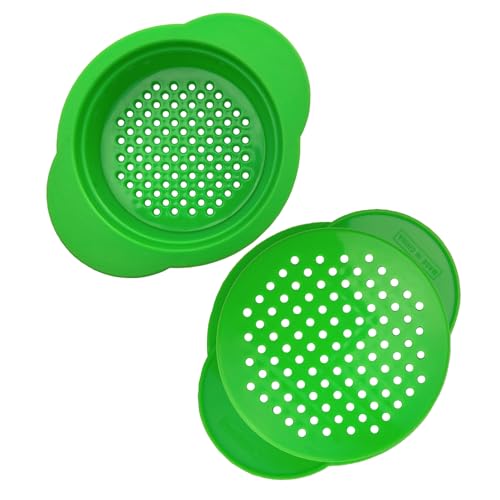
The BPA-free plastic construction distinguishes this two-pack from the metal strainers. Each strainer has a 3.12-inch bottom diameter, a 3.12-inch upper opening and a 3-inch lower opening; the maker says the stepped shape fits most standard cans. Its one-piece molded body avoids assembly, and the maker says it is dishwasher safe. This suits shoppers who prefer lightweight plastic and want two strainers. The plastic material is the tradeoff for anyone specifically seeking stainless steel.
Bottom line: Choose this if you prefer BPA-free plastic and want a pair for standard cans.
Bcautay Stainless Steel Can Strainer

The three described use methods distinguish this stainless steel press strainer: the maker says it can be used directly as a sieve over a container as well as pressed onto a can. It measures 4.7 by 3.6 by 1 inch and has two non-slip handles and 97 round holes. The maker also says it is dishwasher safe. Its broader stated dimensions may suit a buyer wanting a strainer for more than can pressing, while the size could be less convenient for compact drawer storage than a smaller-diameter option.
Bottom line: Pick this if you want a metal strainer described for both can pressing and sieve use.
How to Choose a Tuna Fish Can Strainer
Start with can opening diameter, then choose material and pack quantity. 304 Stainless Steel Tuna Strainer states a 3.15-inch diameter, while Two-Pack BPA-Free Plastic Can Strainers gives a 3.12-inch bottom diameter; even a small difference can affect whether a press strainer seats securely. A press style lets you hold the strainer against the can while tipping out liquid, so a firm grip and perforated base matter. Stainless steel suits shoppers prioritizing metal construction, while BPA-free plastic is an alternative for buyers who prefer that material. If you drain cans often, a two-piece set gives a spare; if you usually drain one can, a single strainer may be enough.
Can Size and Strainer Fit
Measure the can opening rather than relying only on the word “standard.” Many tuna cans are about 3 inches across, but can shapes and opening rims differ, so match the press strainer’s lower diameter to the opening. A step or rim can help a strainer sit on a can, but a mismatch can leave it unstable when inverted. Two-Pack BPA-Free Plastic Can Strainers lists a 3-inch lower opening and 3.12-inch upper and bottom diameters; Patelai 2-Piece Stainless Steel Strainers is said by its maker to suit regular and wide-neck cans. If the opening is wider than the press area, use a separate sieve over a bowl instead of forcing the strainer to fit.
Stainless Steel and Plastic Compared
Stainless steel and plastic suit different handling preferences, and neither material alone guarantees a better fit. Stainless steel resists many kitchen odors and tolerates high temperatures, while plastic is lighter and avoids metal contact; dishwasher suitability still depends on the specific strainer. For canned fish liquid, perforations should retain flakes while allowing oil or water to pass. The metal options describe 97-hole bases, while Two-Pack BPA-Free Plastic Can Strainers emphasizes a one-piece molded body. Use a stable bowl or sink and keep fingers clear of the can rim, which can be sharp after opening.
The table maps common needs to a useful first check.
| Need | Check first |
|---|---|
| Press onto a standard tuna can | Opening diameter against the strainer’s lower diameter |
| Drain wider-neck cans | Measure the can and verify the usable press width |
| Use as a separate sieve | Whether the strainer rests over a bowl |
| Dishwasher cleanup | Product-specific dishwasher suitability |
Safe Draining and Cleanup
Open cans carefully because the lid edge can cut skin, and do not grip the sharp rim while pressing or turning the can. Keep the strainer seated with both handles, tip liquid away from your body, and drain over a sink or a bowl that cannot tip. Oil from tuna can make plastic and metal surfaces slippery, so wash residue off promptly rather than leaving the strainer in a crowded sink. Dishwasher-safe claims apply only where the maker says so; for other strainers, hand washing avoids guessing about heat tolerance. Dry metal strainers before storing them to limit trapped moisture around perforations and handle joints.
Frequently Asked Questions
How do you use a tuna can strainer?
Place the strainer over the can opening and hold its handles firmly while tipping the can to drain over a sink or bowl. Keep fingers away from the cut can rim, which can be sharp.
Will a can strainer fit every tuna can?
No, can diameters and rim shapes vary, so compare the lower press diameter with the can opening. A difference of even a few tenths of an inch can make a press-on fit loose or difficult.
Can I strain tuna without a press-on strainer?
Yes, hold the can lid against the contents and tip it slowly over a sink, or pour the contents into a fine sieve set over a bowl. A separate sieve is more useful when the can opening is unusually wide or irregular.
Should I rinse tuna before using a can strainer?
Rinsing is optional and depends on the recipe; draining alone removes free liquid without washing away the surface flavor. If rinsing, use a sieve over a bowl and avoid splashing oily liquid.
How should I clean a tuna can strainer?
Rinse away oily residue soon after use, then wash with dish soap or use a dishwasher only when the specific strainer is marked dishwasher safe. Let a metal strainer dry fully before storing it.