
Two-Part Epoxy Putty for Metal: 5 Options Compared

For filling holes in metal, Steel-Reinforced Epoxy Putty, 200 g is the clearest fit because it is steel-reinforced and maker-rated for temperatures from -58°F to 266°F. Choose a different putty if you need a smaller stick, machinability after cure, or a larger container for broader projects.
Two-part epoxy putty combines two components that harden into a solid filler; surface preparation and complete mixing matter as much as the putty choice.
We earn a commission if you buy through links on this page. As an Amazon Associate I earn from qualifying purchases. Products are compared on manufacturer specifications, not hands-on testing.
- Best overall: Steel-Reinforced Epoxy Putty, 200 g – Steel-reinforced and maker-rated for a -58°F to 266°F temperature range.
- Best for machining: Steel-Reinforced Epoxy Putty, 2-Piece – The maker says the cured putty can be drilled, tapped, sanded and painted after 24 hours.
- Best for heat exposure: Starbond Steel-Reinforced Putty Stick, 2 oz – The maker rates it for 250°F continuous and 500°F intermittent heat after curing.
| Product | Best for | Size | Suitable materials | Shop |
|---|---|---|---|---|
| Steel-Reinforced Epoxy Putty, 200 g | General metal patching | 7.1 oz | Metal, wood, ceramic, tile | Check Price on Amazon |
| Starbond Steel-Reinforced Putty Stick, 2 oz | Hot metal repairs | 2 oz | Aluminum, pipe, engine | Check Price on Amazon |
| Steel-Reinforced Epoxy Putty, 2-Piece | Machinable patches | — | Pipes, radiators, machinery | Check Price on Amazon |
| Fast Repair Clay, Steel-Reinforced | Everyday surface fixes | — | Metal, wood, ceramic, stone | Check Price on Amazon |
| White 2-Part Epoxy Putty, 12 oz | Larger mixed repairs | 12 oz | Metal, concrete, plastic | Check Price on Amazon |
Two-Part Epoxy Putty for Metal
Match the putty to the hole, the repair conditions and the finishing work you need afterward.
Steel-Reinforced Epoxy Putty, 200 g

For a metal patch where heat resistance is a deciding factor, this 7.1 oz steel-reinforced putty has a maker-rated range of -58°F to 266°F. The maker says it bonds to metal and other surfaces and resists water, acid, oil and impact after curing. It is also described as suitable for filling holes, cracks, chips and gaps.
Choose it for a repair that benefits from a broad stated temperature range.
Bottom line: Pick this for a steel-reinforced metal filler with a temperature range.
Starbond Steel-Reinforced Putty Stick, 2 oz

This 2 oz stick is the only option here with separate continuous and intermittent heat figures: the maker says it withstands up to 250°F continuously and 500°F intermittently after cure. The maker also reports 9,325 PSI compressive strength and 900 PSI lap shear strength, and names aluminum, pipes, engines and automotive repairs as intended uses.
Its small size suits localized repairs where those heat claims matter. Those figures are maker claims, not a substitute for checking whether a repair can safely handle the specific load, fluid or operating conditions.
Bottom line: Choose this for a small repair where the heat limits are relevant.
Steel-Reinforced Epoxy Putty, 2-Piece

For a patch that needs shaping after it hardens, this steel-reinforced repair clay is described as drillable, tappable, sandable and paintable after 24 hours of curing. The maker says it contains steel powder and is intended for cracks, holes, pipes, radiators, worn threads and machinery.
That post-cure machining makes it a fit when a repair needs a new hole or finished edge.
Bottom line: Pick this when you need to machine or finish the cured patch.
Fast Repair Clay, Steel-Reinforced

This putty emphasizes a straightforward mix: work equal parts of A and B until the color is uniform, then shape the material into the repair. The maker says it is steel-reinforced, bonds to metal and several other materials, and can be sanded, drilled, shaped or painted after curing.
It suits small household or workshop holes and surface damage when finishing flexibility matters.
Bottom line: Choose this for mixed-surface repairs that need shaping or paint.
White 2-Part Epoxy Putty, 12 oz
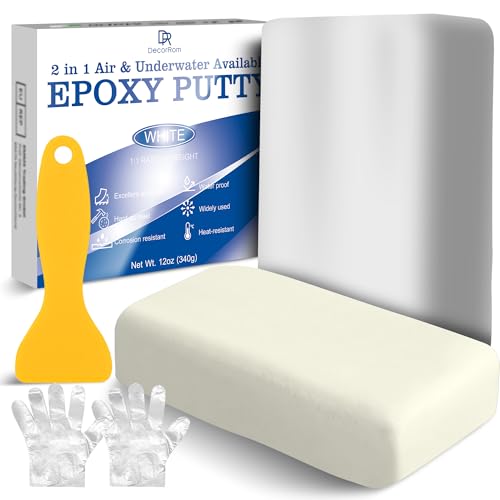
At 12 oz, this white putty has the largest container size among these options. The maker describes it as a two-part formula for filling holes, cracks and uneven surfaces, with metal among its intended materials; it is also positioned for concrete, plastic and ceramics.
The larger amount may suit multiple repairs or a broader patch, rather than a single small hole.
Bottom line: Pick this when you want a larger stated quantity for mixed-material repairs.
How to choose epoxy putty for metal holes
Choose by repair conditions first: metal putty must match the hole size, temperature and whether the patch will carry load or face pressure. Steel reinforcement is a useful material description, but it does not establish that a patch can replace a welded joint or restore a safety-critical part. For a nonstructural hole, match the amount to the patch and allow room to press putty beyond the edges. For a pressurized pipe, fuel system, brake component or load-bearing part, use a repair method rated for that service rather than relying on general-purpose putty. Read each product’s claimed heat range as a boundary, not a target; keep the actual service temperature below the continuous limit when a continuous rating is provided.
Prepare the metal before applying putty
Clean, dry and roughen the metal before mixing epoxy putty; oil, loose rust, paint and scale can weaken adhesion. Remove loose material with a wire brush or abrasive, then degrease with a suitable cleaner and let the surface dry fully. Wear gloves, and avoid skin contact with uncured epoxy, since the resin and hardener can irritate skin or cause sensitization. Mix the two components completely until color and texture are uniform; unmixed streaks can leave soft areas. Press the compound firmly into the hole and overlap onto sound metal. A plug-like patch may need support while curing, especially when gravity could pull the putty out of a larger opening.
Match the repair method to the hole
Small holes and shallow pits are different jobs from large openings or cracks under load. A small, nonpressurized hole can often be filled and shaped with putty; larger holes may need a backing piece to keep the material in place while it cures. Use this guide to screen the repair before choosing a formulation.
| Repair condition | Practical choice |
|---|---|
| Small hole in nonstructural metal | Putty pressed into the opening and overlapped onto clean metal |
| Large opening or vertical surface | Use a backing or temporary support to hold the putty |
| Pressurized, fuel-carrying or load-bearing part | Use a repair method specifically suitable for that service |
Do not use a general-purpose filler as a substitute for a rated repair on a critical component. Hole diameter, wall thickness and operating pressure can change the required method.
Curing and finishing a metal patch
Keep a fresh patch undisturbed until it has cured; working or loading it too early can deform the repair. Cure time depends on formulation, temperature and the amount mixed, so distinguish a machining time from full cure before sanding or drilling. One option here says machining is possible after 24 hours, while the others do not give that timing. Once the putty is ready, sand or shape only if the formulation supports that work, and wear eye protection and a dust mask when abrading cured filler. Paint only after the surface is clean and compatible with the coating. For hot repairs, compare the actual operating temperature with the maker’s continuous rating, not its intermittent peak.
Frequently Asked Questions
Can epoxy putty seal a hole in metal?
Epoxy putty can fill holes in nonstructural metal when the surface is clean, roughened and dry. Press it into the opening and overlap sound metal; pressurized or safety-critical parts need a repair method suitable for their service.
How do you prepare metal for epoxy putty?
Remove oil, loose rust, paint and scale, then roughen the surface and let it dry completely. Wear gloves and follow the putty’s mixing directions so the two parts are fully blended.
How long should metal epoxy putty cure?
Cure time depends on the formulation and temperature; one option here gives 24 hours before machining. Do not sand, drill or load a patch until its cure interval is met.
Can epoxy putty handle heat on metal?
Heat limits vary by product: one option is maker-rated to 266°F, while another claims up to 250°F continuous and 500°F intermittent after cure. Compare the continuous figure with the part’s real operating temperature.
Can cured epoxy putty be drilled or tapped?
Some cured epoxy putties can be drilled or tapped, but that capability is product-specific. One option says drilling and tapping are possible after 24 hours; confirm the cure interval before machining.