
Tyger Trail Hitch Bumper Guard: Fit and Options

A Tyger Trail hitch bumper guard isn’t represented among these choices; for a 2-inch receiver, the Eapele combines a nonskid step with a 10,000-pound tow-strap capacity. Choose another option if you need a wider step, a person-load limit or integrated signal lights.
A hitch bumper guard plugs into a vehicle’s rear receiver and can provide a step or a protective bar; the right fit starts with matching the receiver size.
We earn a commission if you buy through links on this page. As an Amazon Associate I earn from qualifying purchases. Products are compared on manufacturer specifications, not hands-on testing.
- Best overall: Eapele 2-Inch Hitch Step – Fits a 2-inch receiver and has a nonskid step plus a 10,000-pound tow-strap capacity.
- Best for a wide step: PM Performotor 36-Inch Hitch Step – Its 36-inch step includes a textured rubber pad.
- Best for a stated step limit: Nilight Hitch Step with Stabilizer – It gives a 350-pound weight capacity and includes a pin lock and stabilizer.
- Best for integrated signals: LED Hitch Step with 15.2-Inch Bar – It has a 12-volt LED strip for brake, turn and reverse signals.
| Product | Best for | Step width | Stated capacity | Shop |
|---|---|---|---|---|
| PM Performotor 36-Inch Hitch Step | Wide step access | 36 in | — | Check Price on Amazon |
| Eapele 2-Inch Hitch Step | Step and tow point | — | 10,000 lb tow-strap capacity | Check Price on Amazon |
| Nilight Hitch Step with Stabilizer | Rated step use | — | 350 lb | Check Price on Amazon |
| LED Hitch Step with 15.2-Inch Bar | Integrated signaling | 15.2 in | 700 lb | Check Price on Amazon |
Hitch bumper guards for 2-inch receivers
Compare receiver compatibility, step dimensions and the capacity each maker states before choosing.
PM Performotor 36-Inch Hitch Step
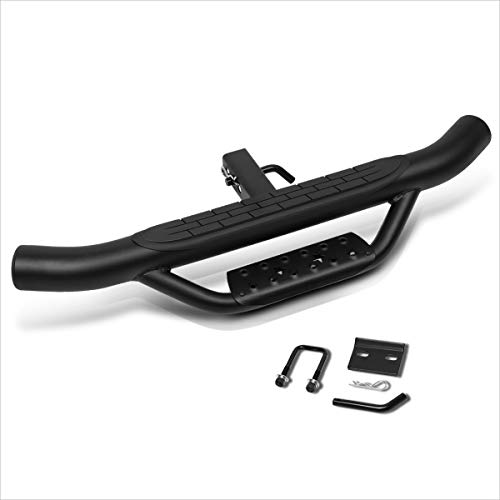
The 36-inch-wide step is the broadest dimension given among these options, making this a fit for buyers who want more stepping area at the rear. It uses 4-inch oval steel tubing, a 1.5-inch reinforced step bar and a textured rubber pad intended to resist slipping. The maker says its dual-stage powder coating protects against corrosion and abrasion. It fits a 2-inch receiver and is described for truck beds, cargo areas and roof racks. Its features do not give a weight limit, so buyers who need a documented step capacity should choose an option with one.
Bottom line: Choose this if a broad step surface matters more than a load limit.
Eapele 2-Inch Hitch Step

The Eapele adds a tow-strap capacity to its step function, unlike the options here that focus on stepping or signaling. It fits a 2-inch receiver and includes a pin to help prevent movement; ridges provide a nonskid footing surface, and the powder-coated steel is intended for weather resistance. The maker gives a 10,000-pound tow-strap capacity, which is not the same as a vehicle’s towing capacity or a person-load rating. Buyers seeking a conventional step with a clearly stated person-load limit should consider a different design.
Bottom line: Pick this if you want a receiver-mounted step that can also serve as a tow-strap point.
Nilight Hitch Step with Stabilizer
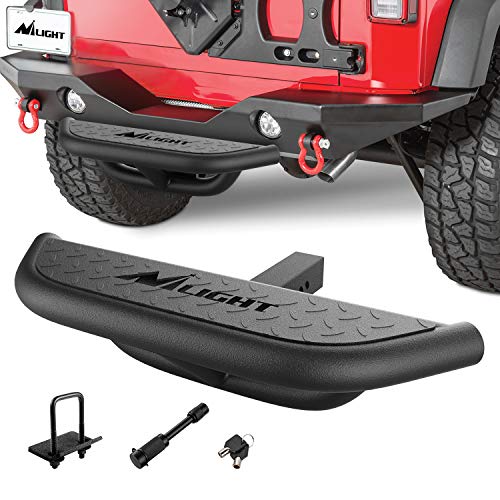
The Nilight is the option here with a clearly stated 350-pound weight capacity for step use. It fits a 2-inch receiver and includes a pin lock and U-bolt stabilizer, along with a slip-proof stepping surface. Its tubes are 2 inches in diameter with 0.120-inch wall thickness, and the finish is textured black powder coating. The plug-in installation requires no drilling according to the maker. Unlike a wider step or an option with signal lighting, this model’s distinguishing point is its person-load limit; buyers needing more than 350 pounds should not rely on it.
Bottom line: Choose this when a 350-pound step capacity and stabilizing hardware are priorities.
LED Hitch Step with 15.2-Inch Bar
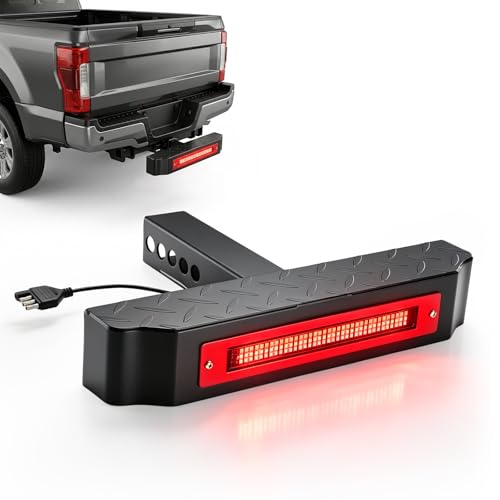
The integrated three-row LED strip sets this step apart, with red, white and yellow lighting intended for brake, turn and reverse signals. The maker says the 12-volt lights improve visibility, and gives the step a 700-pound capacity. Its bar is 15.2 inches long, with an anti-slip surface and textured black finish. This is a fit for buyers who want signaling built into the hitch step rather than a broad step platform. The features don’t establish wiring compatibility for a particular vehicle, so confirm the connection before choosing it.
Bottom line: Pick this if an integrated signal strip matters more than a wide stepping surface.
How to choose a hitch bumper guard
Start by matching the guard’s shank to the receiver opening; these options are specified for 2-inch receivers. Then decide whether the main job is stepping, signaling, or carrying a tow strap, because those functions have different capacity limits. A tow-strap rating is not a step rating, and neither rating increases the vehicle’s towing limit. For a step, prefer a model with a person-load capacity if you need a measurable limit. A wide padded platform suits repeated access to a cargo area, while a compact bar may suit a buyer prioritizing other features. Leave enough room for the hitch pin and any stabilizer hardware to fit securely; a loose or mismatched receiver connection can shift under load.
Receiver fit and hitch-step safety
A 2-inch receiver is the fit stated for each hitch step in this comparison, but receiver size alone does not confirm clearance or secure installation. Before choosing, compare the guard’s shape and projection with the vehicle’s rear bumper, spare tire and any tailgate or hatch movement. Keep the receiver’s hitch pin fully engaged and use included stabilization hardware as intended to reduce rattling. Weight limits apply to the particular use named: a tow-strap capacity should not be treated as a standing capacity, and a step rating should not be treated as a towing rating. If a load would exceed the published step limit, do not stand on it; choose a model whose limit accommodates the user and carried items.
Hitch guard types and useful features
Hitch guards generally trade stepping area, protective-bar coverage and added functions. A wider bar gives more room to place a foot, while a textured pad or ridged surface helps provide traction; neither feature replaces careful footing in wet or icy conditions. Some designs add lights, but a signal strip requires a compatible 12-volt connection and correct wiring to function as intended. A tow-point feature is a separate use with its own rating and correct attachment needs. Use the table to narrow the type by the job you need it to do.
| Need | Feature to prioritize |
|---|---|
| More step width | 36-inch bar and rubber pad |
| Step plus tow-strap point | Stated tow-strap capacity |
| Defined person-load limit | Stated step weight capacity |
| Rear signaling | 12-volt LED strip and wiring fit |
Installing and maintaining a hitch step
Most receiver-mounted steps slide into the hitch and secure with a pin; installation should leave the pin fully seated and any stabilizer hardware snug. Before driving, confirm that the step cannot shift excessively and does not block required lights or interfere with access to the hatch. Check the pin and fasteners periodically, especially after removing and reinstalling the step, and inspect the coating for chips that expose metal to moisture. Clean off road salt and grime rather than letting them accumulate. A hitch accessory that changes rear clearance can also affect departure angle, so take extra care on steep driveways and uneven ground.
Frequently Asked Questions
Can a hitch step fit a 2-inch receiver?
These hitch-step options specify a 2-inch receiver fit. Match the receiver opening and the step shank, then check that the pin hole aligns and the installed bar clears the bumper.
Does tow-strap capacity mean towing capacity?
No. A tow-strap capacity applies to the accessory’s tow-strap use, not the vehicle’s trailer rating or hitch rating. Use the limits for the vehicle, receiver and attachment equipment separately.
How much weight can I put on a hitch step?
Use the step’s person-load capacity, not a tow-strap rating. One option here gives a 350-pound step capacity and another states 700 pounds; do not exceed the chosen model’s limit.
Do hitch steps block backup sensors?
A receiver-mounted step can sit near rear sensors, so check sensor placement and operation after installation. If alerts change or a sensor is obstructed, choose a different position or accessory shape.
Do hitch steps need wiring for brake lights?
A standard step does not need wiring for its step function, but an integrated signal-light model does need a compatible 12-volt connection. Confirm the vehicle connector and wiring arrangement before selecting a lighted step.