
Undereye Red Light Therapy Devices Compared

Red Light Therapy Eye Glasses suits shoppers seeking hands-free under-eye glasses with a 10-minute auto-off, while 630 nm & 850 nm Under-Eye Glasses is the clearer choice if you want specified red and near-infrared wavelengths. Choose another style if you prefer reusable patches or a compact handheld tool.
Under-eye red light devices use LEDs around the eye area; they are not substitutes for eye care or a diagnosis. Avoid looking directly into LEDs, especially when a device also uses near-infrared light, which is invisible.
We earn a commission if you buy through links on this page. As an Amazon Associate I earn from qualifying purchases. Products are compared on manufacturer specifications, not hands-on testing.
- Best overall: Red Light Therapy Eye Glasses – Hands-free glasses with a 10-minute auto-off session.
- Best for specified wavelengths: 630 nm & 850 nm Under-Eye Glasses – Identifies 630 nm red and 850 nm infrared light.
- Best for reusable patches: Mario Badescu Red Light + EMS Patches – Uses wearable patches and includes five pairs of reusable conductive gel pads.
- Best for portability: AOCPO 650 nm Red Light Glasses – Rechargeable glasses with a 650 nm LED.
| Product | Best for | Light wavelength | Design | Session time | Shop |
|---|---|---|---|---|---|
| Red Light Therapy Eye Glasses | Hands-free sessions | — | Glasses | 10 minutes; auto-off | Check Price on Amazon |
| 630 nm & 850 nm Under-Eye Glasses | Wavelength specifics | 630 nm red; 850 nm infrared | Glasses | 10 minutes | Check Price on Amazon |
| Mario Badescu Red Light + EMS Patches | Reusable patches | — | Wearable patches | 10 minutes | Check Price on Amazon |
| AOCPO 650 nm Red Light Glasses | 650 nm red light | 650 nm red | Glasses | — | Check Price on Amazon |
| DCPLBLIB Red Light Eye Massager | Rechargeable massage | — | Eye massager | 3 minutes | Check Price on Amazon |
Undereye Red Light Therapy Devices
Compare the light specifications, device style and session information that distinguish these under-eye tools.
Red Light Therapy Eye Glasses

Red Light Therapy Eye Glasses pairs a glasses-style frame with a 10-minute auto-off, the clearest session control among these options. The maker says its red light and microcurrent combination is designed to support the appearance of collagen, dark circles and fine lines. The 3D contour is intended to sit around the eye area, leaving hands free during a session. Choose this if a set timed routine matters more than knowing the exact wavelength. The name mentions eye care, but this is an under-eye skincare device, not a treatment for vision problems or eye disease.
Bottom line: Pick this for a hands-free glasses design with a timed session.
630 nm & 850 nm Under-Eye Glasses

630 nm & 850 nm Under-Eye Glasses is the only option here that gives both a red wavelength and a near-infrared wavelength: 630 nm and 850 nm. Its glasses format is hands-free, and the maker recommends a 10-minute daily session. The maker also says the light is non-invasive and suitable for all skin types; those are product claims, not a guarantee of safety for every user. Since 850 nm light is invisible, do not assume that a dark-looking device is off or safe to stare into. This is the more informative pick for buyers comparing wavelength numbers.
Bottom line: Choose this if comparing specified red and infrared wavelengths matters.
Mario Badescu Red Light + EMS Patches
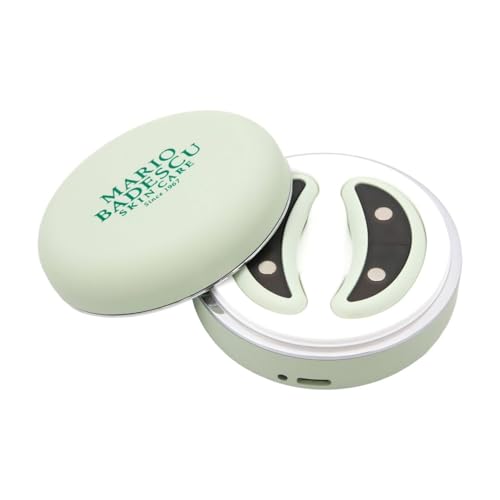
Mario Badescu Red Light + EMS Patches takes a patch approach rather than glasses, and includes five pairs of reusable conductive gel pads. The maker says the rechargeable LED device combines red light with EMS microcurrent and is intended for hands-free 10-minute use. Its wearable form may suit someone who prefers patches placed under the eyes over a glasses frame. Consider whether reusable pads and a microcurrent feature matter more to you than wavelength information.
Bottom line: Pick this for wearable patches and reusable conductive pads.
AOCPO 650 nm Red Light Glasses

AOCPO 650 nm Red Light Glasses specifies a 650 nm red LED and adds gentle pulse technology in a portable glasses-style device. The maker positions the tool for a daily skincare routine and says the light and pulse design supports the appearance of the eye contour. No session length appears in the specifications, so buyers who need a timed treatment schedule should compare that point before choosing.
Bottom line: Choose this for glasses with a specified 650 nm LED and pulse feature.
DCPLBLIB Red Light Eye Massager

DCPLBLIB Red Light Eye Massager stands apart as a rechargeable eye massager rather than glasses or patches, and its maker gives a 3-minute session time. It has a built-in battery and Type-C charging. The maker says the device is intended for under-eye and facial skincare and claims visible results in three minutes; that outcome claim is not a guarantee. It suits buyers who want a short-session massager and portable charging over a wavelength.
Bottom line: Pick this for an eye-massager format and a short listed session.
How to choose under-eye red light therapy
Start with the device’s wavelength and form, then consider session control. Visible red LEDs commonly fall around 630–660 nm; near-infrared around 850 nm is invisible, so wavelength labels matter when comparing devices. A wavelength alone does not tell you the light dose: irradiance, treatment distance and exposure time also affect the energy reaching skin. If those figures are unavailable, do not infer a dose from the color or appearance of the device. Choose glasses for hands-free coverage, patches for a wearable under-eye format, or a massager if that form is your priority. Avoid treating maker claims about cosmetic appearance as guaranteed results.
For this group, 630 nm & 850 nm Under-Eye Glasses specifies 630 nm and 850 nm; AOCPO 650 nm Red Light Glasses specifies 650 nm. The remaining options do not provide a wavelength in the specifications.
Under-eye device styles and fit
Glasses, patches and massagers differ mainly in how they sit against the face, not in proof of effectiveness. Glasses can be easier to put on and remove as one unit, while separate patches may let you position each side independently; actual fit depends on face shape and the device’s contour. A massager is a distinct format, so check that its contact surface reaches the area you intend to treat. Keep LEDs away from direct eye exposure and stop if the device causes discomfort. If you have an eye condition, recent eye surgery or unusual light sensitivity, ask an eye-care professional before using a device near the eyes. This matters especially for infrared LEDs because the emission is not visible.
What wavelength and session numbers tell you
A nanometer value identifies wavelength, not brightness or dose. Red light at 630–650 nm is visible; 850 nm near-infrared is beyond visible red, so you cannot judge whether it is active by looking at it. Dose depends on irradiance and distance as well as time, so a three-minute timer cannot be directly compared with a 10-minute timer without output measurements. Treat a session length as the maker’s usage guidance rather than evidence that one device works faster. Do not extend sessions to compensate for a missing wavelength or output measurement. This comparison includes two stated 10-minute options, one 3-minute option and devices without a session duration supplied.
Safe use around the eyes
Never stare into an LED, and do not point a near-infrared source toward the eyes: invisible light can still reach eye tissue. Use only as intended around closed eyes and follow any eye-protection instructions supplied with the device; do not assume closed eyelids are adequate protection. Start with clean, dry skin unless the device’s instructions specify a compatible product, and discontinue use if you feel pain, persistent irritation or visual symptoms. People with eye disease, photosensitivity, or medicines that increase light sensitivity should get clinical advice before use. Red light skincare devices are not replacements for evaluation of new swelling, persistent dark circles or changes in vision.
Frequently Asked Questions
Can red light therapy help with dark circles?
Some makers claim their devices can improve the appearance of dark circles, but results are not guaranteed. Dark circles can have different causes, including pigmentation, visible blood vessels and facial anatomy, so persistent or changing discoloration merits clinical advice.
Is 850 nm light visible to the eye?
No, 850 nm near-infrared light is outside the visible spectrum. Do not look into an active near-infrared device or assume it is off because you cannot see its emission.
Should I use eye protection with an LED eye device?
Follow the device’s eye-protection instructions and never stare into its LEDs. If the instructions are unclear, or you have an eye condition or light sensitivity, ask an eye-care professional before use.
How long should an under-eye session last?
Use the session time specified by the device maker rather than extending exposure to seek faster results. These options include 3-minute and 10-minute claims, but their dose cannot be compared without irradiance and treatment-distance figures.
Can I apply serum before red light therapy?
Only apply a serum or gel if the device instructions allow it and specify a compatible product. Products around the eyes can irritate, and a conductive gel should not be assumed necessary unless the device calls for one.