
Urea Gel for Nails: 4 Nail-Care Options Compared

For urea gel for nails, the 40% nail gels are the closest match because they are formulated for nail care; choose between them by formula and application format. The 42% foot gel is aimed more broadly at heel calluses and thick toenails, while the brush-on repair treatment combines urea with other ingredients.
We earn a commission if you buy through links on this page. As an Amazon Associate I earn from qualifying purchases. Products are compared on manufacturer specifications, not hands-on testing.
- Best overall: Urea Nail Gel 40% – A 40% urea gel specifically marketed for fingernail and toenail care.
- Best for nighttime routine: 40% Urea Nail Gel with Brush Applicator – A 40% nail gel with a targeted application format and nighttime positioning.
- Best for multi-issue care: Kerasal Multi-Purpose Nail Repair – A brush-on treatment designed to address discoloration, ridges, brittleness, thickness and roughness.
| Product | Best for | Urea concentration | Size | Application | Shop |
|---|---|---|---|---|---|
| Urea Nail Gel 40% | Nail-focused gel | 40% | 1 fl oz | Gel | Check Price on Amazon |
| 40% Urea Nail Gel with Brush Applicator | Targeted application | 40% | 1 fl oz | Brush applicator | Check Price on Amazon |
| Kerasal Multi-Purpose Nail Repair | Multiple nail concerns | Urea; concentration not given | 0.43 fl oz | Brush-on | Check Price on Amazon |
| GILDEN TREE Urea Gel 42% | Foot skin care | 42% | 4 oz | Clear gel | Check Price on Amazon |
Urea Gels for Nails Compared
Compare the nail-focused gels with a multi-ingredient repair treatment and a broader foot gel.
Urea Nail Gel 40%

This 40% urea gel is the closest match for shoppers seeking nail-specific care, with the maker describing use on both fingernails and toenails. The formula is positioned to soften and condition the appearance of discolored or damaged nails, and the package contains 1 fl oz. Its broad nail focus makes it a practical fit when you want a single gel rather than a treatment limited to toenails. The tradeoff is that the application format is not identified as a brush, so buyers who want brush-on precision may prefer a different option.
Bottom line: Choose this if you want a 40% gel explicitly aimed at both fingernails and toenails.
40% Urea Nail Gel with Brush Applicator

This 40% formula distinguishes itself with a brush applicator and a nighttime nail-care focus. The maker frames it as cosmetic care for dry, rough-looking nails and surrounding skin, with a targeted format for the intended area. Its 1 fl oz size matches the other nail gel, while the brush offers a more controlled way to place gel on individual nails. The main limitation is its explicitly cosmetic positioning: shoppers seeking a treatment for a diagnosed nail condition should discuss options with a clinician instead of relying on cosmetic claims.
Bottom line: Pick this for a 40% nail gel whose brush format suits a targeted nighttime routine.
Kerasal Multi-Purpose Nail Repair

This brush-on repair formula differs from the single-ingredient 40% gels by combining urea with propylene glycol and lactic acid. The maker positions it for the appearance of discoloration, ridges, brittleness, thickness and roughness, and gives a schedule of twice-daily application for the first week followed by once daily. At 0.43 fl oz, it is the smallest of these nail-care options.
Bottom line: Choose this if you want a brush-on formula aimed at several visible nail concerns.
GILDEN TREE Urea Gel 42%
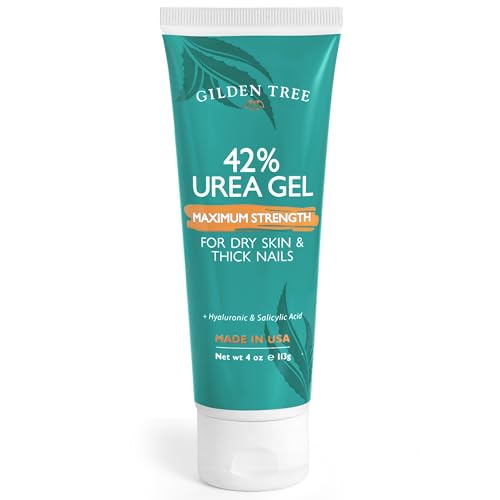
This 42% urea gel is primarily positioned for feet, setting it apart from the two 40% products specifically named as nail gels. The maker says it softens cracked heels and thick toenails, and its 4 oz package offers more product than the nail-focused gels. Salicylic acid and hyaluronic acid are also included, with an oil-free clear-gel format. Because its main emphasis includes hard, dry heel skin, it is a broader foot-care choice rather than the most directly targeted option for fingernails or general nail care.
Bottom line: Choose this for a larger foot-care gel that also targets thick toenails.
How to choose a urea gel for nails
Start with the intended area, then compare the format and formula. Two options here are 40% urea gels specifically positioned for nail care; one emphasizes fingernails and toenails, while the other uses a brush applicator and nighttime positioning. The 42% gel is primarily a foot product that also mentions thick toenails, and the multi-purpose brush-on repair product pairs urea with other ingredients.
Urea is a humectant and keratolytic: it attracts water and can soften hardened keratin. Concentration matters; higher strengths are often used for thicker, rougher skin, but a larger percentage alone does not establish that a product is a better nail choice. If you want a named percentage and a nail-focused format, choose one of the 40% gels. For a brush-on product aimed at several visible nail issues, consider the multi-purpose formula instead.
How urea strength affects nail and foot care
Urea products span a wide range of strengths: lower concentrations, often around 10% to 20%, are commonly used for moisturization, while 40% and higher products are generally intended for more intensive softening of thickened skin. These are broad category conventions, not a guarantee of a product’s results or suitability on the nail plate. Nail plates are hard keratin, and thick toenails can have multiple causes, including injury or infection.
When a nail is painful, lifting, rapidly changing color, or thickening without a clear cause, get medical advice before treating it as a cosmetic issue. Avoid getting concentrated urea products in the eyes or mouth, and keep them away from children. For cracked or bleeding skin, check with a clinician before applying a strong keratolytic.
Applying nail gel without irritating surrounding skin
Apply nail products to the nail area rather than spreading a concentrated gel over healthy surrounding skin. Skin can be more sensitive than a thick nail, and urea may cause irritation or stinging, particularly on broken or inflamed tissue. A brush format can help target a small area; with a tube or gel format, use only a small amount and avoid contact with cuts.
For a thick toenail, routine trimming after bathing can make the nail easier to manage because warm water temporarily softens it. Do not dig into nail corners or share clippers, which can spread infection. Persistent discoloration, separation from the nail bed, or worsening thickness warrants a clinician’s assessment rather than repeated cosmetic treatment.
When thick or discolored nails need more than cosmetic care
A cosmetic nail gel can condition or soften the nail’s appearance, but it does not establish why the nail has changed. Fungal nail infections may require confirmation and treatment, and common lookalikes include nail trauma and psoriasis. A single discolored nail after an impact differs from gradual changes across several nails, so the pattern and timing are useful details to discuss with a health professional.
Do not assume a product that mentions fungus or damaged nails is an antifungal medicine. A clinician can assess the nail and recommend testing or treatment when appropriate; this is especially important for diabetes, poor circulation, or a weakened immune system. Stop using a product and seek advice if redness, swelling, pain, or a rash develops.
Frequently Asked Questions
Can urea gel be used on fingernails?
Some products are specifically positioned for fingernails as well as toenails, including one 40% gel here. Avoid applying concentrated products to broken or irritated skin around the nail.
What does 40% urea do for thick nails?
Urea can soften hard keratin, which may make a thick nail easier to manage. Thickening can also reflect infection, injury or another condition, so a new or worsening change deserves clinical assessment.
Is 42% urea better than 40% for toenails?
Not automatically; a higher concentration does not mean a better fit. The 42% option is primarily presented as a foot gel, whereas the 40% options are positioned as nail gels.
How often should I apply nail urea gel?
Use the schedule on the product packaging because formats and formulas differ. The multi-purpose brush-on product specifies twice daily for its first week, then once daily.
Can urea gel cure toenail fungus?
Urea gel should not be assumed to cure a fungal infection. Nail discoloration and thickening have several possible causes, and a clinician can determine whether testing or antifungal treatment is appropriate.