
Vacuum Chamber for Resin: 4 Kits Compared by Fit

For most resin work, VIVOHOME 5-Gallon Acrylic-Lid Kit is the strongest fit because it combines a 5-gallon stainless steel chamber with a clear acrylic lid and a 3.5 CFM pump. Choose another kit if you need a tempered-glass lid, a smaller chamber, or a faster stated pump flow.
A vacuum chamber removes air from mixed resin by lowering pressure, which makes trapped bubbles expand and escape; it is different from a pressure pot, which compresses bubbles during curing.
We earn a commission if you buy through links on this page. As an Amazon Associate I earn from qualifying purchases. Products are compared on manufacturer specifications, not hands-on testing.
- Best overall: VIVOHOME 5-Gallon Acrylic-Lid Kit – The 5-gallon stainless steel chamber has a clear acrylic lid and includes a 3.5 CFM pump.
- Best for a smaller footprint: BACOENG 3-Gallon Tempered-Glass Kit – Its 3-gallon stainless steel chamber is smaller than the 5-gallon options and includes a tempered-glass lid.
- Best for higher pump flow: VTG VOGTEN 5-Gallon 4.5 CFM Kit – Its included pump is rated at 4.5 CFM, higher than the other vacuum pump kits.
| Product | Best for | Capacity | Chamber and lid | Pump flow | Shop |
|---|---|---|---|---|---|
| VIVOHOME 5-Gallon Acrylic-Lid Kit | Clear-lid visibility | 5 gal | 304 stainless steel, acrylic lid | 3.5 CFM | Check Price on Amazon |
| BACOENG 3-Gallon Tempered-Glass Kit | Smaller batches | 3 gal | Stainless steel, tempered glass | 3.6 CFM | Check Price on Amazon |
| VEVOR 5-Gallon Stainless Steel Kit | General resin work | 5 gal | Stainless steel, acrylic lid | 3.5 CFM | Check Price on Amazon |
| VTG VOGTEN 5-Gallon 4.5 CFM Kit | Higher pump flow | 5 gal | 304 stainless steel, lid type unspecified | 4.5 CFM | Check Price on Amazon |
Vacuum chambers for resin
Compare the chamber capacity, lid construction and pump flow to match a kit to your resin batches and workspace.
VIVOHOME 5-Gallon Acrylic-Lid Kit

VIVOHOME 5-Gallon Acrylic-Lid Kit pairs a 5-gallon chamber with a clear acrylic lid, so it suits resin makers who want to watch the material as bubbles rise. The kit includes a 3.5 CFM, single-stage pump, gauge, 5-foot hose, pump oil, silicone pad and tools. The maker says the lid withstands temperatures up to 160°F and the chamber reaches -29.9 inHg above sea level. The acrylic lid is the key tradeoff: the maker recommends a tempered-glass lid for wood stabilization, so this choice is aimed at resin and silicone rather than that use.
Bottom line: Pick this if you want a large clear-lid chamber for resin and epoxy work.
BACOENG 3-Gallon Tempered-Glass Kit
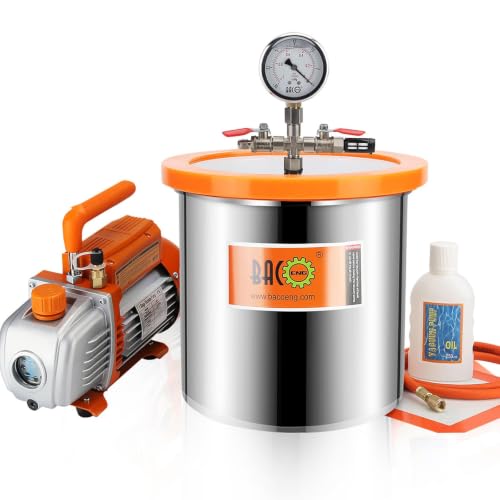
BACOENG 3-Gallon Tempered-Glass Kit is the smallest chamber among the steel pump kits here, making it a practical match for smaller pours or a tighter bench. Its 9.8-inch-diameter by 9.8-inch-high stainless steel vessel has a tempered-glass lid, silicone gasket, vacuum gauge and a 5-foot reinforced hose. The maker rates the included pump at 3.6 CFM and -29.92 inHg. Its 3-gallon capacity limits the size or quantity of containers that fit; measure the vessel and leave room above the resin because degassing can make a foaming mixture rise.
Bottom line: Choose this when your batches fit a 3-gallon vessel and you prefer tempered glass.
VEVOR 5-Gallon Stainless Steel Kit

VEVOR 5-Gallon Stainless Steel Kit offers a 5-gallon stainless steel chamber and a 3.5 CFM pump for resin, silicone and epoxy degassing. The maker specifies a 5 Pa ultimate vacuum and includes an acrylic lid, pump oil and a 4.92-foot hose. Its exclusion matters for buyers considering multiple workshop tasks: the maker says this kit is not suitable for wood stabilization. The acrylic lid provides a view of the chamber, but buyers who need a glass lid or plan to stabilize wood should select a different fit.
Bottom line: Pick this for 5-gallon resin degassing when wood stabilization is not part of the job.
VTG VOGTEN 5-Gallon 4.5 CFM Kit

VTG VOGTEN 5-Gallon 4.5 CFM Kit stands apart with its 4.5 CFM, single-stage pump rated at 1/3 horsepower, plus a 5-gallon 304 stainless steel chamber. The kit includes a 1.5-meter hose, two silencers, a silicone pad and installation tools; the maker gives the pump an ultimate vacuum rating of 5 Pa. The chamber measures 11.8 inches in outside diameter by 11.8 inches high. Lid construction is a decision point for anyone who wants to monitor a pour through a transparent cover, so confirm the lid type before ordering.
Bottom line: Choose this if you want the highest pump flow among these kits.
How to choose a vacuum chamber for resin
Choose a chamber by batch volume first, then check the pump and lid against your workflow. A 3-gallon vessel can fit smaller containers, while a 5-gallon model offers more room; neither capacity tells you the safe working volume because resin expands as air leaves it. Leave substantial headspace above the mixed resin and container rim, and use a vessel much larger than the pour when the mixture foams readily. Pump flow is given in CFM; it describes air movement, not the final vacuum by itself. A higher CFM rating may shorten evacuation, but seal quality, hose connections, chamber volume and pump condition also affect the result.
Chamber size, lid and resin headspace
Measure the container and its height before choosing a chamber, including clearance for the lid and fittings. A chamber must accommodate both the vessel and the rise of a foaming batch; filling a container close to its rim risks drawing resin into the hose or gauge. Start with a small test batch if the resin’s foaming behavior is unfamiliar. A transparent lid helps you observe the rise and decide when to ease off the vacuum, while opaque or unverified lids make that visual check harder. For unusual resins or large pours, verify the manufacturer’s temperature and vacuum limits before use; the products vary in lid construction and stated limits.
Vacuum chamber versus pressure pot for resin
A vacuum chamber removes air before resin cures, while a pressure pot reduces the size of bubbles by compressing them during curing. A vacuum pull is useful for degassing resin or silicone before pouring, but vacuum can make resin foam dramatically, especially if a container is too full. Pressure casting is a different workflow and requires a pressure-rated vessel and compatible equipment; a vacuum chamber is not a substitute. Use the tool that matches the goal: remove air from a mixture before casting, or compress residual bubbles during a pressure-cure process. Never assume a vacuum vessel is designed to hold positive pressure.
| Need | Choose | Reason |
|---|---|---|
| Smaller resin batches | 3-gallon chamber | Less vessel volume to accommodate on the bench |
| More chamber room | 5-gallon chamber | More space for containers and rising foam |
| Visible degassing | Transparent lid | Lets you watch bubbles and foam rise |
Safe setup and common resin degassing mistakes
Keep the chamber on a stable, level surface and inspect the gasket, lid and hose connections before each use; leaks prevent a useful vacuum and can prolong pump operation. Resin can expand and overflow while bubbles escape, so leave headspace and watch the process continuously rather than walking away. Follow the resin maker’s mixing and pot-life limits: degassing does not extend working time, and the material can begin curing while under vacuum. Do not open the chamber until the vacuum has been released, and use eye protection when handling resin and vacuum equipment. A vacuum chamber is designed for negative pressure, not pressurized curing.
Frequently Asked Questions
How much headspace should resin have in a vacuum chamber?
Use a container with several times the resin’s volume so expanding foam stays well below the rim. Resin formulations foam differently, so watch a small test batch before scaling up.
How long should resin stay under vacuum?
There is no universal duration because resin viscosity, batch size and pump setup affect bubble release. Watch the resin and release vacuum once bubbling has subsided; the resin’s pot life continues to run during degassing.
Can I use an acrylic lid with resin?
Acrylic lids are used for resin degassing, but follow the lid’s temperature and vacuum limits. The VIVOHOME maker gives its acrylic lid a 160°F temperature limit.
Can I use a resin vacuum chamber for wood stabilization?
Only use a kit whose maker supports that use. The VEVOR kit’s maker specifically excludes wood stabilization, while the VIVOHOME maker recommends a tempered-glass lid for it.
Why does resin foam inside a vacuum chamber?
Lower pressure lets trapped air expand, so the mixture can swell as bubbles rise. Use a larger container with generous headspace and monitor the batch to prevent overflow.