
HVAC Valve Core Removal Tools Compared by Fit

For most HVAC service work, choose NAVAC NVR2 because it accepts both 1/4- and 5/16-inch flare fittings and is rated to 20 microns for vacuum. Choose Appion MGAVCT MegaFlow if you need a 1/4-inch-only tool, or Dual-Port Brass Valve Core Tool if brass construction matters to your selection.
A valve core removal tool lets a technician remove or replace a service-port core while controlling flow through a valve. Match the tool to the equipment port before starting; refrigerant service involves high pressure and should be done by qualified technicians using proper recovery equipment.
We earn a commission if you buy through links on this page. As an Amazon Associate I earn from qualifying purchases. Products are compared on manufacturer specifications, not hands-on testing.
- Best overall: NAVAC NVR2 – Its dual 1/4- and 5/16-inch fittings cover two common port sizes, and its vacuum rating is 20 microns.
- Best for 1/4-inch ports: Appion MGAVCT MegaFlow – This 1/4-inch tool has a 20-micron vacuum rating and a double O-ring ball-valve seal.
- Best for brass construction: Dual-Port Brass Valve Core Tool – Its brass body and dual 1/4- and 5/16-inch fittings suit buyers prioritizing those features.
| Product | Best for | Ports | Shop |
|---|---|---|---|
| NAVAC NVR2 | Dual-size service | 1/4 and 5/16 in | Check Price on Amazon |
| Appion MGAVCT MegaFlow | 1/4-inch ports | 1/4 in | Check Price on Amazon |
| Dual-Port Brass Valve Core Tool | Brass construction | 1/4 and 5/16 in | Check Price on Amazon |
HVAC Valve Core Removal Tools
Compare port compatibility, vacuum ratings and construction before selecting a core removal tool for HVAC service.
NAVAC NVR2
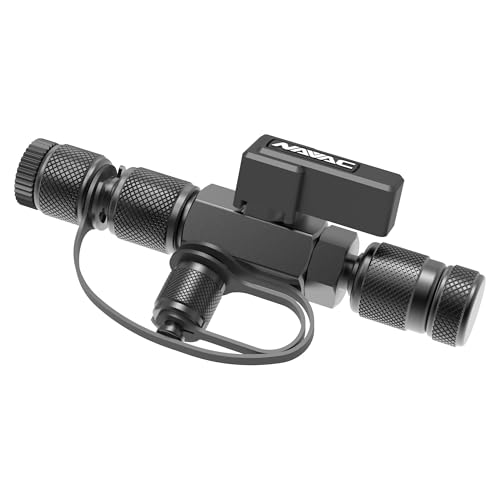
The NAVAC NVR2 stands out for combining 1/4- and 5/16-inch flare fittings in one tool, reducing the need to switch tools when equipment uses either size. NAVAC says the tool supports recovery and evacuation without losing refrigerant, and rates it for R-410A service and vacuum to 20 microns. Its burst pressure is 4,000 psi. This is a practical match for technicians who encounter both fitting sizes. The limitation is that the measurements give overall dimensions rather than a weight, which may matter to buyers comparing what to carry in a service kit.
Bottom line: Choose this if you want one tool for both 1/4- and 5/16-inch flare fittings.
Appion MGAVCT MegaFlow

The Appion MGAVCT is the 1/4-inch-specific option, and its double O-ring ball-valve seal is a distinguishing feature for blank-off vacuum testing. Appion rates it to 20 microns and says it removes access valve cores for unrestricted flow. The compact stated dimensions—5 inches long, 2.5 inches wide and 1.5 inches high—may suit a tool setup where size matters. Choose it when the equipment port matches its 1/4-inch connection. Its main limitation is that this model’s size is 1/4 inch, so technicians needing a 5/16-inch connection should select a dual-size option instead.
Bottom line: Pick this for compatible 1/4-inch ports and a double O-ring seal.
Dual-Port Brass Valve Core Tool
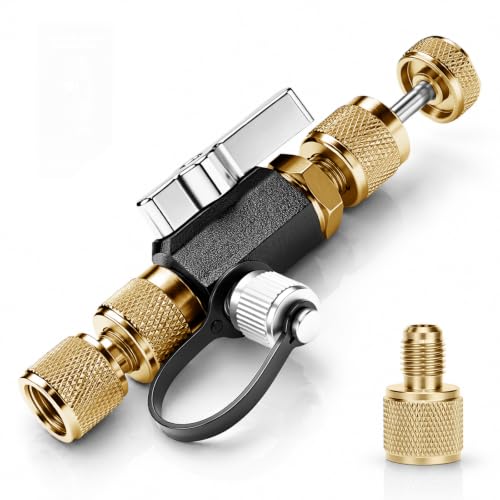
The dual-port brass tool combines 1/4- and 5/16-inch fittings with a brass body, making its material the key distinction from the other options. The maker says it is vacuum-rated to 20 microns and can replace leaking valve cores without venting refrigerant; it also describes a double O-ring ball-valve seal. The textured surface is intended to aid grip when removing or installing cores. This option fits buyers looking for the brass construction and two port sizes. Its measurements are given in an unusual order and do not identify a usable weight, so compactness is harder to assess.
Bottom line: Choose this if brass construction and dual-port sizes are priorities.
How to choose an HVAC valve core removal tool
Start with the service-port connection, then compare the tool’s vacuum rating and valve design. HVAC access fittings commonly use 1/4-inch connections, while some equipment uses 5/16-inch fittings; a dual-port tool can cover both sizes when its connections match the equipment. Vacuum readings are measured in microns, with lower pressure represented by a lower micron reading, so compare ratings on the same basis. A ball valve lets the technician isolate the tool from the system during service, while a core-removal mechanism allows the core to be withdrawn from the flow path. Do not treat a matching thread size as proof of compatibility: confirm the equipment port connection before ordering, especially when servicing mini-split systems.
Valve core tool types and fit
Single-port tools serve one connection size, while dual-port designs are intended for two; port fit, not a broad refrigerant label, determines whether the tool connects to the system. The table summarizes what to prioritize by service need. A core tool also differs from a basic hose fitting: its stem engages the valve core, and the isolation valve can control flow while the core is removed. Different equipment may have different access-port layouts, so a dual-size tool does not necessarily fit every machine. Verify the fitting at the service port and keep the system’s refrigerant circuit isolated as required for the work.
| Service need | Tool type to consider | Check before use |
|---|---|---|
| One known port size | Single-port tool | Connection size |
| Either 1/4- or 5/16-inch ports | Dual-port tool | Both connection sizes |
| Vacuum testing after isolation | Tool with ball valve | Seal design and vacuum rating |
Safe use during refrigerant service
Refrigerant circuits can hold substantial pressure, so valve-core work is not a task for an untrained user or an open system. Use suitable personal protective equipment and equipment rated for the system’s refrigerant and pressure; never deliberately vent refrigerant during service. A core-removal tool can help retain charge while removing a core, but that does not eliminate the need for proper recovery procedures if the circuit must be opened. Confirm the tool is fully connected and its valve is positioned correctly before manipulating the core. Keep hands and face clear of potential refrigerant discharge, since escaping refrigerant can cause cold burns and eye injury.
Frequently Asked Questions
What does a 20-micron vacuum rating mean?
A 20-micron rating describes a very low absolute pressure used in evacuation work; microns are a pressure unit, not a measure of tool size. Compare vacuum ratings using the same unit, and use a suitable micron gauge to measure the system rather than assuming the tool’s rating confirms evacuation.
Why remove a valve core during evacuation?
Removing the core reduces the restriction at the service port and can allow faster evacuation or charging flow. A core tool with an isolation valve lets a technician control the connection while the core is out; the system still needs proper vacuum measurement and leak checks.
Are 1/4-inch and 5/16-inch fittings interchangeable?
No, a 1/4-inch connection is not interchangeable with a 5/16-inch connection. Check the equipment’s service-port size before connecting a core tool, since forcing a mismatched fitting can damage the connection or fail to seal.
Can I remove a valve core without releasing refrigerant?
A valve core removal tool can allow core work while controlling refrigerant flow, but the exact procedure depends on the tool and system setup. Never intentionally vent refrigerant; refrigerant recovery and service should be handled by a qualified technician with equipment suited to the system.
When should an HVAC valve core be replaced?
Replace a core when inspection or leak testing indicates that the core is leaking or damaged. Use a compatible replacement core and verify the connection seals afterward; a tool’s ability to remove cores does not establish that a system leak has been fixed.