
Vivitar 4K Digital Camcorder: Models Compared by Features

The Vivitar 4K camcorder with a 3-inch rotating touchscreen, infrared night vision, Wi-Fi and remote control is the closest match for a general-purpose 4K digital camcorder. Choose another option if you want a named 8K mode or a memory card and spare batteries.
We earn a commission if you buy through links on this page. As an Amazon Associate I earn from qualifying purchases. Products are compared on manufacturer specifications, not hands-on testing.
- Best overall: Vivitar 4K Flip-Screen Camcorder – Its flip touchscreen, infrared night vision, Wi-Fi app control and remote cover a broad range of recording situations.
- Best for 8K mode: Vivitar 4K & 8K Video Camera – Its feature set names 8K capture, built-in stabilization and a microphone.
- Best for included accessories: ZYDIIE 4K 64MP Camcorder – It includes a 32GB card and two batteries, alongside 4K recording and an 18x digital zoom.
| Product | Best for | Video resolution | Still-photo resolution | Screen / zoom | Shop |
|---|---|---|---|---|---|
| Vivitar 4K Flip-Screen Camcorder | Vlogging and travel | 4K UHD | 56MP | 3-inch touchscreen / 18x digital | Check Price on Amazon |
| Vivitar 4K & 8K Video Camera | 8K-mode recording | 4K and 8K | 48MP | 3-inch rotatable LCD | Check Price on Amazon |
| ZYDIIE 4K 64MP Camcorder | Bundled accessories | 4K UHD | 64MP | 3-inch 270° touchscreen / 18x digital | Check Price on Amazon |
| 4K 96MP Camcorder with 32GB Card | High-resolution stills | 4K | 96MP | 3-inch 270° touchscreen / 18x digital | Check Price on Amazon |
| kimire Full HD 1080p Camcorder | Webcam calls | 1080p at 15 fps | 24MP | 3-inch 270° LCD / 16x digital | Check Price on Amazon |
Vivitar 4K Digital Camcorders and Alternatives
Compare the closest Vivitar match with related camcorders by recording mode, screen and practical controls.
Vivitar 4K Flip-Screen Camcorder

The rotating touchscreen and Wi-Fi app control distinguish this Vivitar camcorder from the other 4K options. It records 4K UHD video, captures 56MP stills, and includes infrared night vision and a remote, making it a fit for self-framed clips, family events and recording after dark. The maker says the camera supports app-based control and transfers to a phone. Its 18x zoom is digital, so it enlarges the image electronically rather than optically; buyers who need reach with fine detail should not treat that figure as optical zoom.
Bottom line: Choose this if a flip touchscreen and phone control matter more than bundled storage or extra batteries.
Vivitar 4K & 8K Video Camera

The named 8K capture mode and built-in image stabilization set this Vivitar apart from the 4K-only choices. It also has a 3-inch rotatable LCD, Wi-Fi, a remote and a microphone, which may suit a creator who wants those controls in one camera. Its feature set specifies a 13MP sensor and 48MP still photos, so sensor resolution and photo resolution are distinct figures. The maker does not give a zoom ratio or night-vision capability, making this a weaker fit for buyers who prioritize either feature.
Bottom line: Pick this if an 8K mode and built-in stabilization are priorities.
ZYDIIE 4K 64MP Camcorder
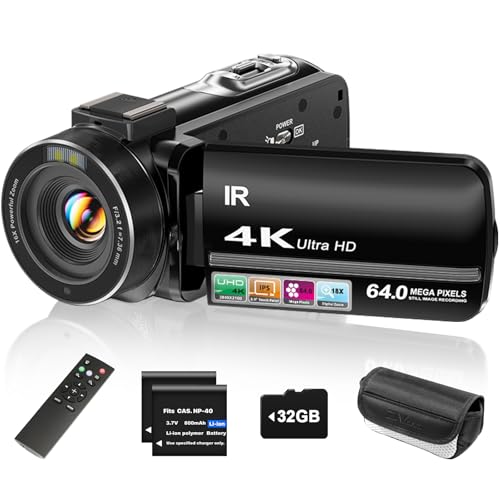
The included 32GB card and two batteries are the main practical distinction of this 4K camcorder. It pairs those extras with a 3-inch 270-degree rotating IPS touchscreen, 18x digital zoom, infrared night vision and remote control. The maker describes the night-vision mode as black-and-white video in total darkness. This model is a related alternative rather than a Vivitar camera; choose it when a ready-to-use storage card and spare battery matter more than matching the requested brand.
Bottom line: Choose this alternative when bundled storage and an extra battery are useful.
4K 96MP Camcorder with 32GB Card

The 96MP still-photo figure is the standout distinction of this 4K camcorder, which also includes an 18x digital zoom, infrared night vision, a wireless remote, webcam function, 32GB card and two batteries. Its touchscreen rotates 270 degrees, making self-framing easier than a fixed display. It is a non-Vivitar alternative for shoppers comparing feature bundles rather than a match for the requested brand. Since the zoom is digital, it is not equivalent to an optical lens zoom for distant subjects.
Bottom line: Consider it if the included card, spare battery and high stated photo resolution suit your priorities.
kimire Full HD 1080p Camcorder
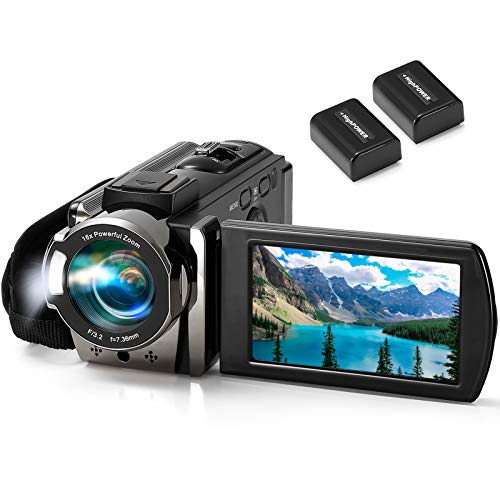
The webcam mode is this camcorder’s defining difference from the 4K models. It records Full HD 1080p at 15 frames per second, takes 24MP photos and has a 3-inch 270-degree rotating LCD, fill light, 16x digital zoom and two batteries. The webcam setup requires selecting PC CAM mode and using AMCAP software, so it is best for someone willing to configure a computer connection. Its 1080p resolution and 15 fps rate make it a clear step down for buyers specifically seeking 4K video.
Bottom line: Choose this only if webcam mode matters more than 4K resolution.
How to choose a 4K digital camcorder
Start with the recording resolution and controls you will actually use: 4K is 3,840 × 2,160 pixels, while 8K is 7,680 × 4,320. Higher resolution creates larger files and demands more storage and editing capacity. Digital zoom crops and enlarges the image, unlike optical zoom, which changes lens magnification; for distant subjects, prioritize optical zoom if a camera offers it. A flip or rotating display helps when filming yourself, while Wi-Fi and a remote serve different needs: phone transfer or control versus starting a recording at a distance. Choose the 4K model with a rotating touchscreen when self-framing is central; choose a different mode only if your editing and storage setup can support it.
What 4K, 8K and frame rates mean
4K UHD has about 8.3 million pixels per frame, and 8K has about 33.2 million, so an 8K file can demand substantially more storage and processing. Resolution alone does not establish motion smoothness: frame rate matters too, and 30 fps is a common baseline for everyday video while 60 fps better captures fast movement. A 1080p mode at 15 fps is a modest capture rate for fluid action. Before choosing, match the mode to the destination: a 4K TV or online video can show 4K detail, but a 1080p export will scale it down. A larger megapixel figure for still photos does not by itself guarantee greater image quality.
Screen, zoom and low-light tradeoffs
A rotating screen makes it easier to check framing from in front of the camera, but a 3-inch display is still small for judging focus or fine detail; review important footage on a larger screen. Digital zoom enlarges a crop, so use it sparingly when detail matters, and move closer when safe and practical. Infrared night vision uses infrared illumination and commonly produces monochrome footage rather than natural-color images. It is useful in darkness, but it does not replace a bright light for color recording. For self-filming, choose a 270-degree or flip-screen; for night scenes, confirm the camera’s IR mode and understand that the result may be black and white.
Memory cards, batteries and safe handling
4K files fill cards faster than 1080p files, so select a card with enough capacity and a write speed suited to the camera’s recording mode; a 32GB card can hold very different amounts depending on bitrate and clip length. Keep spare batteries charged for long events, and test the camera’s recording mode and card before an important shoot. Never assume the battery or card is compatible with another camera model just because it looks similar. During setup, keep the camera and charging equipment dry, avoid blocking ventilation, and use only the or manufacturer-approved charging method. For a trip or event, record a short test clip first and check that both sound and playback work as expected.
Frequently Asked Questions
Does a 4K camcorder take 4K photos?
No; 4K usually describes video resolution, while still photos use a separate megapixel specification. A 4K video frame is 3,840 × 2,160 pixels, or about 8.3MP.
Is 18x digital zoom the same as optical zoom?
No, digital zoom enlarges a cropped portion of the image and may reduce visible detail. Optical zoom changes lens magnification, so compare the zoom type rather than relying on the ratio alone.
How much card space does 4K recording need?
It varies with bitrate, but higher-bitrate 4K recordings consume more storage than 1080p footage of the same duration. A 32GB card is a useful starting capacity for short clips, not a guarantee for a full day of recording.
Can infrared night vision record color video?
Infrared night-vision footage is commonly monochrome because the camera uses IR illumination in darkness. Use visible lighting when retaining color is important.
What frame rate is suitable for everyday videos?
Around 30 frames per second is a common choice for ordinary video, while 60 fps can look smoother for fast movement. A 15 fps mode is less suitable for fluid sports or quick action.