
VoleX Vole Killer Pellets: 4 Options Compared

VoleX is the closest match for vole killer pellets because it is formulated for vole control and comes in a 0.5-pound pack. Choose another option only if your target is moles, you want a broader lawn repellent, or you need a bait that targets multiple rodents; those products are not direct substitutes for vole-specific pellets.
We earn a commission if you buy through links on this page. As an Amazon Associate I earn from qualifying purchases. Products are compared on manufacturer specifications, not hands-on testing.
- Best overall: VoleX Vole Control Pellets – The only option specifically formulated for vole control as pellets.
- Best for lawn coverage: Bonide MoleMax Granules, 10 lb – Ready-to-use granules treat up to 5,000 square feet when used as directed.
- Best for multiple rodents: Kaput Combo Bait Place Packs – The maker says its place packs target rats, house mice and pine voles.
| Product | Best for | Target pests | Form | Package size | Shop |
|---|---|---|---|---|---|
| VoleX Vole Control Pellets | Vole control | Voles | Pellets | 8 ounces | Check Price on Amazon |
| Bonide MoleMax Granules, 10 lb | Lawn repelling | Moles, voles, gophers, rabbits | Ready-to-use granules | 160 ounces | Check Price on Amazon |
| Kaput Combo Bait Place Packs | Multi-rodent bait | Rats, house mice, pine voles, fleas | Place packs | 64 ounces | Check Price on Amazon |
| MoleX Mole Bait Pellets, 8 oz | Mole control | Moles | Pellets | 8 ounces | Check Price on Amazon |
Vole Killer Pellets and Related Controls
Compare the vole-specific pellet with related baits and outdoor granules by target pest and application format.
VoleX Vole Control Pellets

Unlike the other options, VoleX Vole Control Pellets is specifically formulated for vole control in pellet form. The 0.5-pound package is intended for use wherever vole activity appears, including lawns, gardens, orchards, vineyards and greenhouses. The maker says the naturally derived formula contains no conventional poisons and is safe around people, pets, livestock and non-target wildlife. That claim does not mean pellets are edible or should be left where children or animals can reach them. The small package may suit spot treatment, but buyers managing a broad area should compare its coverage needs with a product that gives a square-foot treatment figure.
Bottom line: Choose this for vole-targeted pellets and garden or crop-area use.
Bonide MoleMax Granules, 10 lb
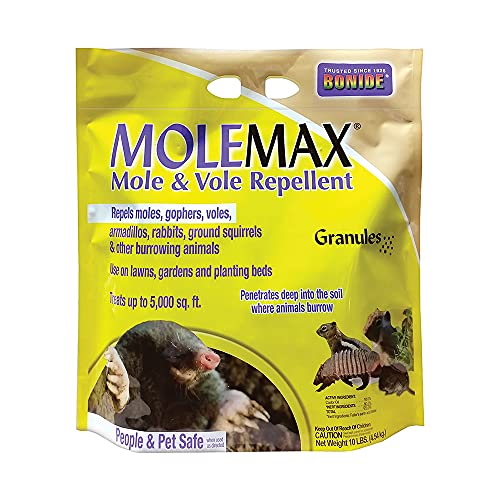
For larger outdoor coverage rather than vole-specific bait, Bonide MoleMax Granules, 10 lb is a ready-to-use repellent granule. Its castor-oil formulation is intended to make treated soil unpalatable to burrowing animals, and the maker says a 10-pound package treats up to 5,000 square feet for up to three months when used as directed. The target range also includes rabbits and ground squirrels. This is a repellent, not a vole-killing pellet, so it suits people trying to discourage activity across a lawn or garden rather than place vole bait at activity points. Keep expectations tied to the treated area and directed use.
Bottom line: Pick this when broad lawn repelling matters more than baiting voles.
Kaput Combo Bait Place Packs

Kaput Combo Bait Place Packs differs from vole-specific pellets by targeting several rodents and fleas with enclosed place packs. Each of the 32 packs contains 2 ounces, and the maker identifies warfarin at 0.025% and imidacloprid at 0.020% as active ingredients. Its claimed target list includes Norway and roof rats, house mice and pine voles, so it may be relevant when those pests are part of the problem. This is a rodenticide bait, not a poison-free vole treatment; use only the bait station and placement directions on its label, and keep it inaccessible to children, pets and wildlife.
Bottom line: Choose this only when its rodent targets and bait-station format fit.
MoleX Mole Bait Pellets, 8 oz

MoleX Mole Bait Pellets, 8 oz is a mole-control pellet, not a vole-specific product, which is the key distinction from VoleX Vole Control Pellets. The 8-ounce bag is described by the maker as a ready-to-use, all-natural, non-toxic solution for indoor and outdoor use that requires no mixing or spraying and has no offensive odor. Its target is moles, so it is a poor match if you have confirmed vole runways or plant damage. The package also uses a different pest-control approach than a lawn repellent granule: choose it only when mole control is the actual goal and follow its label for placement.
Bottom line: Pick this for moles, not for a confirmed vole problem.
How to Choose Vole Control Pellets
Start by identifying the animal, because vole pellets, mole baits and lawn repellents are not interchangeable. Voles are small rodents that eat plants and often leave surface runways through grass; moles primarily feed on soil invertebrates and create raised tunnels or soil mounds. If you find clipped stems, gnawed roots or narrow paths in turf, prioritize a vole-targeted product such as VoleX Vole Control Pellets. If raised ridges and molehills dominate, a mole product is the closer match. When the animal is uncertain, inspect for these signs before applying any bait. Avoid choosing by the word “burrowing” alone: a product’s target list and format determine whether it is suited to the pest and treatment area.
Pellets, Place Packs and Repellent Granules
Choose the format according to the job: localized bait placement and broad soil treatment solve different problems. Pellets can be placed at activity areas according to the label; a place pack is a premeasured bait portion intended for a bait station; granules are spread over an outdoor area. A bait station helps restrict access to rodenticide, while a granule treatment depends on applying the right amount across its coverage. Use this quick guide to avoid treating a mole problem with vole bait or expecting a repellent to kill pests.
| Need | Closest format |
|---|---|
| Vole-targeted pellet application | VoleX Vole Control Pellets |
| Broad lawn or garden repelling | Bonide MoleMax Granules, 10 lb |
| Multiple rodent targets in bait stations | Kaput Combo Bait Place Packs |
| Mole bait pellets | MoleX Mole Bait Pellets, 8 oz |
For a lawn-sized treatment, compare the area figure rather than package weight alone; only one of these options gives a square-foot coverage amount.
Vole Identification and Placement Mistakes
Voles commonly use shallow surface runways and feed on grasses, roots, bulbs and bark, while moles leave raised soil ridges as they tunnel below ground. Before selecting a control, distinguish those signs: baiting a mole with a vole product can miss the actual pest, and spreading a repellent does not make it a killing bait. Also, do not assume that a product described as poison-free is safe to eat or safe to leave accessible. Keep all pest-control products away from children, pets and non-target wildlife, and use rodenticide baits only in the labeled bait station and placement pattern. If the label does not authorize the intended site or pest, do not apply it there.
Safe Use Around Pets and Wildlife
Rodenticide baits require extra care because non-target animals can encounter bait directly or consume a poisoned rodent. Use a tamper-resistant bait station where the product label calls for one, and remove spilled or unused bait as directed. A claim that a formula avoids conventional poisons or is safe around pets is not permission to let animals ingest it; the label’s permitted sites, placement instructions and precautions control use. Wear gloves when handling bait packs if the label directs, wash hands afterward, and store products in their original containers away from food and feed. For any exposure, follow the emergency directions on the product label and contact a veterinarian or poison-control resource promptly.
Frequently Asked Questions
How can I tell voles from moles in my yard?
Voles often leave narrow surface runways and damage grass, roots or bark, while moles make raised soil ridges and mounds as they tunnel. Use those signs to identify the pest before choosing bait or repellent.
Do vole pellets work on moles too?
A vole-targeted pellet should not be assumed to control moles. Moles eat soil invertebrates, while voles are rodents that feed on plants, so choose a product whose target specifically matches the pest.
Can I spread vole pellets across my lawn?
Use pellets only in the placement pattern and sites permitted by their label. Broad surface spreading is not interchangeable with targeted placement, and keep pellets inaccessible to children, pets and wildlife.
Are poison-free vole pellets safe for pets?
A poison-free claim does not mean a product is edible or safe to ingest. Store and apply it according to the label, and prevent pets from reaching treated material.
How much area do mole and vole granules cover?
The Bonide MoleMax package says 10 pounds treats up to 5,000 square feet when used as directed. Coverage depends on applying the amount specified for the product and treatment area.