
Walnut Nut Cracker Tools Compared by Shell Type

For ordinary walnuts, Anwenk Spring-Loaded Nutcracker is the straightforward choice because its spring-loaded plier design is made for walnuts and other common nuts. Choose a tabletop model instead if you want a fixed base, or a purpose-built black walnut cracker if you regularly process harder shells.
A walnut nut cracker is a hand or lever tool that applies pressure to split a shell; the right style depends on shell hardness and how much control you want.
We earn a commission if you buy through links on this page. As an Amazon Associate I earn from qualifying purchases. Products are compared on manufacturer specifications, not hands-on testing.
- Best overall: Anwenk Spring-Loaded Nutcracker – Spring-loaded pliers are expressly intended for walnuts and give you a compact, hand-held cracking style.
- Best for black walnuts: Black Walnut Nut Cracker (Steel) – Its steel design is made for black walnuts, regular walnuts, and hickory nuts.
- Best for tabletop use: JARGUUO Nutcracker with Wooden Base – The manual steel mechanism sits on a wooden base for countertop cracking.
| Product | Best for | Mechanism | Walnut fit | Material | Shop |
|---|---|---|---|---|---|
| Anwenk Spring-Loaded Nutcracker | Everyday walnuts | Spring-loaded pliers | Regular walnuts | Enameled aluminum, wood | Check Price on Amazon |
| Black Walnut Nut Cracker (Steel) | Hard-shell walnuts | Steel shear mechanism | Black, regular walnuts | Steel | Check Price on Amazon |
| JARGUUO Nutcracker with Wooden Base | Countertop cracking | Manual tabletop lever | Walnuts, pecans, chestnuts | Steel, wood | Check Price on Amazon |
| Zinc Nut and Seafood Cracker | Nuts and seafood | Handheld toothed cracker | Walnuts, hazelnuts | Zinc | Check Price on Amazon |
Walnut Nut Cracker Tools
Match the cracking mechanism to the walnut shell and the way you want to work.
Anwenk Spring-Loaded Nutcracker

For a hand-held tool aimed at everyday walnuts, Anwenk Spring-Loaded Nutcracker combines a spring-loaded plier mechanism with wood handles. The maker says it is intended for walnuts, pecans, hazelnuts, almonds, and Brazil nuts, and warns that it may not work for hard black walnuts or macadamias. Its compact form suits occasional kitchen or table use when you prefer to position each nut by hand. The limitation matters if your main task is processing especially hard shells; a dedicated lever-style black walnut cracker is a better match for that job.
Bottom line: Choose this for ordinary walnuts when a compact plier-style tool suits your cracking routine.
Black Walnut Nut Cracker (Steel)

Unlike the hand-held plier styles, Black Walnut Nut Cracker (Steel) is specifically intended for black walnuts as well as regular walnuts and hickory nuts. It is a 14-inch steel tool with a powder-coat finish, and the package includes a shear, hardware, and setup instructions. That specialization makes it relevant when hard black walnut shells are the regular task, rather than occasional standard walnuts. Its 10-pound weight and larger footprint make it less suited to someone seeking a small drawer tool; make room for a stable work area before choosing it.
Bottom line: Pick this when black walnuts are the main job and you can accommodate a substantial steel tool.
JARGUUO Nutcracker with Wooden Base
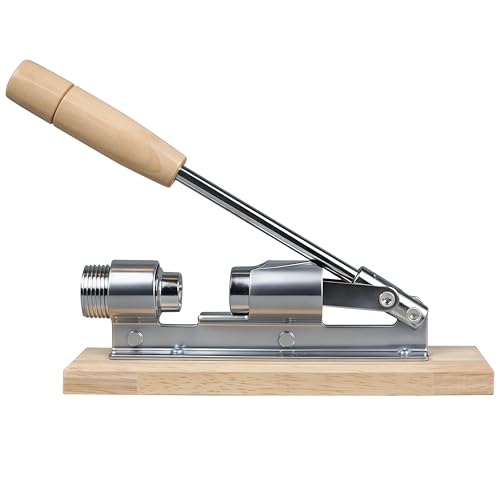
JARGUUO Nutcracker with Wooden Base stands apart with a manual cracking mechanism mounted on a wooden base, rather than a handheld plier frame. The maker says it is intended for pecans, walnuts, chestnuts, and other nuts; it requires no assembly. At 7.8 inches long and 1.17 pounds, it suits a counter or dining table where a fixed position is more convenient than holding a tool around each nut. The maker’s broad all-nuts phrasing does not establish suitability for every hard shell, so buyers focused on black walnuts should select a model expressly made for them.
Bottom line: Choose this for routine tabletop cracking across common nuts, not as a specialist hard-shell tool.
Zinc Nut and Seafood Cracker
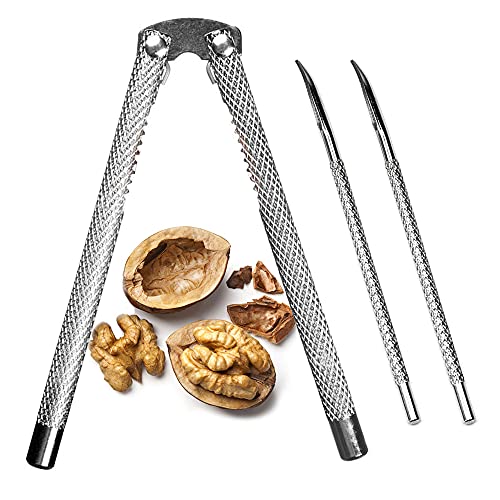
Zinc Nut and Seafood Cracker is the dual-purpose choice: its toothed jaws are designed for walnuts and hazelnuts as well as lobster and crab shells. The all-metal zinc frame weighs about 0.29 pounds, making it a compact handheld option if one tool needs to serve both nut and seafood meals. The machined teeth are intended to grip shells during cracking. Its nut range does not include black walnuts, so choose a purpose-built black walnut tool if those especially hard shells are your priority.
Bottom line: Pick this if you want one handheld tool for common nuts and shellfish.
How to Choose a Walnut Nut Cracker
Choose by shell hardness first, then by whether you want a handheld or fixed-base tool. Plier crackers use squeezing force and allow you to reposition individual nuts; tabletop lever models anchor the work and apply force through a longer handle. Standard walnuts generally suit ordinary nutcrackers, while black walnuts have notably harder shells and call for a tool designed for them. A practical rule: if black walnuts make up most of your harvest, favor a purpose-built steel cracker over a compact general-purpose plier. Match the opening or cracking chamber to the nut size so the shell is held securely rather than slipping out under pressure.
Walnut Shell Types and Tool Fit
Black walnuts and English walnuts are different cracking jobs: black walnut shells are much harder, so a tool suitable for regular walnuts may not handle them. A purpose-built black walnut cracker is the clearest choice for frequent hard-shell cracking; a general nutcracker is more appropriate for ordinary walnuts and mixed everyday nuts. Shell size also matters because a small nut may move inside a wide jaw, while an oversized nut may not seat correctly. Before cracking, position the seam toward the jaw or pressure point where the tool can split the shell with control. Keep fingers clear of the closing jaws and falling shell fragments.
Handheld and Tabletop Walnut Crackers
Handheld plier tools trade a compact footprint for repeated hand squeezing, while tabletop lever models trade storage space for a fixed work surface. A toothed seafood cracker adds a second use for crab or lobster shells, but that versatility does not make it a specialist black walnut cracker. Use this comparison to narrow the style by the task rather than by appearance.
| Need | Tool style | Useful distinction |
|---|---|---|
| Common walnuts in a drawer-friendly tool | Handheld pliers | Position and squeeze each nut |
| Black walnuts as a regular task | Purpose-built steel cracker | Designed for harder shells |
| Countertop use across common nuts | Manual tabletop lever | Base stays on the work surface |
| Nuts and shellfish | Toothed handheld cracker | Dual-purpose shell cracking |
Safe Walnut Cracking and Cleanup
Crack nuts on a stable surface and keep hands out of the jaw path; sudden shell splits can shift the nut or release fragments. Eye protection is sensible when repeatedly cracking hard shells, especially with a lever tool that concentrates force. Use only one nut at a time and seat it before applying pressure instead of stacking nuts or striking the tool. Remove shell pieces and nut residue after use, then dry metal parts before storage to limit corrosion. Wood-handled or wooden-base tools should be kept dry rather than soaked, since prolonged moisture can damage wood and loosen joints.
Frequently Asked Questions
Can a regular nutcracker open black walnuts?
Some general nutcrackers may not handle black walnuts because their shells are especially hard. If black walnuts are your main crop, choose a tool specifically made for them rather than relying on a standard plier cracker.
How should I position a walnut in the cracker?
Place one walnut at a time so the shell seam faces the cracking pressure when the tool’s shape allows it. Keep fingers outside the closing jaws, and use a stable work surface for lever-style tools.
Should walnuts be cracked with a handheld or tabletop tool?
A handheld tool is convenient for occasional nuts and compact storage, while a tabletop lever can be easier to position for repeated cracking. Choose a dedicated black walnut model if hard-shell walnuts are a frequent job.
How do I keep walnut shells from scattering?
Crack one nut at a time over a shallow tray or bowl to catch fragments. Applying pressure gradually on a stable surface helps keep the nut controlled as the shell splits.
Can a nutcracker also open crab or lobster shells?
Some toothed metal crackers are designed for both nuts and shellfish, while ordinary walnut crackers may not be. Check that dual-purpose use is part of the tool’s intended function before using it on seafood.