
Water Pump Stop Leak: 4 Coolant Sealers Compared

For a coolant leak at a water pump, K-Seal ST5501 Coolant Leak Repair is the closest match because its maker says it seals water-pump leaks and works with all antifreeze types. Choose Bar’s Leaks Radiator Stop Leak, 11 oz if water-pump lubrication and rust inhibition matter alongside broader leak coverage; a pump with a failed bearing or damaged shaft may need mechanical repair, not sealer.
Coolant stop leak products circulate through a cooling system to seal small openings; they are not a substitute for diagnosing the source or repairing a failing pump.
We earn a commission if you buy through links on this page. As an Amazon Associate I earn from qualifying purchases. Products are compared on manufacturer specifications, not hands-on testing.
- Best overall: K-Seal ST5501 Coolant Leak Repair – Its maker specifically includes water-pump leaks and says it is compatible with all antifreeze types.
- Best for pump lubrication: Bar’s Leaks Radiator Stop Leak, 11 oz – Its formula includes water-pump lubricant and rust and scale inhibition.
- Best for pump-casing leaks: K-Seal ST9501 Coolant Leak Repair – Its product name specifically includes water-pump casing leaks.
| Product | Best for | Size | Water-pump coverage | Coolant compatibility | Shop |
|---|---|---|---|---|---|
| K-Seal ST5501 Coolant Leak Repair | Broad coolant compatibility | 8 oz | Water-pump leaks | All antifreeze types | Check Price on Amazon |
| K-Seal ST9501 Coolant Leak Repair | Pump-casing coverage | 472 ml | Water-pump casing | — | Check Price on Amazon |
| Bar’s Leaks Radiator Stop Leak, 11 oz | Pump lubrication | 11 oz | Water-pump seal lubricant | All coolant types or water | Check Price on Amazon |
| Bar’s Leaks Cooling System Stop Leak, 16.9 oz | Radiator leak coverage | 16.9 oz | — | — | Check Price on Amazon |
Water Pump Stop Leak Products
Compare pump-specific coverage, coolant compatibility and package size before choosing a sealer.
K-Seal ST5501 Coolant Leak Repair

K-Seal ST5501 Coolant Leak Repair is the clearest fit for a water-pump leak because its maker explicitly includes the pump among the leak locations it targets. The 8-ounce formula is a one-step, pour-and-go treatment for cars and light trucks with up to 12 cylinders, and the maker says it mixes with all antifreeze types without flushing. That compatibility makes it a reasonable pick when the coolant type is a concern. The maker also cautions that bubbles from the radiator or reservoir can indicate an over-pressurized system; a continuing leak or those bubbles calls for diagnosis rather than repeated sealer use.
Bottom line: Choose this when you want a pump-specific sealer compatible with varied antifreeze types.
K-Seal ST9501 Coolant Leak Repair

K-Seal ST9501 Coolant Leak Repair distinguishes itself by naming water-pump casing leaks among the areas its multipurpose formula targets. Its 472 ml package is a larger format than the 8-ounce K-Seal option, and the product name describes it as pour-and-go. That makes it relevant when the suspected leak is at the pump casing rather than a vague coolant loss. Sealer cannot restore a worn pump bearing or damaged shaft.
Bottom line: Choose this when the suspected leak is specifically at the pump casing.
Bar’s Leaks Radiator Stop Leak, 11 oz

Bar’s Leaks Radiator Stop Leak, 11 oz differs from the pump-casing-targeted choices by emphasizing lubricant for the water-pump seal, plus rust and scale inhibition. The 11-ounce dissolved pelletized formula is also described as sealing internal, external and coolant-to-oil leaks, and it works with conventional and extended-life antifreeze as well as straight water. Its broad material coverage includes plastic, aluminum and metal components. The distinction matters: the specifications names pump lubrication, not a specific water-pump leak location, so choose it for that added function rather than assuming it will repair a failed mechanical seal or bearing.
Bottom line: Choose this when pump-seal lubrication is a priority alongside broad leak coverage.
Bar’s Leaks Cooling System Stop Leak, 16.9 oz
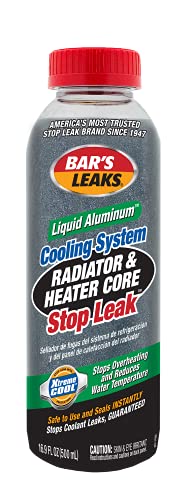
Bar’s Leaks Cooling System Stop Leak, 16.9 oz is a larger-format cooling-system sealer whose targets include radiator, freeze-plug, gasket and heater-core leaks. Those named targets distinguish it from products that explicitly identify water-pump coverage, so it is a less direct match for a leak traced to the pump. The package is 16.9 ounces, and the specifications identifies the formula as liquid aluminum. Consider it when the leak source is one of its named areas, but verify that the sealer is appropriate for the specific cooling system before adding it. A pump leak still needs a pump-focused diagnosis.
Bottom line: Choose this for its named radiator and cooling-system leak targets, not pump-specific coverage.
How to Choose Water Pump Stop Leak
Choose a sealer whose leak coverage includes the water pump or pump casing, and match its coolant compatibility to the fluid already in the vehicle. Stop leak products circulate with coolant and may seal small openings, but they cannot repair a loose pulley, worn bearing, cracked housing or damaged shaft. A practical decision rule: if the pump is noisy, wobbles, or leaks heavily, prioritize mechanical inspection over a sealer. A small seep with a stable temperature gauge is a different situation from rapid coolant loss. Do not open a hot cooling system; pressure can eject scalding coolant. Let the engine cool fully before checking the reservoir or radiator cap.
Where Water Pump Leaks Come From
A water pump can leak from its shaft seal, gasket or housing, and the source changes what a stop leak product can reasonably address. Coolant emerging from a pump’s weep hole often signals an internal seal problem; noise or shaft play points toward wear that a circulating sealer cannot reverse. A leak at the pump-to-engine joint may instead involve the gasket or mating surface. Dried coolant residue can help locate a seep, but leaks can travel along nearby components, so trace the wettest point rather than assuming the drip’s landing spot is the source. If coolant loss is accompanied by overheating, stop driving and investigate: low coolant can quickly compromise engine cooling.
Coolant Sealer Types and Compatibility
Cooling-system sealers use different formulas, and compatibility matters as much as package size. Some are described as one-step liquids, while others use pelletized material; product claims about compatibility should be matched to the coolant chemistry already in the vehicle. Conventional and extended-life coolants may use different inhibitor packages, so do not treat color alone as a reliable chemistry identifier. The table separates the options by the feature that is most useful for this search. Confirm the system’s coolant type and any product-specific application requirement before adding sealer, and never combine products just because both claim broad compatibility. Excess material can complicate later repairs or cooling-system service.
| Need | Relevant option | Decision point |
|---|---|---|
| Pump leak coverage | K-Seal ST5501 Coolant Leak Repair or K-Seal ST9501 Coolant Leak Repair | Match the pump or casing target |
| Pump-seal lubrication | Bar’s Leaks Radiator Stop Leak, 11 oz | Its formula names water-pump lube |
| Radiator and other named leaks | Bar’s Leaks Cooling System Stop Leak, 16.9 oz | Its targets do not name the pump |
Safe Use and Common Sealer Mistakes
Use stop leak only in a fully cooled system and only after identifying the leak source. A cooling system is pressurized when hot, so removing a radiator cap or opening a pressurized reservoir can cause severe burns. Do not pour sealer into a hot engine, exceed the product’s directed amount, or use multiple sealers together. A rising temperature gauge, steam, persistent bubbling or continued coolant loss means the underlying problem needs diagnosis, not another dose. Sealer is also a poor substitute for a pump replacement when the shaft, bearing or housing is damaged. After any cooling-system repair, check the coolant level and watch for renewed leakage during normal operation.
Frequently Asked Questions
Can stop leak fix a water pump seal?
A sealer may address a small seep if its coverage includes the water pump, but it cannot restore a worn bearing or damaged shaft. Noise, pulley play or heavy coolant loss calls for mechanical diagnosis.
Can I add coolant sealer to a hot engine?
No; wait until the engine and cooling system are fully cool before opening a cap or adding a product. Hot systems are pressurized and can eject scalding coolant.
Does coolant color identify the right sealer?
Color alone is not a reliable way to identify coolant chemistry. Check the vehicle’s required coolant type and match that to the product’s compatibility claims.
What does a water pump weep-hole leak mean?
Coolant at the weep hole commonly points to a failing internal pump seal. A sealer might temporarily affect a small seep, but it will not repair worn pump components.
Should I use sealer if my engine is overheating?
No; stop driving and diagnose the overheating cause first. Low coolant, a failed pump or another cooling-system fault can lead to engine damage, and sealer is not a safe substitute for repair.