
Waterproof Underground Storage Containers Compared by Fit

G-Stash 3.5-Gallon Capsule is the strongest match for most buyers because it combines a 3.5-gallon capsule with a threaded seal and gasket. Choose TUSC Small PVC Vault for a compact vault, or QPS Large Time Capsule for a small keepsake capsule designed for a future opening.
Underground containers are meant to be buried, but soil moisture and groundwater can challenge seals; match the container to the contents and burial conditions.
We earn a commission if you buy through links on this page. As an Amazon Associate I earn from qualifying purchases. Products are compared on manufacturer specifications, not hands-on testing.
- Best overall: G-Stash 3.5-Gallon Capsule – A 3.5-gallon capsule pairs a threaded seal and gasket with a removable dry bag insert.
- Best for compact storage: TUSC Small PVC Vault – Its 4-by-4-inch footprint is narrower than the other underground options.
- Best for keepsakes: QPS Large Time Capsule – Its use centers on letters, photos and other time capsule mementos.
| Product | Best for | Capacity or size | Dimensions | Seal or material | Shop |
|---|---|---|---|---|---|
| G-Stash 3.5-Gallon Capsule | Valuables outdoors | 3.5 gallons | 13.5 × 13.5 × 12.5 in | Crosslink polyethylene; gasket seal | Check Price on Amazon |
| TUSC Small PVC Vault | Compact valuables | Small | 4 × 4 × 11 in | PVC; sealed design | Check Price on Amazon |
| QPS Large Time Capsule | Family keepsakes | — | 3.62 × 3.62 × 6.89 in | Plastic; airtight and waterproof | Check Price on Amazon |
Waterproof underground storage containers
Compare each container’s size and intended use against your burial plan and the items you need to protect.
G-Stash 3.5-Gallon Capsule

Unlike a simple keepsake tube, this 3.5-gallon capsule has an inner track that seats it underground, raises it for lid access or releases it for removal. The maker says its threaded inner seal and heavy-duty gasket keep out moisture and seepage; it also includes a removable roll-top dry bag insert made from 500D PVC tarpaulin with mesh lining. The UV- and weather-resistant crosslink polyethylene body suits outdoor storage where a larger capsule is useful. Its 13.5-inch width and length call for a wider hole than the compact vault, so measure the site and contents first.
Bottom line: Choose this for larger outdoor storage with a retrieval track and included dry bag.
TUSC Small PVC Vault

The TUSC is the narrowest option here, with a 4-by-4-inch footprint and an 11-inch height. The maker says its sealed design resists water infiltration, humidity and temperature fluctuations, and describes the construction as heavy-duty for underground conditions and soil pressure. A removable steel washer can be used with a metal detector, while the maker cautions that buried metal contents may still be detectable. This compact form is suited to small supplies or valuables rather than broad keepsakes; the 4-inch width limits what can fit. Confirm the item dimensions before choosing a burial spot.
Bottom line: Choose this when a small footprint matters more than broad storage space.
QPS Large Time Capsule
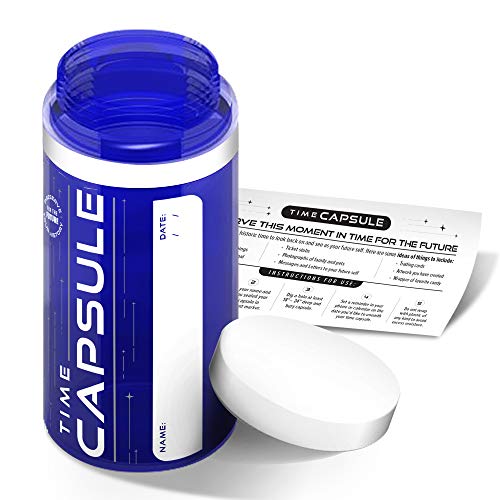
For letters, photos and family mementos, this capsule is presented as a time capsule activity rather than a general supply vault. Its dimensions are 3.62 inches wide and long and 6.89 inches high, making it the smallest of these options by height. The maker describes it as airtight and waterproof and highlights future openings for children, teens and family milestones. That compact size works best for flat notes and small keepsakes, not bulky belongings. If the capsule will hold irreplaceable paper, keep a second copy elsewhere; a seal’s purpose cannot remove the risk of damage during burial or recovery.
Bottom line: Choose this for a small collection of letters, photos or milestone keepsakes.
How to choose a waterproof underground container
Start with the contents and the soil conditions, not the word “waterproof.” A gasket or threaded closure can help keep water out, but buried containers also face damp soil and pressure from the surrounding ground. A high water table or a spot that floods can expose a container to sustained water pressure; avoid burying valuables where water routinely pools. Measure the largest item and leave room for its shape and packing material. Then compare the excavation footprint: a container with a 13.5-inch width needs a substantially broader hole than one with a 4-inch width. For paper or electronics, add a separate sealed inner layer rather than relying on a single closure.
Match container dimensions to the burial site
Container dimensions set the minimum space needed, but the hole must be wider than the container to allow placement and careful backfill. Measure width, length and height in inches, and consider whether the shape can pass through gates, roots or a narrow access point. Digging near buried utility lines is hazardous; in the United States, contact 811 before excavation so underground utilities can be marked. Avoid placing a container where vehicles, foundations or heavy equipment will load the soil above it. Keep a written location record or a mapped marker that does not disclose the cache to passersby. For a compact site, choose a narrow cylinder-like form; for mixed-size items, prioritize usable interior dimensions.
What a waterproof seal can and cannot promise
A waterproof claim describes a goal for keeping liquid out, but it does not by itself tell you an immersion depth, duration or burial-pressure rating. Those are different conditions: standing water can press on a closure continuously, while wet soil can force moisture against seams and threads. Before burying critical contents, verify any depth or duration limit and whether the container is intended for the local water table. Do not assume airtight means safe for every item; damp contents trapped inside can remain damp. Dry everything fully, use an inner barrier for moisture-sensitive items, and avoid placing batteries or chemicals in a sealed container unless their storage requirements permit it. A raised, well-drained location reduces exposure.
Plan recovery and protect what goes inside
Plan how to find and open a buried container before filling it. Record the location using measured distances from permanent landmarks, and keep that record secure; a phone coordinate alone can be imprecise under tree cover or near buildings. Keep the lid and closure clean during packing, since grit caught on threads or a gasket can compromise how the parts seat. Put paper in a sealed inner pouch and separate metal items from documents to reduce abrasion and rust transfer. Mark the outside or keep an inventory of contents, and schedule a retrieval date so a time capsule is not forgotten. For any excavation, identify utilities first and avoid digging into tree roots or beneath structures.
Frequently Asked Questions
Can any waterproof container be buried underground?
No; waterproofing does not automatically mean a container is built for soil pressure or continuous groundwater exposure. Check for an explicit burial use and any immersion or pressure limit, and avoid sites that flood.
How deep should an underground storage container go?
There is no universal burial depth because soil, groundwater and container construction differ. Use only the maker’s depth guidance, and choose a shallower, accessible location rather than burying where heavy loads or standing water occur.
How can I protect documents in a buried container?
Place fully dry documents in a separate sealed inner pouch before packing them. Paper can be damaged by trapped moisture, so keep a duplicate copy elsewhere and avoid storing irreplaceable originals as the only copy.
How do I find a buried container later?
Keep a secure location record using measured distances from at least two permanent landmarks, not only a phone coordinate. Before digging to recover it, contact 811 in the United States to locate buried utilities.
Should I test a container before burying it?
Yes, a noncritical trial can reveal a poor closure before valuable items go underground. Follow any maker guidance for testing, keep the trial away from flooding, and do not assume a short test proves long-term protection.