
Weed Wacker With Blades Instead of String: 5 Picks

For a weed wacker with blades instead of string, choose 24V 3-in-1 Cordless Trimmer for its stringless blade option and 3-in-1 setup. Choose another model if you want a 13-inch cutting path, a 40V battery platform, or multiple blade materials and attachments.
These cordless tools use replaceable blades rather than relying only on a spinning line; check which blade types are included and compatible before choosing.
We earn a commission if you buy through links on this page. As an Amazon Associate I earn from qualifying purchases. Products are compared on manufacturer specifications, not hands-on testing.
- Best overall: 24V 3-in-1 Cordless Trimmer – Its stringless blade option and 3-in-1 configuration match the request directly.
- Best for lightweight handling: 21V Cordless Trimmer With Three Blade Types – It includes three blade types and lists a 2.76-pound weight.
- Best for blade variety: 21V 4-in-1 Cordless Trimmer – It includes cutting line plus saw, alloy, and plastic blades.
| Product | Best for | Power | Cutting setup | Shaft range | Shop |
|---|---|---|---|---|---|
| 24V 3-in-1 Cordless Trimmer | Stringless blade option | 24V | Blade, string trimmer, brush cutter | 33–47 in. | Check Price on Amazon |
| 21V Cordless Trimmer With Three Blade Types | Lightweight blade options | 21V (features say 24V batteries) | Three blade types | — | Check Price on Amazon |
| 21V 4-in-1 Cordless Trimmer | Multiple blade materials | 21V | Line, saw, alloy, plastic blades | 34–48 in. | Check Price on Amazon |
| Greenworks 40V 13-Inch Trimmer | Wider cutting path | 40V | 0.065-in. auto-line, brush-cutter attachment | 40–52 in. | Check Price on Amazon |
| Greenworks 24V 12-Inch Trimmer | Adjustable user height | 24V | 0.065-in. dual line, plastic blades | — | Check Price on Amazon |
Weed Wackers With Blades Instead of String
Compare the blade arrangements, power systems, and reach adjustments before choosing a cordless trimmer.
24V 3-in-1 Cordless Trimmer
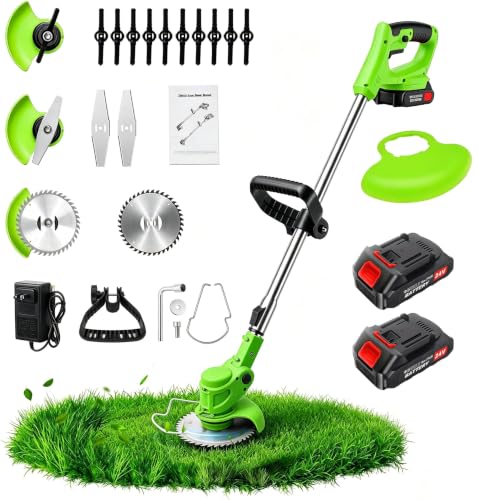
Unlike the other options, this model explicitly identifies a stringless weed-trimmer mode alongside string-trimmer and brush-cutter functions. Its product features claim a 650W motor running at 11,000 RPM and two 24V batteries, each with a 30-minute runtime. The 33–47-inch adjustable shaft can suit users who want to change reach, while the multi-function design may work for mixed grass and light brush tasks. The limitation is that the maker does not identify the blade material or dimensions, so confirm blade compatibility before ordering if those specifications matter.
Bottom line: Choose this if a stringless blade mode and three functions are the priority.
21V Cordless Trimmer With Three Blade Types

This model stands out for including three blade types in a stringless-style trimmer: the product name calls it a 6-inch stringless trimmer, and its features describe a plastic blade, alloy blade, and a third blade type. The product features also claim an 11,000 RPM motor and up to 30 minutes of combined runtime from two batteries. At a 2.76 pounds, it is the lightest weight among these options. Battery voltage conflicts between the product name and features, so confirm the correct battery specification before choosing it.
Bottom line: Pick this for three blade types and the lowest weight.
21V 4-in-1 Cordless Trimmer
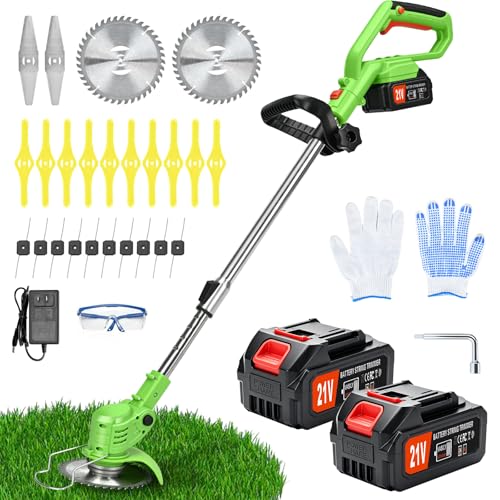
This is the most varied cutting setup here, combining cutting line with a saw blade, rhombus alloy blade, and plastic blade. That makes it a partial match for buyers who want blade choices but still want a line option. The telescoping pole adjusts from 34 to 48 inches, and the handle and cutting head pivot for different working angles.
Bottom line: Choose this if you want several blade materials and a line option.
Greenworks 40V 13-Inch Trimmer

Unlike the stringless options, this Greenworks model is primarily a string trimmer, with a brush-cutter attachment and 20 replacement plastic blades included. Its 13-inch cutting width is the widest here, and the seven-position pivoting head supports different trimming angles. The telescoping shaft adjusts from 40 to 52 inches. The maker claims auto-line handles weeds up to 1.5 inches, but the model remains a partial fit if you want blades to replace string altogether; its cutting system includes both line and blade components.
Bottom line: Pick this for a wider cutting path and included replacement blades.
Greenworks 24V 12-Inch Trimmer

This Greenworks model pairs a conventional 0.065-inch dual-line trimmer with 10 included plastic blades, so it offers blade replacements without being a stringless-only tool. Its telescoping aluminum shaft is described as fitting users from 4 feet 8 inches to 6 feet 5 inches, a broader stated user-height range than the other shaft descriptions here. The product also converts between trimmer and edger modes. Buyers who specifically want to avoid string should note that dual line is part of the cutting setup, not an optional accessory.
Bottom line: Choose this if adjustable user height and edging matter more than stringless operation.
How blade and string trimmers differ
String trimmers use a fast-spinning nylon line, while blade-capable models use replaceable plastic or metal cutting pieces. Nylon line is commonly used for grass and soft weeds around edges; blades can offer another option for tougher growth, but the exact task depends on the blade material and tool design. Plastic blades can wear or break on hard surfaces, so keep them clear of pavement, stones, and tree trunks. A metal blade is not interchangeable with a plastic one unless the tool is designed for it. Use the guard specified for the installed cutting head, wear eye protection, and stop the motor before changing cutting parts.
For a direct stringless choice, prioritize a model that explicitly names a blade mode, not just one that includes spare plastic blades alongside line.
How to choose blade types and reach
Choose by cutting head first: plastic blades suit lighter trimming, while a saw or alloy blade is intended for a different, heavier cutting task and requires a compatible tool and guard. The products here vary from stringless blade modes to combinations that retain nylon line, so distinguish “blades included” from “blades replace string.” Shaft reach is another practical fit: the adjustable poles in this group range from 33–47 inches to 40–52 inches. Measure the handle-to-ground reach that lets you work upright before picking a range. A longer pole is not automatically better if it makes the cutting head harder to control.
Use only the cutting attachment permitted by the tool’s manual, and never install a metal blade on a trimmer not designed for it.
What the five cutting setups include
The main decision is whether you want to eliminate line or keep it as an option. The table distinguishes explicitly stringless arrangements from hybrid line-and-blade tools; it does not imply that every included blade fits every task.
| Setup | What to look for | Fits this need |
|---|---|---|
| Stringless blade mode | Product explicitly names blade operation | Replace line with a compatible blade mode |
| Line plus blades | Both nylon line and blade parts included | Keep line available while trying blades |
| Line-forward trimmer | Auto-feed or dual line is central | Conventional grass trimming with blade extras |
When a product names several modes, verify which attachment is required for each one. A replacement blade count does not establish the blade material, diameter, or suitability for woody stems.
Safe setup and blade changes
Before changing a blade, switch the tool off and remove its battery; a trimmer can start unexpectedly if the trigger is pressed during handling. Check the cutting head, fasteners, and guard for damage before each use, and do not run the tool with a cracked blade or loose attachment. Keep people and pets away from the cutting area because hard debris can be thrown by either line or blades. Avoid contact with fences, rocks, and concrete, which can damage plastic blades and create projectiles. Use eye protection and sturdy footwear, and keep both hands on the handles while cutting.
Confirm the attachment and guard match the tool’s manual before installing any blade, especially a metal blade.
Frequently Asked Questions
Can a plastic blade replace trimmer string?
Only when the trimmer is designed for a plastic-blade attachment. Check the specified cutting head and guard, since blades are not universal across string trimmers.
Are metal blades safe on every weed wacker?
No; a metal blade should be used only on a tool designed for that attachment. The correct guard and fasteners matter, and an incompatible blade can create a serious injury hazard.
How do I know what shaft length I need?
Choose a pole range that lets you hold the handles comfortably while keeping the cutting head near the ground without bending. The models here span adjustable ranges from 33–47 inches to 40–52 inches.
Do replacement blades work on every trimmer?
No; replacement blades must match the trimmer’s head and attachment system. Confirm compatibility and blade dimensions before buying spare blades.
Should I use a blade near a sidewalk?
Avoid striking pavement with a blade because hard contact can damage the cutting part and throw debris. Use the tool’s intended edging mode or a compatible line head where the manual permits.