
Weldbond Adhesive Pros and Cons by Package Size

Weldbond Glue 101.4 fl oz suits larger projects because its 101.4-fl-oz jug holds the most adhesive; choose a smaller container if you need less glue or easier handling.
Weldbond is a PVA adhesive intended for bonding varied porous and craft surfaces; the main tradeoff is that a versatile glue may not suit every material pairing or exposure.
We earn a commission if you buy through links on this page. As an Amazon Associate I earn from qualifying purchases. Products are compared on manufacturer specifications, not hands-on testing.
- For 101.4 fl oz: Weldbond Glue 101.4 fl oz – The largest container here suits projects that will use substantially more adhesive.
- For 14.2 oz: Weldbond Multi-Surface Glue 14.2 oz – A middle-size container offers more glue than the 2-fl-oz bottle without the gallon jug volume.
- For 2 fl oz: Weldbond Glue 2 fl oz – The smallest package is suited to occasional or small-scale craft work.
| Product | Best for | Package size | Color | Shop |
|---|---|---|---|---|
| Weldbond Glue 101.4 fl oz | Large projects | 101.4 fl oz | White | Check Price on Amazon |
| Weldbond Multi-Surface Glue 14.2 oz | Mosaic projects | 14.2 oz | Cream | Check Price on Amazon |
| Weldbond Glue 2 fl oz | Small crafts | 2 fl oz | Clear | Check Price on Amazon |
Weldbond Adhesive Sizes
Compare the package volumes and colors, then match the amount of glue to the scale of your work.
Weldbond Glue 101.4 fl oz

The 101.4-fl-oz jug provides the most adhesive among these Weldbond options, making it the practical choice when a project will use a substantial amount. The maker says it bonds wood, tile, glass, craft foam, fabric, stone, cement, concrete and other porous surfaces; it also claims a clear, flexible, water-resistant bond and water cleanup. The container measures 5.4 inches high, 9.8 inches long and 6.2 inches wide. Its main drawback is bulk: occasional users may find this volume cumbersome to store and more glue than a small project needs.
Bottom line: Choose this jug when your work regularly calls for a large volume of adhesive.
Weldbond Multi-Surface Glue 14.2 oz
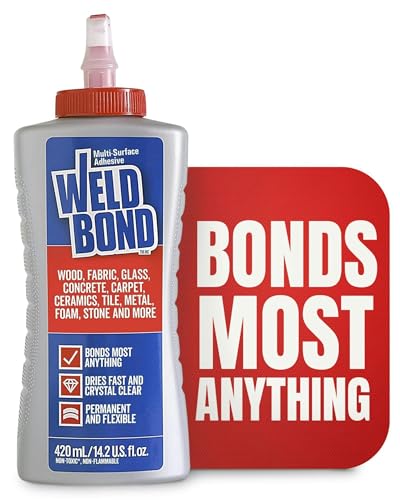
The 14.2-ounce bottle sits between the tiny craft bottle and the large jug, so it suits recurring home projects without committing to gallon-sized volume. The maker identifies wood, ceramic, glass, tile, pottery, porcelain, fabric and carpet as bondable materials, and recommends a thin coat on clean faces followed by pressing the pieces together. One important limitation is explicit: this adhesive does not bond metal with ceramic. Its cream color may also matter when working on a pale surface, even though the maker says the dried bond becomes crystal clear.
Bottom line: Pick this bottle for regular mosaic or craft work, but not a metal-to-ceramic join.
Weldbond Glue 2 fl oz

The 2-fl-oz bottle is the smallest option here, which makes it a better scale match for occasional repairs and limited craft projects than a large jug. The maker says the adhesive works on wood, ceramic, glass, tile, Styrofoam, fabric and porous surfaces, dries clear, and can be cleaned up with water. The compact amount limits waste when only a little glue is needed, but it is a poor fit for repeated large applications because it contains far less adhesive than the other sizes. The maker also claims a 20-minute set time, which is not the same as a full cure.
Bottom line: Choose this bottle for small jobs where a modest amount of glue is enough.
Weldbond Adhesive Pros and Cons
Weldbond’s main advantage is material range: the maker describes bonding across wood, ceramics, glass, tile, fabric and other surfaces, rather than limiting the glue to one craft. The maker also claims clear drying and water cleanup, useful where a visible residue or cleanup effort matters. The tradeoff is that multi-surface use does not mean every material pairing works; the 14.2-ounce product explicitly excludes metal-to-ceramic bonding. PVA adhesives also rely on the joint and surface: clean, close-fitting, porous faces generally give glue a better chance to form a sound bond than oily or contaminated surfaces. Do not assume a water-resistant claim means a joint can remain submerged; choose an adhesive specifically rated for continuous immersion when that is the exposure.
Choosing a Weldbond Package Size
Choose package volume by how much adhesive the project consumes, not by the number of materials on the label. The 2-fl-oz container fits occasional small work, 14.2 ounces covers a larger run of craft projects, and 101.4 fluid ounces is intended for repeated or large-scale use. A useful decision rule is to select the smallest package that can cover the project plus a modest margin, especially if you have limited storage space. Adhesive left unused can thicken or dry if the cap is not sealed; wipe the opening and close it promptly. Package dimensions can also affect where the container fits, so compare the jug’s height and footprint with your shelf or work area before bringing it home.
Surface Preparation and Bonding
Clean, dry surfaces are the starting point for a dependable adhesive joint; dust, grease and loose paint can interfere with contact. Apply a thin, even coat rather than a thick puddle, then align the pieces before the adhesive begins setting. Porous materials such as unfinished wood can absorb glue differently from glazed tile or glass, so a test joint on scrap is sensible when appearance matters. The maker claims a 20-minute set time for some Weldbond formulations, but handling set and full cure are different stages; avoid loading a joint until it has had adequate cure time. Keep glue out of eyes and mouths, and supervise children during craft use even when the maker describes a product as non-toxic.
| Project scale | Package to consider | Reason |
|---|---|---|
| Occasional small craft | 2 fl oz | Least adhesive volume |
| Repeated crafts or mosaics | 14.2 oz | Middle package size |
| Large or ongoing work | 101.4 fl oz | Largest package volume |
Common Weldbond Adhesive Mistakes
A common mistake is treating “multi-surface” as a guarantee for every combination; the 14.2-ounce product specifically says it does not bond metal with ceramic. Another is relying on glue to fill a wide gap: adhesive joints generally work best when mating faces fit closely, while gaps can weaken contact. Do not use a water-resistant claim as permission for prolonged immersion or assume weather exposure suits every joint design. Check compatibility on a small, hidden area if the surface is painted, coated or valuable, and confirm the adhesive is suitable for the exact material pairing before committing the whole project. Keep containers closed between uses and store glue away from heat and freezing conditions unless its packaging permits otherwise.
Frequently Asked Questions
How long does Weldbond take to set?
The maker claims a 20-minute set time for the larger and small Weldbond products in this comparison. Set time is not necessarily full cure, so avoid stressing the bond until it has cured adequately.
Does Weldbond bond metal to ceramic?
The 14.2-ounce Weldbond product explicitly says it does not bond metal with ceramic. For that material pairing, choose an adhesive specifically intended for both surfaces.
Can Weldbond be used outdoors?
The maker describes some Weldbond adhesive as weatherproof and water-resistant. Those claims do not establish suitability for continuous immersion, so use an adhesive rated for submerged conditions if that is the intended use.
How should surfaces be prepared for Weldbond?
Clean both surfaces and apply a thin coat before pressing the pieces together, as the maker advises for its mosaic glue. Dust, grease and loose finishes can interfere with adhesive contact, so remove contaminants and test a hidden area when appearance matters.
Is Weldbond safe for children to use?
The maker describes the larger and small products as non-toxic, but glue should still be kept out of children’s eyes and mouths. Adult supervision is prudent during craft use, especially for young children.