
Winter Hats for Men With Ear Flaps: 5 Fits Compared

FURTALK Fleece-Lined Earflap Beanie is the best starting point for most men who want a stretchy knit hat with fleece lining and extended ear coverage. Choose a trapper style instead if you want a chin strap or a removable face mask, or a brimmed beanie if you want a visor.
Winter hats with ear flaps cover the ears more fully than a standard beanie, but fit and construction vary; measure your head and match the style to your weather and activity.
We earn a commission if you buy through links on this page. As an Amazon Associate I earn from qualifying purchases. Products are compared on manufacturer specifications, not hands-on testing.
- Best overall: FURTALK Fleece-Lined Earflap Beanie – Its elastic knit, fleece lining and extended earflaps combine coverage with a stretchy fit.
- Best for face coverage: Connectyle Trooper Trapper Hat – The trapper design includes a detachable windproof face mask and an adjustable chin strap.
- Best for a brim: WMCAPS Brimmed Earflap Beanie – The beanie combines ear coverage with a brim intended to shield the face.
| Product | Best for | Style | Lining | Fit | Shop |
|---|---|---|---|---|---|
| FURTALK Fleece-Lined Earflap Beanie | Stretchy knit fit | Beanie | Fleece | One size | Check Price on Amazon |
| Mysuntown Trooper Trapper Hat | Chin-strap style | Trapper hat | Artificial fur | 22–24 in | Check Price on Amazon |
| Connectyle Trooper Trapper Hat | Removable face mask | Trapper hat | Polar fleece, faux fur | 22–23.6 in | Check Price on Amazon |
| WMCAPS Brimmed Earflap Beanie | Brimmed coverage | Brimmed beanie | Plush lining | One size | Check Price on Amazon |
| WMCAPS Fleece-Lined Earflap Beanie | Full ear coverage | Beanie | Fleece | One size | Check Price on Amazon |
Winter Hats for Men With Ear Flaps
Compare the silhouettes and fit details to choose the coverage that suits your winter routine.
FURTALK Fleece-Lined Earflap Beanie

FURTALK Fleece-Lined Earflap Beanie stands out for its stretchy viscose-blend knit and extended earflaps, rather than the straps and mask of a trapper hat. The fabric blend is 51% viscose, 26% spandex and 23% nylon, with a fleece lining. The maker says the hat is OEKO-TEX Standard 100 certified and designed for outdoor work and winter activities. Its one-size format may suit someone who prefers an elastic fit, but it gives less sizing guidance than a hat with a head-circumference range; measure your head if fit is a concern.
Bottom line: Choose this if you want a stretchy fleece-lined beanie with extended ear coverage.
Mysuntown Trooper Trapper Hat

Mysuntown Trooper Trapper Hat is a trapper-style hat with earflaps and a chin strap, distinct from the knit beanies in this group. Its name gives a 22–24-inch size range, and the features describe a 100% polyester outer shell with a breathable, waterproof sandwich construction. The maker describes its artificial-fur lining as soft and the hat as suited to cold weather. This structured style is a better fit for someone who wants a strap-secured silhouette; the maker does not establish whether the face mask is removable, so confirm that before choosing it for mask versatility.
Bottom line: Pick this for a strapped trapper silhouette and a 22–24-inch fit range.
Connectyle Trooper Trapper Hat
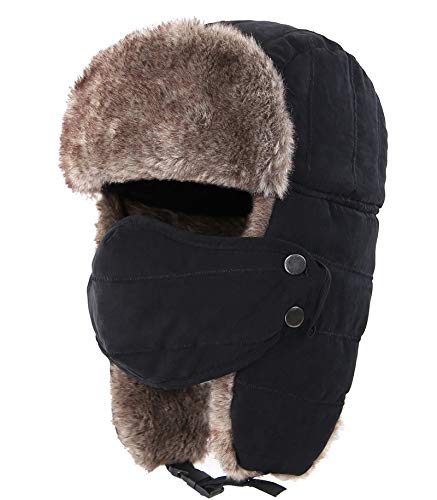
Connectyle Trooper Trapper Hat separates itself with a detachable face mask that can also be worn independently. The polyester-shell trapper hat has polar-fleece lining and faux fur at the earflaps, neck and forehead; its adjustable chin strap helps secure the fit. The head-circumference range is 22.0–23.6 inches, making it a more defined fit choice than a one-size beanie. Choose it when a removable face covering matters, but measure carefully: a head outside that range may not get the intended fit.
Bottom line: Choose this if a removable face mask and defined head-size range matter.
WMCAPS Brimmed Earflap Beanie

WMCAPS Brimmed Earflap Beanie is the only brimmed beanie among these options, adding a visor-like edge to its ear coverage. Its maker says the long plush lining extends to the ears and describes the brim as shielding the face from sun, rain and snow. The one-size format is aimed at men and women and is suggested for activities such as golf, hiking and everyday outdoor use. A brim adds coverage in front, but this is not the trapper style to pick if you need a chin strap or detachable face mask.
Bottom line: Pick this if you want ear coverage with a brim at the front.
WMCAPS Fleece-Lined Earflap Beanie
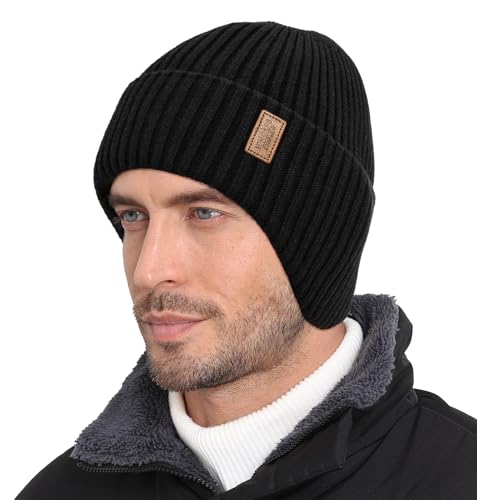
WMCAPS Fleece-Lined Earflap Beanie is another knit beanie, but its features emphasize a double-layer, cuff-style fit rather than a brim or trapper construction. The fabric blend is 50% viscose, 30% polyester and 20% nylon, with fleece lining. The maker says its earflaps cover the ears and describes the hat as suited to dog walking and outdoor work. Its one-size fit is intended to be elastic, but shoppers seeking a precise circumference range should favor a model with a measurement instead.
Bottom line: Choose this for a cuff-style fleece beanie intended to cover the ears.
How to choose a winter hat with ear flaps
Start with the coverage you need: an extended-earflap beanie covers the ears while a trapper hat adds a more structured shape, and some styles include a mask or chin strap. A brim adds a visor at the front but does not replace ear coverage. Measure around the head just above the eyebrows and ears, keeping the tape level; compare that number with any range. Adult hat sizing commonly falls around 21 to 24 inches, but head shape and stretch affect fit, so do not treat that range as a guarantee. For windy outdoor use, prioritize ear coverage that stays in place when you turn your head. If the hat will be worn with a helmet, check the helmet maker’s fit guidance; bulky insulation can change how a helmet sits.
Beanies and trapper hats compared
Beanies are knitted caps that stretch over the crown, while trapper hats have a more structured crown and earflaps that can often be secured under the chin. A brimmed beanie adds shade or a barrier against falling precipitation at the front, but does not provide a face mask. A separate mask is useful when you want coverage over the nose and mouth; confirm that it is detachable if you want to wear it independently. The table summarizes the practical distinction between these types, not a warmth ranking: warmth also depends on lining, fit, wind and activity.
| Style | Useful feature | Fit consideration |
|---|---|---|
| Earflap beanie | Stretch-knit crown | Check stretch and coverage |
| Trapper hat | Structured earflaps | Measure head circumference |
| Brimmed beanie | Front brim | Consider brim with eyewear |
Getting the right fit and coverage
A hat should sit level above the eyebrows and cover the ears without pinching or sliding when you move your head. Measure the head circumference above the ears; use the product’s range when available, and choose another size or adjustable design if your measurement falls outside it. A close fit helps limit gaps, but an overly tight hat can become uncomfortable, especially over long periods. With a face mask or chin strap, check that the strap rests comfortably and does not interfere with eyewear or other cold-weather gear. For outdoor work, make sure the hat does not obstruct peripheral vision or hearing needed for the task.
Care for fleece-lined winter hats
Check the care label before washing, because knit blends, fleece and faux fur can respond differently to heat and agitation. Hand washing or a gentle cold-water cycle is a common low-stress approach for mixed-fiber hats, while high heat can damage stretch fibers or distort a knit; avoid assuming a specific method when the care label says otherwise. Close or detach straps and masks as directed, and let a damp hat air-dry in its natural shape rather than placing it on a heater. Before storing it, make sure the lining is fully dry; trapped moisture can lead to odor and can make the hat unpleasant to wear.
Frequently Asked Questions
How should a winter hat with ear flaps fit?
A winter hat should sit level above the eyebrows and cover both ears without pinching or slipping. Measure around your head just above the ears and compare that number with the hat’s range; adult sizing commonly spans roughly 21 to 24 inches.
Are trapper hats warmer than earflap beanies?
Not automatically: warmth depends on lining, wind exposure, coverage and fit, not just the silhouette. A trapper hat with a face mask can cover more of the face, while an earflap beanie may provide a closer, stretch-knit fit.
Can I wear a winter hat under a helmet?
Only if the hat does not change the helmet’s fit or stability. Even thin layers can affect helmet positioning, so use the helmet maker’s fit guidance and avoid bulky earflaps beneath a snug helmet.
How often should I wash a fleece-lined winter hat?
Wash a winter hat when it becomes soiled or develops odor, following its care label. Use cool water and gentle handling when the label allows; high heat can damage stretch fibers and distort knit fabric.
What head measurement should I take for a winter hat?
Measure the circumference around your head just above the eyebrows and ears, keeping the tape level. Compare the measurement with the hat’s range; a difference of even an inch can change how securely the earflaps cover.