
Wood Look Contact Paper: 5 Rolls Compared by Size

Brown Natural Wood Grain Contact Paper is a good starting point for wood look contact paper because its 15.7-inch by 118-inch roll balances a familiar width with enough length for multiple small projects. Choose a wider roll if minimizing seams across a broad surface matters more, or a shorter roll for a smaller job.
Wood look contact paper is a self-adhesive decorative film for smooth surfaces; it is not a rigid wood panel. Measure the project before choosing a roll, since seams and trimming reduce the usable coverage.
We earn a commission if you buy through links on this page. As an Amazon Associate I earn from qualifying purchases. Products are compared on manufacturer specifications, not hands-on testing.
- Best overall: Brown Natural Wood Grain Contact Paper – A 15.7-inch by 118-inch roll with a matte finish and brown wood grain.
- Best for wider coverage: WENMER Brown Shiplap Contact Paper – Its 17.71-inch width covers more area per strip than the narrower rolls.
- Best for smaller projects: HOLOMEY Walnut Wood Grain Contact Paper – The 78.7-inch length suits a more limited surface than the longer rolls.
| Product | Best for | Roll width | Roll length | Material | Shop |
|---|---|---|---|---|---|
| Brown Natural Wood Grain Contact Paper | Matte wood look | 15.7 in | 118 in | Vinyl | Check Price on Amazon |
| WENMER Brown Shiplap Contact Paper | Wider strips | 17.71 in | 118 in | PVC | Check Price on Amazon |
| COSNIGHT Brown Wood Grain Contact Paper | Smooth surfaces | 15.7 in | 118 in | Vinyl | Check Price on Amazon |
| Brown Matte Wood Panel Contact Paper | Panel effect | 17.5 in | 118.1 in | Vinyl | Check Price on Amazon |
| HOLOMEY Walnut Wood Grain Contact Paper | Shorter projects | 16 in | 78.7 in | Vinyl | Check Price on Amazon |
Wood Look Contact Paper Compared
Compare roll dimensions and material before matching a pattern to your project surface.
Brown Natural Wood Grain Contact Paper

Brown Natural Wood Grain Contact Paper pairs a matte, frosted finish with a brown wood grain pattern, making it a fit for projects where a less glossy look is preferred. The roll is 15.7 inches wide and 118 inches long, with a grid on the backing to help guide cuts. The maker describes it as removable and waterproof. Its narrower width means a broad countertop or tabletop may require several strips, so plan the seam positions before peeling the backing. This option suits furniture accents and smaller flat surfaces where the grain can be aligned consistently.
Bottom line: Pick this for a matte brown grain and a long roll for smaller sections.
WENMER Brown Shiplap Contact Paper
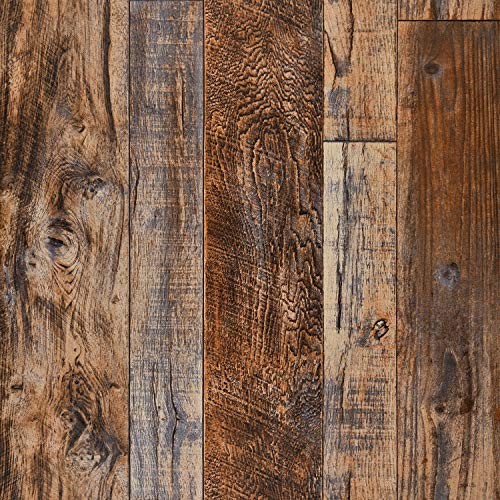
WENMER Brown Shiplap Contact Paper is the widest roll in this group at 17.71 inches, which can mean fewer vertical seams across a given surface than the narrower options. Its distressed brown shiplap pattern is made of PVC, and the maker describes the film as waterproof and removable. At 118 inches long, it provides substantial strip length for cabinet faces, shelves, or other flat areas. The shiplap look is more board-like than a continuous wood grain pattern, so buyers seeking subtle grain rather than visible plank lines may prefer another style.
Bottom line: Choose this for wider strips and a distressed shiplap appearance.
COSNIGHT Brown Wood Grain Contact Paper
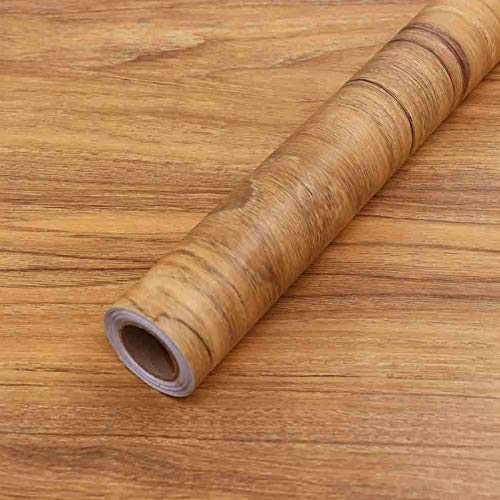
COSNIGHT Brown Wood Grain Contact Paper emphasizes a wear-layer surface and a brown wood grain look for smooth, dry areas such as shelves or drawers. The roll measures 15.7 inches by 118 inches, making its width comparable to Brown Natural Wood Grain Contact Paper and HOLOMEY Walnut Wood Grain Contact Paper, but longer than HOLOMEY Walnut Wood Grain Contact Paper. The maker says the adhesive film can be removed without leaving glue if the paste fails. That removal claim does not establish how every finish will respond; test an inconspicuous spot if preserving a delicate or freshly painted surface is important. This choice is suited to flat indoor surfaces where cleanability matters.
Bottom line: Pick this for a wear-layer finish on smooth, dry surfaces.
Brown Matte Wood Panel Contact Paper

Brown Matte Wood Panel Contact Paper combines a matte brown surface with a faux-shiplap or wood panel effect, distinguishing it from the more continuous grain options. The roll is 17.5 inches wide and 118.1 inches long, offering a wider strip than 15.7-inch rolls. Its backing grid is intended to make measuring and cutting easier, and the maker says it can be peeled off when replacing the finish. The use is smooth surfaces; pronounced texture, grout lines, or loose finishes can prevent a neat bond. Choose it where visible panel lines suit the room or furniture.
Bottom line: Choose this when a matte panel pattern fits the surface and decor.
HOLOMEY Walnut Wood Grain Contact Paper

HOLOMEY Walnut Wood Grain Contact Paper is the shortest roll here at 78.7 inches, which can be useful when the project is limited to a small furniture piece or a few drawer fronts. Its 16-inch width is close to the 15.7-inch rolls, and its walnut-look brown pattern offers a distinct wood tone. The maker describes the vinyl as waterproof and oil resistant and says its bubble-free design supports repositioning. A shorter roll leaves less room for mistakes or long continuous runs, so measure carefully and allow extra material for trimming before starting.
Bottom line: Pick this for a shorter walnut-look roll and limited surface area.
How to choose wood look contact paper
Start with the surface and the pattern, then compare roll dimensions. Self-adhesive contact paper bonds most reliably to smooth, clean, dry surfaces; rough texture, dust, grease, and moisture can interfere with adhesion. Measure each face separately and include extra material for trimming at edges. A practical decision rule is to choose the widest roll that fits the narrowest part of the surface without forcing a seam through a visible focal area. Wood grain and shiplap patterns also behave differently: continuous grain can conceal a joint more easily, while plank lines need careful alignment. Check the pattern direction before cutting, and account for matching grain when estimating how many strips you need.
Measure rolls and plan seams
Measure the surface width and length in inches, then compare those dimensions with the roll width and length; square-foot coverage alone does not account for seam placement or pattern matching. For example, a 30-inch-wide face needs at least two strips from a 15.7-inch roll, plus overlap or edge-trimming allowance. Lay out the strips before removing backing so the grain runs in the intended direction. Keep seams away from corners and high-visibility edges when possible. A utility knife and straightedge help trim excess at edges, while a plastic smoothing tool can work air toward the nearest edge. Do not stretch the film to make a strip fit, because tension can pull it back.
| Project condition | Useful choice |
|---|---|
| Broad, flat surface | Wider roll to reduce strip count |
| Small drawer or furniture face | Shorter roll after measuring |
| Visible plank styling | Shiplap or panel pattern with aligned seams |
| Subtle wood appearance | Continuous wood grain pattern |
Prepare the surface before applying
Clean the surface and let it dry completely before applying adhesive film; dust or cleaner residue can create bumps and weak spots beneath the finish. Remove loose paint or flaking material rather than covering it, since the film adheres only as well as the layer underneath. Make a small test placement in an inconspicuous spot when the existing finish is delicate, freshly painted, or valuable. Apply a short section at a time and smooth outward to limit trapped air. Avoid applying over seams, deep grooves, or textured walls if a seamless appearance is important. Contact paper is a decorative surface covering, not a repair material for damaged countertops or furniture.
Use and care for adhesive wood-look film
Use this film for decorative coverage on compatible flat surfaces, not as a structural layer or a cutting surface. Even when a maker calls a roll waterproof, that does not establish that seams or edges will withstand standing water, heat, or repeated abrasion. Keep hot cookware and sharp blades off a covered counter; use trivets and a cutting board instead. Wipe routine spills promptly with a soft cloth and mild cleaner, avoiding abrasive pads that can scratch or lift film edges. When removing adhesive film, peel slowly at a low angle and stop if the underlying finish begins to lift. Test a hidden area first when finish preservation matters.
Frequently Asked Questions
How much extra contact paper should I allow for trimming?
Allow a few inches of extra length on each cut section so you can square the edges after placement. Add more if the surface has corners or a pattern that needs matching.
Can wood look contact paper cover textured walls?
A smooth, flat surface is the safer choice because texture can prevent full adhesive contact and show through the film. If a wall has noticeable bumps or grooves, use another wallcovering suited to that texture.
How do I avoid bubbles when applying contact paper?
Peel back only a short section of backing at a time and smooth the film outward with a plastic smoothing tool. Pushing trapped air toward an open edge is easier than trying to flatten a full sheet at once.
Can I put contact paper on a kitchen countertop?
Decorative film can be applied to a compatible smooth, dry countertop, but the covering is not a cutting board or heat barrier. Use a cutting board and trivets, and wipe spills rather than letting water sit at seams.
Will removable contact paper damage painted furniture?
Removal can affect paint if the finish is weak, fresh, or poorly bonded. Test an inconspicuous area first and peel slowly at a low angle if the surface remains intact.