
Wrought Iron Spray Paint: 5 Black Finishes Compared

For a flat black finish explicitly made for wrought iron, choose Krylon NOW Enamel Wrought Iron Flat Black; its 9-ounce cans cover up to 15 square feet each. Choose a different option if you want satin or semi-gloss sheen, a textured aged-iron look, or a single can rather than a multipack.
Wrought iron spray paint is an aerosol coating for metalwork such as gates, railings and furniture; surface preparation and even application help produce a more uniform finish.
We earn a commission if you buy through links on this page. As an Amazon Associate I earn from qualifying purchases. Products are compared on manufacturer specifications, not hands-on testing.
- Best overall: Krylon NOW Enamel Wrought Iron Flat Black – Names wrought iron in its flat black finish and covers up to 15 square feet per can.
- Best for texture: Rust-Oleum Stops Rust Textured Aged Iron – Aged Iron has a textured finish and dries to touch in 15 minutes.
- Best for satin sheen: Rust-Oleum Stops Rust Satin Black – The 12-ounce can has a low-sheen satin black finish.
| Product | Best for | Finish | Can size | Coverage per can | Shop |
|---|---|---|---|---|---|
| Krylon NOW Enamel Wrought Iron Flat Black | Flat black metalwork | Flat black | 9 oz | Up to 15 ft² | Check Price on Amazon |
| Rust-Oleum Stops Rust Satin Black | Satin black finish | Satin black | 12 oz | Up to 15 ft² | Check Price on Amazon |
| Rust-Oleum Stops Rust Semi-Gloss Black | Subtle shine | Semi-gloss black | 12 oz | Up to 15 ft² | Check Price on Amazon |
| Rust-Oleum Stops Rust Textured Aged Iron | Textured iron look | Textured Aged Iron | 12 oz | Up to 6 ft² | Check Price on Amazon |
| Rust-Oleum Painter’s Touch 2X Flat Black | Flat black surfaces | Flat black | 12 oz | Up to 12 ft² | Check Price on Amazon |
Wrought Iron Spray Paint Options
Compare the finish, can size and coverage to match the look and scale of your metalwork.
Krylon NOW Enamel Wrought Iron Flat Black

Unlike the general-purpose black paints here, this Krylon enamel explicitly names wrought iron and gives a flat black finish. Each 9-ounce can covers up to 15 square feet, and the pack contains six cans, so it suits larger projects or multiple pieces. The formula is described as rust- and fade-resistant for indoor or outdoor use on metal, wood and other surfaces, and dries to touch in 10 minutes. The limitation is its flat finish: buyers seeking a visible sheen or aged texture should choose a different look.
Bottom line: Pick this for wrought iron when you want flat black and multiple cans.
Rust-Oleum Stops Rust Satin Black
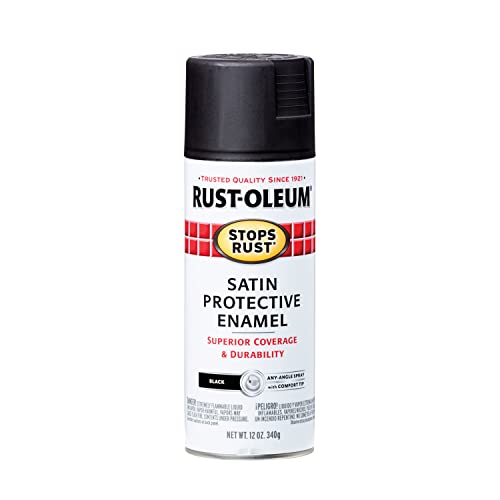
This is the satin option among the black coatings, with a 12-ounce can and coverage up to 15 square feet. The oil-based formula is described as weather- and corrosion-resistant for interior or exterior surfaces including metal, and the satin sheen gives wrought iron a restrained, low-sheen appearance rather than a flat look. Rust-Oleum says it dries to touch in 2 to 4 hours. It is a general-purpose coating rather than one specifically named for wrought iron, so choose it for its finish and surface compatibility, not a specialized iron texture.
Bottom line: Choose this when a low-sheen satin black look matters most.
Rust-Oleum Stops Rust Semi-Gloss Black

This six-can pack is the semi-gloss choice, giving wrought iron a subtle shine instead of the flat finish of the iron-specific option. Each 12-ounce can covers up to 15 square feet. The oil-based coating is described as weather- and corrosion-resistant and intended for interior or exterior use on metal, among other surfaces; Rust-Oleum gives a 2-to-4-hour touch-dry time. Its multipack can help when coating more than one item, but it is not the right pick if you want satin, flat black or a textured aged-iron effect.
Bottom line: Pick this for multiple metal pieces when you prefer semi-gloss black.
Rust-Oleum Stops Rust Textured Aged Iron

This coating stands apart with an aged-iron textured finish rather than a smooth black sheen. Its 12-ounce can covers up to 6 square feet, less area than the smooth black options provide per can, so it is better suited to smaller projects or a deliberately textured accent. The oil-based coating is described as offering rust prevention and chip resistance for indoor or outdoor surfaces such as metal, and Rust-Oleum says it dries to touch in 15 minutes. The color is Aged Iron, not a flat or satin black, so check that appearance against the rest of the project.
Bottom line: Choose this for a small project where aged texture is the goal.
Rust-Oleum Painter’s Touch 2X Flat Black

This flat black option is a general-purpose oil-based paint that includes metal among its intended surfaces, and it dries to touch in 20 minutes. A 12-ounce can covers up to 12 square feet, making its coverage distinct from the 15-square-foot smooth black choices. The flat finish is described as helping hide surface imperfections, which can suit ironwork where a low-sheen appearance is preferred.
Bottom line: Pick this for flat black when you also need a general-purpose coating.
How to choose a finish for wrought iron
Choose the sheen by the look you want and how much surface texture should remain visible. Flat finishes reflect little light and can soften the appearance of small surface irregularities; satin adds a low sheen, while semi-gloss reflects more light. A textured coating changes the surface appearance rather than simply changing gloss, so it may not blend with smooth existing paint. Before choosing, compare a small hidden area with adjacent metal if matching an existing finish matters. Aerosol paint leaves a thin film, and multiple light passes are generally easier to control than one heavy pass, which can sag or pool on narrow bars and decorative curves. Keep the can moving and overlap passes slightly for more even coverage.
Prepare ironwork before spraying
Clean, dry metal is the starting point for durable paint adhesion. Remove loose rust and flaking paint with a wire brush or sandpaper, then remove dust and residue before applying a coating. Paint does not reliably bond to loose scale, grease or damp surfaces, so address those conditions first. For heavily rusted iron, a rust-inhibiting primer can provide a more appropriate base than spraying directly over active corrosion; check compatibility with the chosen topcoat. Mask nearby surfaces and protect the ground, since aerosol drift can travel beyond the bars being painted. Spray outdoors or with strong ventilation, away from flames and sparks, and wear eye protection and a properly selected respirator as the product label directs.
Estimate coverage and avoid common spray mistakes
Use the can’s coverage as an upper bound, not a guaranteed finished area: intricate railings, overlapping bars and rough or porous surfaces consume more paint than a flat panel. Divide the project’s paintable area by the per-can coverage, then allow extra for edges and missed spots. A useful decision rule is to select a product with at least 20 percent more stated coverage than your calculated area when the ironwork has many curves or tight corners. Apply thin, overlapping passes and maintain a consistent distance rather than pausing over one spot. Touch-dry time is not the same as full cure; avoid handling or exposing freshly coated metal to wear until the label’s recoat and cure guidance is met. Keep aerosol cans away from heat even when empty.
Frequently Asked Questions
Can spray paint go directly on rusty wrought iron?
Only after loose rust and flaking paint are removed; paint over scale can detach with the rust beneath it. For substantial remaining corrosion, use a compatible rust-inhibiting primer before the topcoat.
How many cans do I need for an iron railing?
Estimate paintable area and divide by the coverage per can, then add extra for curves, overlapping bars and overspray. A railing with intricate bars can use at least 20 percent more paint than a flat-area estimate suggests.
Is flat or satin paint better for wrought iron?
Flat gives a low-reflection look, while satin adds a subtle sheen. Choose based on the existing finish you want to match; textured paint will look and feel different from either smooth sheen.
How long should spray paint dry before handling?
Touch-dry time is not the same as ready-to-handle or fully cured. Follow the paint label’s recoat and cure times, and keep freshly painted iron from contact or weather exposure during that period.
Should I use primer on wrought iron before painting?
Primer is useful when bare metal or substantial rust remains after cleaning, provided the primer is compatible with the topcoat. Remove loose rust first, because primer cannot secure a coating to flaking scale.