
Yamaha WaveRunner Fire Extinguishers Compared by Fit

For most Yamaha WaveRunner owners, Kidde Mariner PWC 5-B:C is the clearest fit because it is specifically made for personal watercraft and has a 5-B:C rating.
A marine extinguisher is a portable unit intended for boat fire classes such as flammable liquids and electrical equipment; confirm that your chosen unit and mounting location meet the requirements for your craft.
We earn a commission if you buy through links on this page. As an Amazon Associate I earn from qualifying purchases. Products are compared on manufacturer specifications, not hands-on testing.
- Best overall: Kidde Mariner PWC 5-B:C – PWC-specific design, USCG approval and a 5-B:C rating.
- Best for lighter carry: First Alert PWC 5-B:C – Weighs 1.4 lb. and is sized for personal-watercraft containers.
- Best for higher rating: Kidde Mariner 10-B:C – Offers a 10-B:C rating for general boat and watercraft use.
| Product | Best for | Weight | Dimensions | Shop |
|---|---|---|---|---|
| Kidde Mariner PWC 5-B:C | PWC-specific fit | 3.2 lb. | 11.9 × 2.9 × 2.9 in. | Check Price on Amazon |
| First Alert PWC 5-B:C | Lighter PWC unit | 1.4 lb. | 12.75 × 3.88 × 3.13 in. | Check Price on Amazon |
| Kidde Mariner 10-B:C | Higher fire rating | 3.9 lb. | 14 × 3.25 × 3.25 in. | Check Price on Amazon |
Yamaha WaveRunner Fire Extinguishers
Compare PWC-specific units with a general marine option, then check that the extinguisher can be secured and reached aboard your craft.
Kidde Mariner PWC 5-B:C
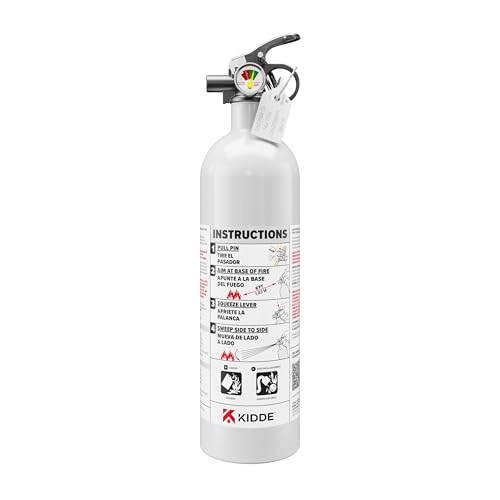
For a PWC-specific choice, this Kidde combines a 5-B:C rating with USCG approval and an included strap bracket. Its dry chemical agent is sodium bicarbonate, and the metal valve assembly and stainless-steel lever are suited to a marine environment. Brand says the extinguisher discharges for 8–12 seconds with a 6–8-foot range; the pressure indicator uses a green zone to show charge. At 3.2 lb., it is heavier than the First Alert option, which matters if minimizing carried weight is your priority. Check that the bracket can be mounted securely without blocking access.
Bottom line: Choose this when a PWC-specific, USCG-approved 5-B:C extinguisher is your priority.
First Alert PWC 5-B:C

The First Alert stands out for its 1.4-pound weight and a push-button pressure check, rather than the Kidde’s green-zone indicator. It is intended for personal watercraft, meets USCG Size I requirements, and carries a UL 5-B:C classification. The sodium bicarbonate agent is for flammable-liquid and electrical-equipment fires. Its 12.75-inch height and stated fit for PWC extinguisher containers may suit owners with a compatible built-in container. The limitation is its longer height than the Kidde PWC model, so check the available compartment dimensions before choosing it.
Bottom line: Pick this if lower weight and a push-button pressure check matter most.
Kidde Mariner 10-B:C
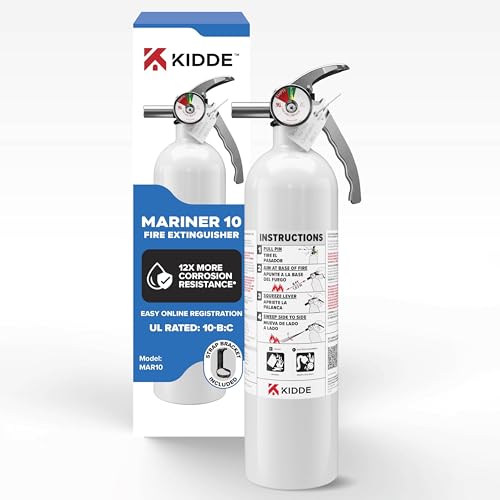
This general marine Kidde has a 10-B:C rating, compared with the 5-B:C PWC-specific units, and is marketed for boats and watercraft. Its 2.5-pound sodium bicarbonate agent, all-metal construction, and pressure indicator are useful traits for marine use; Brand says discharge lasts 8–12 seconds and reaches 6–8 feet. At 14 inches tall and 3.9 pounds, it is larger and heavier than either PWC-specific option. Because it is not identified as a PWC model, it is a partial match rather than the straightforward WaveRunner choice; verify fit and required approval for your craft.
Bottom line: Choose this only if a general marine extinguisher fits your craft and its requirements.
How to choose a WaveRunner fire extinguisher
Start with a unit intended for personal watercraft, then compare its fire rating, size and mounting method. Class B covers flammable liquids and gases; Class C applies to energized electrical equipment, so a B:C rating addresses both hazards named for these marine units. The 5-B:C models here are PWC-specific, while the 10-B:C option is presented for boats and watercraft generally. A higher number in the B rating indicates greater capacity to handle a Class B fire under the rating system, not a guarantee that an extinguisher is suitable for every craft. If an existing storage space is under 12 inches tall, check dimensions before choosing a model taller than that. Prefer a unit you can reach quickly without moving other gear.
How PWC extinguisher fit and mounting differ
PWC extinguisher fit depends on the actual compartment or bracket, not just the model name. Measure the opening’s height, width and depth, and leave room to remove the unit in one motion; compare those measurements against the extinguisher body and bracket. The two PWC-specific choices differ in height: one is 11.9 inches and the other 12.75 inches, while the general marine option is 14 inches tall. Mount the extinguisher so it stays secure in rough motion but remains accessible. Keep the pressure indicator visible when possible, and inspect the retention strap or bracket for looseness or corrosion. Do not place an extinguisher where luggage, a seat or other gear can block it.
What B:C ratings mean on marine extinguishers
A B:C label identifies the fire classes an extinguisher is intended to address: Class B involves flammable liquids or gases, and Class C involves energized electrical equipment. The number before B distinguishes rated extinguishing capacity; the 10-B:C model has a higher B rating than the 5-B:C units, but it is also larger and heavier. Ratings do not replace craft-specific requirements, and the same marine label does not mean every extinguisher is a PWC fit. This quick comparison pairs common needs with the useful distinction to check.
| Need | What to prioritize |
|---|---|
| PWC-specific option | 5-B:C and explicit personal-watercraft fit |
| Lower carry weight | 1.4 lb. compact unit |
| Higher B rating | 10-B:C, after verifying PWC fit |
Safe placement and extinguisher checks
Keep a marine extinguisher reachable and use it only when a fire is small, you have a clear escape route, and you can operate it safely. For a typical handheld dry-chemical extinguisher, PASS means pull the pin, aim at the base of the fire, squeeze the handle and sweep side to side; retreat if the fire grows or the agent does not put it out. Check the pressure indicator before outings and inspect the body, pin, seal and bracket for damage or corrosion. A green-zone gauge or a push-button check is useful only when it is easy to see and operate. Replace or service a unit after discharge, even if the release was brief.
Frequently Asked Questions
Can a 5-B:C extinguisher handle electrical fires?
A 5-B:C extinguisher is rated for Class B flammable-liquid fires and Class C energized electrical-equipment fires. De-energize electrical equipment only if you can do so safely, and never approach a fire that blocks your escape.
How should I check a marine extinguisher before riding?
Check the pressure indicator, pin and seal, and make sure the mounting bracket holds the unit securely. A loose bracket or damaged seal is a reason to address the extinguisher before the next outing.
Where should a WaveRunner extinguisher be mounted?
Mount it where it is secured against movement but reachable without shifting other gear. Measure the compartment and bracket first, since the PWC-specific units here range from 11.9 to 12.75 inches tall.
What does the number in a 5-B:C rating mean?
The 5 refers to the extinguisher’s Class B rating, while B covers flammable liquids and C covers energized electrical equipment. A 10-B:C unit has a higher Class B rating, but size and craft fit still matter.