
ZEISS TL Pocket 10×25: Specs and Alternatives Compared

The ZEISS TL Pocket 10×25 is the closest match for a compact 10×25 binocular, with a folding design and waterproof, fiberglass-reinforced housing. Choose ZEISS Terra ED Pocket 10×25 for ED glass and an 88% light-transmission claim, or ZEISS Victory Pocket 10×25 if you want Victory Pocket binoculars bundled with a cleaning kit.
We earn a commission if you buy through links on this page. As an Amazon Associate I earn from qualifying purchases. Products are compared on manufacturer specifications, not hands-on testing.
- Best overall: ZEISS TL Pocket 10×25 – A folding 10×25 binocular with waterproof, fiberglass-reinforced housing.
- Best for optical features: ZEISS Terra ED Pocket 10×25 – Its features include ED glass, hydrophobic multi-coating and 88% light transmission.
- Best for included care kit: ZEISS Victory Pocket 10×25 – This 10×25 Victory Pocket bundle includes a five-piece lens-cleaning kit.
| Product | Best for | Weight | Shop |
|---|---|---|---|
| ZEISS TL Pocket 10×25 | Pocketable folding | 0.68 lb | Check Price on Amazon |
| ZEISS Terra ED Pocket 10×25 | ED glass features | 0.68 lb | Check Price on Amazon |
| ZEISS Victory Pocket 10×25 | Cleaning kit bundle | 3.01 lb | Check Price on Amazon |
ZEISS TL Pocket 10×25 and Alternatives
These compact 10×25 binoculars differ most in optical features, folding design and included accessories.
ZEISS TL Pocket 10×25

The TL Pocket pairs a 10×25 format with an ergonomic folding design, distinguishing it from the other binoculars here. Its fiberglass-reinforced housing is waterproof, and a grip-optimized focus wheel is designed for quick adjustment. At 0.68 lb, it suits pocket or bag carry. ZEISS says the binoculars are suitable for use in all weather. Their field of view and eye relief are useful comparison points for buyers who track moving subjects or wear glasses, so confirm those measurements before choosing if either is a priority.
Bottom line: Choose this if a folding design and compact, weather-ready carry matter most.
ZEISS Terra ED Pocket 10×25
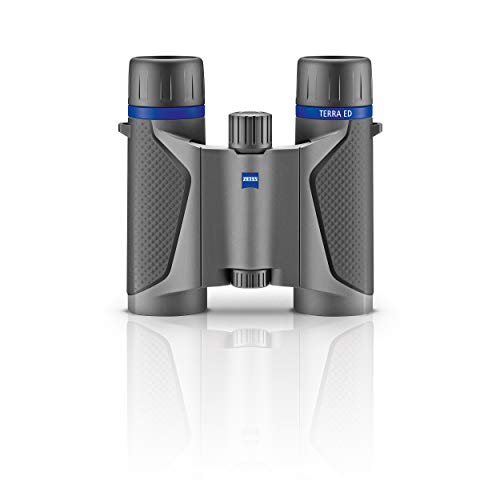
The Terra ED stands out for its ED glass and hydrophobic multi-coating, along with ZEISS’s 88% light-transmission claim. It shares the 10×25 format but has a large focus wheel intended for quick adjustment. The fiberglass-reinforced casing is waterproof. ZEISS describes the housing as nearly indestructible, which is a maker claim rather than a durability rating. Its folded dimensions are a key point to compare for buyers choosing by pocket fit, particularly against other compact folding designs.
Bottom line: Choose this if ED glass and the transmission figure are priorities.
ZEISS Victory Pocket 10×25

The Victory Pocket combines fluoride glass and T* multi-layer coating with a bundled five-piece lens-cleaning kit, unlike the other options. Its 10×25 binoculars fold asymmetrically and have a nitrogen-filled housing. ZEISS says the binoculars are fully waterproof and that nitrogen filling helps prevent internal fogging during temperature changes. The weight is 3.01 lb, more than the other two entries, so it may not suit buyers prioritizing a light carry. The bundle is a fit for shoppers who value the included lens-care kit.
Bottom line: Choose this bundle if fluoride glass and an included cleaning kit suit your priorities.
How to choose 10×25 binoculars
For general handheld viewing, 8x binoculars are often easier to hold steady, while 10x magnification makes hand movement more visible. A 25 mm objective lens gathers less light than a 32 mm or 42 mm lens, so 10×25 binoculars generally suit daylight and easy carrying. For frequent twilight viewing, consider a larger objective lens rather than expecting a coating to make a compact optic bright in low light. Pocket-first buyers should prioritize folding designs and verify folded dimensions; for distant detail, compare eye relief and field of view as well as magnification.
What 10×25 specifications mean
The 10 in 10×25 means 10x magnification, and 25 is the objective-lens diameter in millimeters. A 10x view makes an object appear about ten times larger in angular size, but a narrow field of view can make moving birds harder to track. Manufacturers commonly express field of view in feet at 1,000 yards or degrees; compare figures in the same unit. Exit pupil equals objective diameter divided by magnification, so 25 mm at 10x produces a 2.5 mm exit pupil, which favors bright conditions over dim viewing.
This table connects common needs with specifications worth comparing.
| Need | Specification to prioritize |
|---|---|
| Bright daylight carrying | Compact folding body and low weight |
| Finding moving subjects | Wider field of view |
| Viewing with eyeglasses | Longer eye relief |
| Rain exposure | Waterproof construction |
Waterproofing and binocular care
Waterproof binoculars can handle wet weather, but waterproofing alone does not establish a safe submersion depth. Nitrogen or argon purging can help limit internal fogging during temperature changes, while exterior lenses can still fog or get wet. After rain, dry the body and remove loose grit with a blower before using a lens cloth; rubbing grit can scratch coatings. Clean lenses only as needed with optical-safe materials, not household tissue or clothing. Avoid leaving binoculars in a hot parked car, where heat can stress seals and adhesives.
Common 10×25 buying mistakes
Magnification alone is a poor basis for choosing binoculars: 10x power is harder to steady than 8x, and a narrow field slows scanning. Eyeglass wearers should check eye relief because short eye relief can limit the visible field. Close-focus distance matters for butterflies and other nearby subjects, while field of view matters when tracking birds in flight. A 2.5 mm exit pupil also makes 10×25 binoculars a poor substitute for a larger-objective model at twilight. If possible, handle the hinge and focus wheel before choosing, since compact designs can feel different in smaller or gloved hands.
Frequently Asked Questions
Are 10×25 binoculars good for bird watching?
10×25 binoculars can work for birding in bright daylight, especially when low weight and compact carry are priorities. Their 2.5 mm exit pupil is less suited to dawn and dusk than larger objectives, and 10x magnification makes hand shake more visible than 8x.
What does 10×25 mean on binoculars?
The 10 means the view magnifies an object by 10 times, while 25 is the objective-lens diameter in millimeters. Dividing 25 mm by 10 gives a 2.5 mm exit pupil, a useful clue that the format favors brighter conditions.
Can waterproof binoculars be submerged in water?
Waterproofing does not automatically mean a binocular is safe to submerge; submersion limits depend on a specific depth and duration rating. For rain use, dry the exterior afterward and keep water away from open eyecup or hinge areas.
Are 10x binoculars harder to hold steady?
Yes, 10x magnification makes hand movement more noticeable than 8x magnification. Bracing your elbows against your body or a support helps, and a lower-power pair can be easier for prolonged scanning.
What should eyeglass wearers check in binoculars?
Check eye relief, which is the distance behind the eyepiece where the full image remains visible. Longer eye relief is generally more comfortable with glasses; folding eyecups can also help position the eyes properly.