
Zipper Compression Socks for Seniors: 3 Options Compared

For seniors seeking moderate daily compression, the Ailaka Ailaka Medical 15–20 mmHg Zipper Socks is the most fitting starting point because it combines a zipper with 15–20 mmHg graduated pressure and closed-toe coverage. Choose a different option if you need stronger 20–30 mmHg compression, open toes, or a two-pair pack.
Compression socks apply graduated pressure, typically firmer at the ankle and easing up the calf; seniors with circulation problems or a new swelling concern should ask a clinician what pressure is appropriate before wearing them.
We earn a commission if you buy through links on this page. As an Amazon Associate I earn from qualifying purchases. Products are compared on manufacturer specifications, not hands-on testing.
- Best overall: Ailaka Medical 15–20 mmHg Zipper Socks – Its 15–20 mmHg pressure, closed toe and zipper suit moderate daily support.
- Best for firmer compression: TheraMagic 20–30 mmHg Zipper Socks – It is the only option with 20–30 mmHg graduated compression.
- Best for a two-pair pack: cerpite 15–20 mmHg Zipper Socks, 2 Pairs – It provides two pairs with 15–20 mmHg compression and closed toes.
| Product | Best for | Compression | Pack count | Shop |
|---|---|---|---|---|
| Ailaka Medical 15–20 mmHg Zipper Socks | Moderate daily support | 15–20 mmHg | 1 pair | Check Price on Amazon |
| TheraMagic 20–30 mmHg Zipper Socks | Firmer compression | 20–30 mmHg | 1 pair | Check Price on Amazon |
| cerpite 15–20 mmHg Zipper Socks, 2 Pairs | Two-pair rotation | 15–20 mmHg | 2 pairs | Check Price on Amazon |
Zipper Compression Socks for Seniors
Compare pressure, toe coverage and pack size, then select a fit that matches your measurements and clinician’s guidance.
Ailaka Medical 15–20 mmHg Zipper Socks

The Ailaka Ailaka Medical 15–20 mmHg Zipper Socks pairs a zipper with 15–20 mmHg graduated compression, making it the moderate-pressure choice among these options. Its knee-high, closed-toe design includes fabric beneath the zipper to reduce rubbing, and the maker says the zipper is intended to stay closed during movement. That combination may suit someone who wants full-foot coverage and easier dressing than a pull-on stocking. The main limitation is its single-pair format; choose another option if having two pairs for rotation matters more than matching this pressure and toe style.
Bottom line: Choose this for one closed-toe pair with moderate graduated pressure.
TheraMagic 20–30 mmHg Zipper Socks

The TheraMagic TheraMagic 20–30 mmHg Zipper Socks stands apart with 20–30 mmHg graduated compression, a firmer range than the 15–20 mmHg choices here. The maker also describes copper-infused fibers in the soles. This option suits a buyer whose clinician has recommended firmer pressure and whose calf measurements match the size chart. Its higher pressure makes it a poor default for someone who has not confirmed the appropriate compression level.
Bottom line: Choose this only when firmer compression is the intended pressure.
cerpite 15–20 mmHg Zipper Socks, 2 Pairs
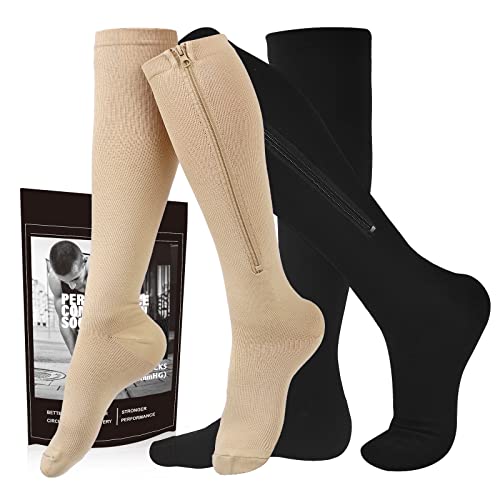
The cerpite cerpite 15–20 mmHg Zipper Socks, 2 Pairs is the only closed-toe choice here supplied as two pairs, while keeping to the 15–20 mmHg range. Its maker describes graduated compression and suitability for people who sit or stand for extended periods, but it also warns that compression is not suitable for everyone. The two-pair format can help when a clean pair is needed while another is being washed. The tradeoff is that the size is Large–X-Large, so this particular variant may not fit smaller calves or feet; measure against the maker’s chart before choosing it.
Bottom line: Choose this when a two-pair closed-toe set fits your measurements.
How to choose zipper compression socks
Choose compression strength first, then compare toe style, calf fit and zipper construction. Mild compression is generally 8–15 mmHg, moderate compression is 15–20 mmHg, and firm compression is 20–30 mmHg; these ranges are not interchangeable for every wearer. A zipper can make donning easier, but the sock still needs to fit smoothly without folds or a tight band at the top. For seniors, a measurable rule is to use the pressure prescribed by a clinician rather than stepping up to 20–30 mmHg simply because it feels more supportive. Measure the ankle and calf at the time recommended by the size chart, since swelling changes fit over the day.
Use this guide to match the main decision to the sock style.
| Need | Choose |
|---|---|
| Moderate pressure and covered toes | 15–20 mmHg closed toe |
| Clinician-directed firmer pressure | 20–30 mmHg closed toe |
| Open toes or two-pair pack | Check toe design and count before selecting |
How compression pressure works
Graduated compression applies the greatest pressure at the ankle and gradually less pressure higher up the leg. A 15–20 mmHg sock and a 20–30 mmHg sock therefore differ in more than a number: the latter is a firmer class and should match an individual need, not just a preference for a snug feel. Compression is not appropriate for everyone, particularly when circulation or sensation is impaired. Seniors with diabetes, peripheral artery disease, fragile skin or unexplained leg swelling should get professional advice before wearing a compression garment. Remove a sock and seek medical advice if it causes pain, numbness, unusual skin color or a cold foot.
Getting the right sock size
Measure the ankle and calf rather than relying on shoe size or age. Compression garments are commonly sized around ankle circumference and calf circumference, and some charts also use leg length; a size that is too small can create concentrated pressure, while an oversized sock may slide or bunch. Measurements are often taken in the morning, when leg swelling is lower, which is especially relevant for people whose ankles enlarge during the day. If a measurement lands between sizes, follow the product’s sizing rule; the bropite guidance specifically says to choose the larger size. Recheck the fit after putting the sock on: smooth fabric and a zipper that lies flat matter more than pulling it as tight as possible.
Putting on and caring for zippered socks
Apply compression socks when legs are least swollen, usually in the morning, and smooth fabric from ankle to calf before closing the zipper. A fabric guard beneath the zipper helps separate skin from the closure, but a wrinkle under the sock or zipper can still rub. Keep nails and sharp jewelry away from the knit, and close the zipper gently rather than forcing it over a fold. Wash compression garments gently and air-dry them when possible; heat and aggressive handling can degrade elastic fibers and reduce their ability to hold graduated pressure. Replace a pair when the fabric becomes loose, stretched or damaged, since a worn garment may no longer provide consistent compression.
Frequently Asked Questions
Can seniors wear zipper compression socks every day?
Many people wear compression socks during daytime hours, but seniors should use the pressure and wear schedule recommended for their condition. Remove them if they cause pain, numbness, skin discoloration or a cold foot.
Should compression socks feel tight around the ankle?
They should feel snug and supportive, not painful or constricting. The pressure is designed to be greatest at the ankle and decrease up the calf, so bunching or a rolled top can create uncomfortable pressure points.
When should leg measurements be taken for sizing?
Morning is often the best time because swelling is typically lower before standing and walking increase fluid pooling. Measure the ankle and widest part of the calf using the product’s sizing chart.
Are open-toe compression socks better for seniors?
Open toes leave the toes uncovered, while closed toes provide full-foot coverage; neither style is universally better. Choose based on comfort and footwear needs, and ensure the sock still fits the heel and calf without slipping.
When should compression socks be removed?
Remove a sock promptly if it causes pain, numbness, unusual skin color, or a cold foot. Seniors with poor circulation, reduced sensation or fragile skin should ask a clinician before using compression garments.