
100% Pure Monk Fruit Sweetener: 4 Options Compared

Morning Pep is the closest match for a 100% pure monk fruit sweetener if you want a 5-ounce powder with no erythritol and more than 450 servings. Choose another format if you prefer USDA Organic certification, a serving count, or liquid drops for drinks.
Pure monk fruit extract is a concentrated, high-intensity sweetener, so it does not replace sugar cup-for-cup in recipes.
We earn a commission if you buy through links on this page. As an Amazon Associate I earn from qualifying purchases. Products are compared on manufacturer specifications, not hands-on testing.
- Best overall: Morning Pep Pure Monk Fruit Extract – A 5-ounce pure extract powder with no erythritol and over 450 servings.
- Best for organic certification: DureLife Organic Monk Fruit Extract – A 5-ounce powder carrying USDA Organic certification.
- Best for baking: WHYZ Organic Monk Fruit Powder – A 5-ounce powder with a 458 servings and baking-focused positioning.
- Best for drinks: Monk Fruit Drops – Liquid drops offer 167 servings, with the maker equating six drops to a teaspoon of sugar sweetness.
| Product | Best for | Format | Package size | Servings | Shop |
|---|---|---|---|---|---|
| Morning Pep Pure Monk Fruit Extract | Powdered extract | Powder | 5 oz | Over 450 | Check Price on Amazon |
| DureLife Organic Monk Fruit Extract | Organic powder | Powder | 5 oz | — | Check Price on Amazon |
| WHYZ Organic Monk Fruit Powder | Baking-focused powder | Powder | 5 oz | 458 | Check Price on Amazon |
| Monk Fruit Drops | Liquid sweetener | Liquid drops | 1.7 fl oz | 167 | Check Price on Amazon |
100% Pure Monk Fruit Sweetener Options
Compare powder and liquid formats, then match the package and serving count to how you plan to sweeten.
Morning Pep Pure Monk Fruit Extract
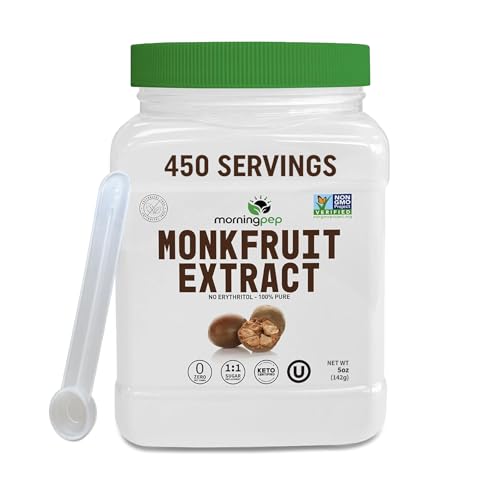
Morning Pep combines a 5-ounce powdered format with a count of over 450 servings, making it a practical fit if you want one concentrated extract for repeated use. The product is described as 100% pure monk fruit extract, with no erythritol or other sugar alcohols. Its maker also identifies Non-GMO Project verification, Keto Certification and OU kosher status. The limitation is that pure extract is highly concentrated and does not supply sugar’s bulk in baking; use a small amount and adjust recipe structure separately when needed.
Bottom line: Pick this if you want a 5-ounce pure extract powder with a high stated serving count.
DureLife Organic Monk Fruit Extract

DureLife stands apart with USDA Organic certification among these powdered options. The 5-ounce package is described as a single-ingredient monk fruit extract with no erythritol, sugar alcohols or fillers, and the maker identifies Non-GMO Project verification, Keto Certification and OU kosher status. The powder is intended to blend into beverages, batters and recipes, while the concentrated sweetness means small measures can go a long way.
Bottom line: Choose this when USDA Organic certification is your deciding factor.
WHYZ Organic Monk Fruit Powder

WHYZ gives a specific serving count—458 in a 5-ounce package—and is positioned for baking as well as drinks. The maker describes it as organic pure monk fruit extract without erythritol, added sugar, fillers or carbs, and claims it is 200 times sweeter than sugar. That high intensity calls for careful measuring; the product’s own guidance is to start with a small amount. Pure extract will not recreate sugar’s volume or structure in baked goods, so recipes that depend on creaming or bulk may need a different sweetener approach.
Bottom line: Pick this if you want a baking-oriented powder with a serving count.
Monk Fruit Drops

These monk fruit drops are the only liquid format in the group, making them a natural fit for sweetening coffee or tea without measuring powder. The 1.7-fluid-ounce bottle provides 167 servings, and the maker says six drops provide sweetness comparable to one teaspoon of sugar. The product is described as pure monk fruit extract with no erythritol or added water. Its limitation is format: drops are most suited to beverages and are less convenient than a dry powder when blending a measured sweetener into a dry baking mix.
Bottom line: Choose these for measured sweetness in coffee, tea and other drinks.
How to choose pure monk fruit sweetener
Start with format and concentration, because pure monk fruit extract does not replace sugar cup-for-cup. Extract is a high-intensity sweetener; tiny differences in measuring can noticeably change sweetness, and products may have different conversion guidance. For drinks, drops can be measured directly into a cup; for batters and dry mixes, powder is easier to distribute. Check the package’s conversion directions before using a product in a recipe, especially when switching from a blend that includes a bulking ingredient. If you need sugar’s volume for structure or browning, pure extract alone will not provide it.
Choose by the feature that matters most: organic certification, serving count, or liquid dosing. A serving count helps compare packages, but it does not indicate how much sweetness each serving provides across different formats.
| Need | Format to consider | Why |
|---|---|---|
| Sweeten coffee or tea | Drops | Direct liquid dosing |
| Mix into dry ingredients | Powder | Blends with dry recipes |
| Replace sugar’s baking volume | Neither alone | Pure extract supplies sweetness, not bulk |
Using monk fruit in drinks and baking
Use the package’s conversion guidance rather than a one-to-one sugar swap. Pure extract provides sweetness without sugar’s bulk, so a cake or cookie may lose volume, moisture balance or browning when sugar is simply removed. Start with a small amount, taste where safe and practical, and increase gradually; the exact measure depends on the product’s concentration. For a recipe that relies on sugar for structure, use a recipe designed for high-intensity sweeteners or retain a suitable bulking ingredient.
For beverages, add drops or powder in small increments and stir thoroughly before deciding whether to add more. Liquid drops are convenient for a cup at a time, while powder can work in a drink but needs careful dosing. Avoid treating a serving count as a conversion guide: servings describe package yield, not an interchangeable sweetness measure.
What to check on a monk fruit label
Read the ingredient statement to distinguish pure monk fruit extract from a monk fruit blend. Many products sold as monk fruit sweeteners combine extract with a bulking sweetener, such as erythritol; those blends measure differently from concentrated extract. Buyers avoiding sugar alcohols should confirm the ingredient panel rather than relying on front-label wording alone.
Certification marks answer different questions: organic certification concerns organic production standards, while Non-GMO Project verification concerns genetically modified ingredients. Neither mark tells you how concentrated a serving is or how much to use in a recipe. Before ordering, confirm the format and sweetness conversion you need—especially if the product will replace another brand in a recipe.
Frequently Asked Questions
Can pure monk fruit replace sugar cup for cup?
Use the product’s conversion guidance, and account separately for bulk and structure in baking.
How much monk fruit should I add to coffee?
Start with a very small amount and increase gradually, since pure extracts can be highly concentrated. Follow the product’s own conversion directions; for these drops, the maker equates six drops with the sweetness of one teaspoon of sugar.
Does pure monk fruit sweetener contain erythritol?
Pure monk fruit extract does not require erythritol, but many monk fruit products are blends that use it as a bulking ingredient. Check the ingredient statement when avoiding sugar alcohols.
Why does monk fruit sweetener affect baking differently?
Sugar contributes volume and structure as well as sweetness, while pure monk fruit extract supplies concentrated sweetness. In recipes that rely on creaming, moisture balance or browning, replacing sugar with extract alone can change the result.
Are monk fruit drops easier to use in drinks?
Drops can be added directly to a drink and measured incrementally, which suits single servings of coffee or tea. Powder can also sweeten beverages, but its concentrated dose may be harder to measure in a cup.