
Adhesive Sealant for Toilet: 5 Options Compared

For a toilet-to-floor joint, DAP Kwik Seal Plus is the most purpose-specific choice because it is an interior kitchen-and-bath sealant with a waterproof claim and an 18-hour water-ready time. Choose Fixmend PVC Caulk Tape, 3 Rolls or Mokani PVC Caulk Tape, 2 Rolls only when a peel-and-stick strip suits the surface and seam; choose J-B Weld All-Purpose RTV Silicone, 3 oz or Permatex Clear RTV Silicone, 3 oz for a general-purpose RTV adhesive-sealant rather than a dedicated bathroom caulk.
We earn a commission if you buy through links on this page. As an Amazon Associate I earn from qualifying purchases. Products are compared on manufacturer specifications, not hands-on testing.
- Best overall: DAP Kwik Seal Plus – Bathroom-specific acrylic latex formula; the maker says it is water ready in 18 hours.
- Best for long strip runs: Fixmend PVC Caulk Tape, 3 Rolls – PVC tape comes in three 10.5-foot rolls, with a sealing tool included.
- Best for folded corners: Mokani PVC Caulk Tape, 2 Rolls – A crease lets the PVC tape fold to 90 degrees at a wall edge.
| Product | Best for | Form | Amount | Shop |
|---|---|---|---|---|
| DAP Kwik Seal Plus | Bathroom joints | Siliconized acrylic latex | 10.1 oz | Check Price on Amazon |
| Fixmend PVC Caulk Tape, 3 Rolls | Long tape runs | Self-adhesive PVC tape | 3 rolls, 10.5 ft each | Check Price on Amazon |
| Mokani PVC Caulk Tape, 2 Rolls | Folded corners | Self-adhesive PVC tape | 2 rolls, 10.5 ft each | Check Price on Amazon |
| J-B Weld All-Purpose RTV Silicone, 3 oz | General assembly | RTV silicone | 3 oz | Check Price on Amazon |
| Permatex Clear RTV Silicone, 3 oz | Broad material repairs | RTV silicone | 3 oz | Check Price on Amazon |
Adhesive Sealant for Toilet Joints
Match the sealant form to the joint: flexible tape covers a surface seam, while tube sealant fills a gap.
DAP Kwik Seal Plus
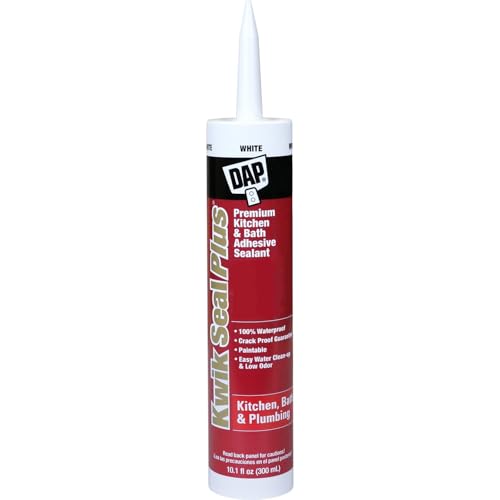
DAP Kwik Seal Plus is the bathroom-focused tube sealant in this group, rather than a peel-and-stick strip or general-purpose RTV product. Its siliconized acrylic latex formula is intended for interior kitchen, bath and plumbing applications; the maker says the seal is waterproof and crackproof and can be painted within 2 hours. The 10.1-ounce tube suits a caulk gun and a continuous joint. Its limitation is the 18-hour water-ready wait, so it is a poor fit when the joint must be exposed to water sooner.
Bottom line: Choose it for a conventional bathroom joint when an 18-hour cure window works.
Fixmend PVC Caulk Tape, 3 Rolls
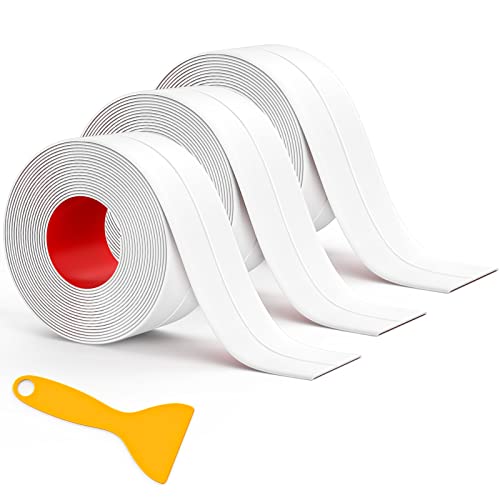
Fixmend PVC Caulk Tape, 3 Rolls supplies three white PVC strips, each 1.5 inches wide and 10.5 feet long, for covering seams without applying caulk from a tube. The maker recommends cleaning and drying the surface, warming the strip with a hair dryer to improve adhesion, and pressing it smooth with the included sealing tool. This format can suit a straight, accessible seam around a toilet base. The limitation is that tape covers the surface rather than serving as a conventional gap-filling bead; use tube sealant for a joint that needs a formed bead.
Bottom line: Pick it for a clean, dry surface seam where a tape finish is appropriate.
Mokani PVC Caulk Tape, 2 Rolls

Mokani PVC Caulk Tape, 2 Rolls stands out among the tape options for its crease, which the maker says folds to 90 degrees to fit a wall edge. The two white PVC rolls are each 1.5 inches wide and 10.5 feet long, and a sealing tool is included for smoothing the strip. For cooler installation areas, the maker advises warming the tape until it softens. The main limitation is the same as with other surface strips: it is suited to covering a seam, not replacing a caulk bead where the gap needs filling.
Bottom line: Choose it when the joint turns up a wall and the crease fits the corner.
J-B Weld All-Purpose RTV Silicone, 3 oz

J-B Weld All-Purpose RTV Silicone, 3 oz is a clear, 3-ounce room-temperature-vulcanized silicone sealant and adhesive for household or mechanical assembly, making it a general-purpose option rather than a bathroom-specific caulk. Its clear color can suit applications where white tape or sealant would be conspicuous. The small tube is also a different format from the larger caulk-gun sealant. For toilet-edge work, the specifications establish neither bathroom-joint suitability nor a water-ready time, so choose a bathroom-labeled sealant when the joint will see routine moisture.
Bottom line: Consider it for general household assembly, not as a preferred choice for a wet bathroom joint.
Permatex Clear RTV Silicone, 3 oz

Permatex Clear RTV Silicone, 3 oz differs from the other sealants by listing a broad material range, including glass, metal, plastics, fabric, vinyl and weather stripping, as well as interior and exterior use. The clear RTV silicone is flexible and waterproof according to the maker, with an operating temperature range from -75°F to 400°F. That makes it a multipurpose repair product, not a bathroom-specific caulk. Its limitation for a toilet joint is that the specifications do not establish a bathroom cure or water-ready interval; use a bathroom sealant when that timing and application are central.
Bottom line: Pick it for multipurpose repairs across its materials, not a bathroom-first caulk job.
How to choose sealant for a toilet joint
A conventional tube sealant is the stronger match when the joint needs a continuous bead; self-adhesive PVC tape is for covering a clean surface seam. Bathroom sealants are commonly sold as silicone, siliconized acrylic latex, or acrylic latex, and the label should identify the intended wet-area use. A silicone bead is generally flexible and water resistant, while acrylic latex is easier to paint and clean up but needs its cure time before water exposure. For a toilet base, use the bathroom-specific product type and follow its cure window. Do not use sealant to stabilize a rocking toilet: correct the flange, shims, or fasteners first, then seal the perimeter where appropriate.
Fit the sealant to the gap and floor
A gap under about 1/4 inch is typically a caulk-joint scale; larger or irregular gaps may need backer rod or repair before sealing. Check that the flooring and toilet surfaces are clean, dry, and compatible with the formula, since residue and moisture undermine adhesion. For tape, the surface needs enough uninterrupted width for the strip to lie flat; a crease can help on a 90-degree wall edge, but wrinkles create channels. Use the actual gap and surface shape to choose: if the strip bridges an uneven opening instead of adhering on both sides, use a suitable tube sealant or repair the gap first.
This table separates the three formats by the kind of joint they address.
| Format | Best joint condition | Decision cue |
|---|---|---|
| Bathroom tube sealant | Continuous bead at a fixed seam | Choose for wet-area caulking and observe cure time |
| Self-adhesive PVC tape | Clean, flat surface seam | Choose when a strip can sit fully adhered |
| General-purpose RTV | Assembly or multipurpose repairs | Choose only when application suitability is confirmed |
Prepare and apply toilet sealant
Sealant adhesion depends on a clean, dry joint, so remove old caulk and residue and let the surfaces dry before application. For a tube, cut the nozzle to a bead size that matches the gap and tool the bead promptly; a small, controlled opening is easier to manage than an oversized one. For tape, the maker’s directions call for peeling, pressing, and smoothing with a tool, with warming recommended for the PVC strips here. Avoid stretching tape around corners because tension can pull it back. Let the sealant cure for its time before water exposure, and ventilate while applying products with a noticeable odor.
Toilet sealing mistakes and safety
Caulking over a loose toilet is a mistake: movement can crack the bead and conceal a continuing leak, so correct the mounting before sealing. Another common error is sealing a wet or dirty surface, which compromises the bond even when the product is labeled waterproof. Leave any intentional drainage or inspection gap required by the toilet or local plumbing practice rather than sealing every edge blindly. Silicone and other sealants can irritate skin or eyes before curing; wear gloves, avoid contact, and provide ventilation. Keep uncured material away from children and pets, and follow the product label for cleanup and disposal.
Frequently Asked Questions
Should a toilet be sealed to the floor?
A stable toilet is commonly caulked around its base, but sealing should not substitute for correct mounting. Follow local plumbing practice and preserve any intentional inspection or drainage gap.
How long should toilet caulk cure before water?
Use the product’s water-ready time rather than judging by a dry surface. For the bathroom formula here, the maker gives 18 hours; other cure windows depend on the specific sealant.
Can caulk tape seal around a toilet base?
Tape can cover a narrow, clean seam if it adheres continuously to both surfaces. A tube sealant is a better fit when the joint is irregular or needs a formed bead rather than a surface strip.
What size gap can toilet caulk fill?
A gap around 1/4 inch or less is a typical caulk-joint scale. For larger openings, use an appropriate backer or repair before sealing rather than relying on a bead to bridge the void.
Can you caulk over old toilet sealant?
Remove loose or failed sealant first and clean the joint down to sound, dry surfaces. A fresh bead over residue often bonds to the old material instead of the floor or toilet.