
20W-50 Synthetic Hydrostatic Transmission Fluid Compared

TRIAX Trans-Zero 20W-50 is the closest match for buyers seeking 20W-50 full synthetic hydrostatic transmission fluid, because it is specifically presented as a full-synthetic fluid for mower hydrostatic systems. Choose one of the Lucas synthetic blends if you prefer that formulation or need a different package size.
Hydrostatic transmission fluid circulates through a mower’s hydraulic drive system; the correct viscosity and fluid specification depend on the transmission manufacturer, so confirm the required fluid before filling.
We earn a commission if you buy through links on this page. As an Amazon Associate I earn from qualifying purchases. Products are compared on manufacturer specifications, not hands-on testing.
- Best overall: TRIAX Trans-Zero 20W-50 – A full synthetic 20W-50 fluid specifically positioned for mower hydrostatic systems.
- Best for five-quart supply: Lucas 20W-50 Synthetic Blend, 5-Quart – The synthetic blend comes as a five-quart package with a funnel and absorbent pad.
- Best for a one-quart top-up: Lucas Oil 11300 20W-50, 1-Quart – The synthetic blend is packaged in a one-quart container.
| Product | Best for | Base oil | Package size | Notable feature | Shop |
|---|---|---|---|---|---|
| TRIAX Trans-Zero 20W-50 | Full synthetic fluid | Full synthetic | 4 quarts | Claims broad mower compatibility | Check Price on Amazon |
| Lucas 20W-50 Synthetic Blend, 5-Quart | Five-quart service supply | Synthetic blend | 5 quarts | Funnel and absorbent pad | Check Price on Amazon |
| Lucas Oil 11300 20W-50, 1-Quart | Single-quart quantity | Synthetic blend | 1 quart | Anti-wear and corrosion claims | Check Price on Amazon |
20W-50 Synthetic Hydrostatic Transmission Fluids
Compare formulation, package size, and the feature that distinguishes each option before choosing fluid for your mower.
TRIAX Trans-Zero 20W-50

TRIAX Trans-Zero 20W-50 is the only full-synthetic option here, and it comes in a one-gallon container. The manufacturer says it replaces hydrostatic and drivetrain fluids requiring 20W-50 or a higher-viscosity grade and names compatibility with multiple mower brands. That makes it a candidate for owners servicing a mixed mower fleet, but brand coverage alone does not confirm the correct fluid for a particular transmission. Check the mower or transmission manual for its specified fluid and viscosity; this product’s replacement range does not establish compatibility with every unit from a named brand.
Bottom line: Choose this if your mower calls for 20W-50 and you want a full-synthetic formulation.
Lucas 20W-50 Synthetic Blend, 5-Quart

Lucas 20W-50 Synthetic Blend, 5-Quart is the largest package in this comparison at five quarts, and its included funnel and absorbent pad distinguish it from the other options. Lucas identifies the fluid as a 20W-50 synthetic blend for hydrostatic transmissions. The larger quantity may suit a service that needs more than a quart, while the accessories help with pouring and spill control. The package size does not indicate how much a transmission takes, however; confirm the unit’s fill capacity and fluid requirement before opening the container.
Bottom line: Pick this when you want a five-quart synthetic blend supply and its included pouring accessories.
Lucas Oil 11300 20W-50, 1-Quart
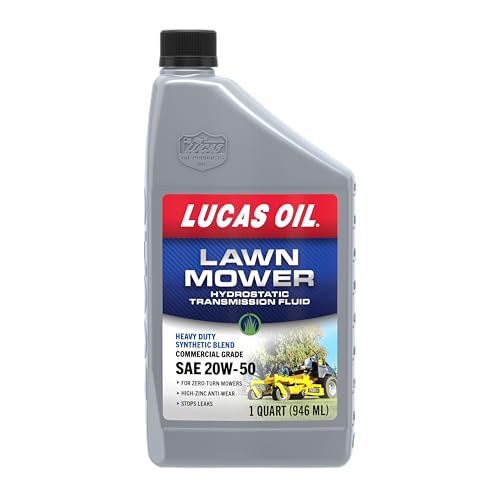
Lucas Oil 11300 20W-50, 1-Quart is a one-quart synthetic blend, making its package size the clearest distinction from the other choices. Lucas describes it as a hydrostatic lawn mower transmission fluid and claims anti-wear and corrosion protection, oxidation resistance, and added detergency and dispersancy. A single quart can be convenient when the service calls for a small quantity, but it may not cover a full refill. Check the mower’s specified fluid and capacity first; the product’s 20W-50 grade by itself does not prove that it suits every hydrostatic drive.
Bottom line: Choose this for a one-quart quantity when the mower’s fluid specification matches.
How to choose 20W-50 hydrostatic fluid
Start with the mower or transmission manufacturer’s fluid specification, not the product label alone. A 20W-50 viscosity match is not enough if the manual calls for a different fluid type or a proprietary specification. Hydrostatic systems use fluid to transmit power as well as lubricate internal parts, so the wrong fluid can affect operation and wear. Compare the requested grade, fluid type, and any named specification against the container. If the manual permits 20W-50 hydrostatic fluid, then formulation and package size become useful tie-breakers. A one-quart package suits a small service quantity; a gallon contains four quarts. Do not assume that a brand name listed as compatible overrides the requirements for your exact transmission model.
Full synthetic versus synthetic blend
Full synthetic and synthetic blend identify different base-oil formulations, but the label does not by itself establish that a fluid meets a particular transmission maker’s specification. The options here include one full synthetic and two synthetic blends; choose only among products that match the manual’s requirements. A viscosity grade describes how an oil behaves across temperature conditions, but it is not a substitute for the specified fluid chemistry or approval. For a mower used in cold starts or hot conditions, follow the temperature and fluid guidance for the specific drive unit rather than relying on a broad all-season claim. Avoid mixing fluids unless the transmission manufacturer allows it, since compatible viscosity labels do not guarantee compatible additive packages.
Package size and service planning
Match the container to the amount of fluid the service requires: one gallon is four quarts, while the comparison also includes one-quart and five-quart containers. A container’s size is not the transmission’s refill capacity, so consult the unit’s service procedure before buying or pouring. Some hydrostatic drives have separate reservoirs or service steps, and the required level-check conditions can differ by design. A practical rule is to buy a single quart only when the service calls for no more than one quart; plan a larger container for a confirmed larger fill. Keep fluid clean while transferring it, since dirt entering a hydraulic system can damage close-fitting internal components. Use a clean funnel and wipe the fill area before opening the system.
Safe filling and common mistakes
Use the fluid grade and fill procedure specified for the exact mower drive, and never substitute engine oil solely because it carries a 20W-50 label. Before servicing, park the mower on stable, level ground and let hot components cool; hydraulic fluid and nearby parts can cause burns. Keep hands and clothing away from moving belts and fans, and never search for a hydraulic leak with bare fingers because pressurized fluid can penetrate skin. Check level using the procedure for the transmission, since some systems require a particular temperature or operating state. If fluid has leaked or the drive behaves abnormally after service, stop using the mower until the level and source of the problem are addressed.
Frequently Asked Questions
Can I use 20W-50 engine oil in a hydrostatic transmission?
Use engine oil only if the mower or transmission manufacturer specifies it for that unit. The shared 20W-50 viscosity label does not establish that the fluid types or additive packages are interchangeable.
How much hydrostatic fluid does a mower need?
Capacity depends on the transmission and whether the service is a top-up or a refill. Check the unit’s service procedure before buying; one gallon equals four quarts, but package size is not fill capacity.
Can I mix full synthetic and synthetic blend fluids?
Do not mix them unless the transmission manufacturer permits it. Similar 20W-50 labels do not guarantee that formulations or additive packages are compatible.
When should hydrostatic transmission fluid be changed?
Use the service interval specified for the mower’s transmission, because intervals differ by unit and operating conditions. Heavy dust, heat, or prolonged demanding use can make clean fluid and leak checks especially important.
What should I do if hydrostatic fluid gets on skin?
Wash exposed skin promptly with soap and water, and seek urgent medical care if fluid was injected through the skin. High-pressure hydraulic leaks can cause serious injury even when the puncture looks small.