
6.7 Powerstroke Crankcase Vent Filters by Fitment

Choose a 6.7L Powerstroke crankcase vent filter assembly by truck year and replacement part number: the 2011–2016 assembly differs from the sensor-free 2017–2019 option. These assemblies separate oil from crankcase vapors before ventilation.
For later trucks, verify the exact fitment and sensor configuration before ordering because one option gives conflicting year ranges.
We earn a commission if you buy through links on this page. As an Amazon Associate I earn from qualifying purchases. Products are compared on manufacturer specifications, not hands-on testing.
- For 2011–2016: 6.7L Super Duty Oil Separator, 2011–2016 – Its fitment is limited to 2011–2016 F-250 through F-550 Super Duty trucks.
- For 2017–2019: 6.7L CCV Assembly, 2017–2019, No Sensor – It specifies 2017–2019 Super Duty fitment and says the version is without a sensor.
- For newer Super Duty: 6.7L CCV Assembly, PC3Z-6A785-A – It gives a 2023–2026 fitment range, but its year ranges conflict.
| Product | Best for | Fitment | Replacement numbers | Shop |
|---|---|---|---|---|
| 6.7L Super Duty Oil Separator, 2011–2016 | 2011–2016 trucks | 2011–2016 F-250/F-350/F-450/F-550 | DC3Z6A785C; others | Check Price on Amazon |
| 6.7L CCV Assembly, 2017–2019, No Sensor | 2017–2019 trucks | 2017–2019 F-250/F-350/F-450/F-550 | FC3Z-6A785-F; FC3Z-6A785-D; FC3Z-6A785-E | Check Price on Amazon |
| 6.7L CCV Assembly, PC3Z-6A785-A | Newer Super Duty | F-250–F-550; conflicting year ranges | PC3Z-6A785-A; PC3Z6A785A | Check Price on Amazon |
6.7 Powerstroke crankcase vent filters
Match the assembly to the truck’s model year and the part number it replaces before choosing among these options.
6.7L Super Duty Oil Separator, 2011–2016

This assembly is matched to 2011–2016 F-250, F-350, F-450, and F-550 Super Duty trucks. Its replacement-number options include DC3Z6A785C and several BC3Z, FC3Z, and DC3Z variants, so compare the number on the original assembly rather than relying on the engine name alone. The package includes one crankcase filter oil separator assembly. This is the clearest fit for the early model years, but it is not the choice for a 2017 or newer truck; confirm the replacement number if the original part has been changed previously.
Bottom line: Choose this assembly for a 2011–2016 Super Duty when its replacement number matches.
6.7L CCV Assembly, 2017–2019, No Sensor
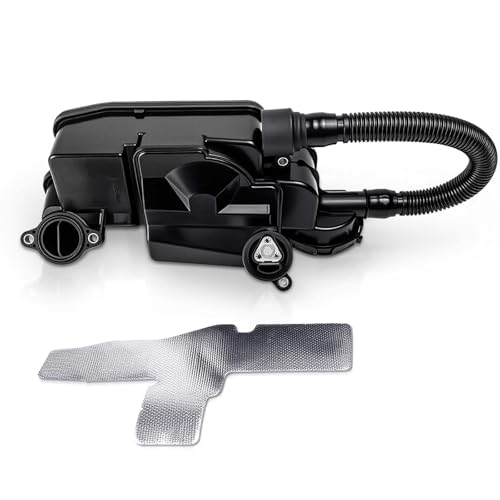
The distinguishing feature here is its sensor-free configuration for 2017–2019 Super Duty pickups with the 6.7L engine. It gives FC3Z-6A785-F, FC3Z-6A785-D, and FC3Z-6A785-E as replacement numbers, and it also names F-650/F-750 fitment for 2016–2019. The manufacturer says the updated version needs no reuse or programming of the old sensor. That makes sensor configuration an important selection point: this assembly may not suit a truck whose required part includes a sensor. Compare the original part number and connector arrangement before choosing it.
Bottom line: Pick this for a 2017–2019 application that calls for the sensor-free version.
6.7L CCV Assembly, PC3Z-6A785-A

This assembly is distinguished by the PC3Z-6A785-A replacement number and PA66 plastic construction. Those ranges do not align, so do not use the broader year claim alone to select it. PA66 is a polyamide commonly used in engineered plastic parts; the material specification does not establish a vehicle-specific fit. Confirm the exact year and replacement number against the original assembly before ordering.
Bottom line: Consider it only after confirming the truck’s year and original replacement number.
How to choose a 6.7 Powerstroke crankcase vent filter
Start with the truck’s model year and the part number on the existing crankcase vent assembly. The options here divide into 2011–2016 and 2017–2019 applications, while the newer-numbered assembly has conflicting year ranges. A crankcase ventilation system routes blow-by gases away from the crankcase; its oil separator removes some oil mist before the vapors continue through the ventilation path. Use this decision rule: if the replacement number does not match one of the assembly’s numbers, do not choose it solely because the engine is a 6.7L Powerstroke. Model-year breaks and sensor configuration can change which assembly belongs on the truck. For uncertain later-year fitment, check the VIN and original part number with a parts specialist before ordering.
Model-year fitment and sensor differences
Fitment is the main distinction among these crankcase vent assemblies: one is stated for 2011–2016, one for 2017–2019, and one has conflicting ranges spanning older and newer trucks. The 2017–2019 option specifically says it is without a sensor and says an old sensor does not need to be reused or programmed. Do not treat that sensor detail as a universal feature of all 6.7L assemblies. A physical connector or sensor requirement can distinguish otherwise similar-looking components, so compare the old assembly before installation. A part number is a more precise cross-check than a broad year range; use the whole number, including its letter suffix, because these options list multiple suffixes and revisions.
What the crankcase vent filter does
A crankcase vent filter assembly separates oil mist from gases produced inside the engine and supports crankcase ventilation. Excess restriction or a poor seal can undermine ventilation, so inspect the replacement’s sealing surfaces and routing against the removed assembly rather than forcing a mismatch into place. Oil separation is not the same as filtering the engine’s intake air: this component belongs to the crankcase ventilation path. During service, keep debris out of open engine connections and make sure hoses and electrical connectors, where present, return to their original positions. If the replacement does not sit flush or a connector does not match, stop and recheck the part number and application before running the engine.
Frequently Asked Questions
How do I identify the correct 6.7 Powerstroke vent assembly?
Match the truck’s model year and the complete replacement number on the original assembly. The options here name separate ranges for 2011–2016 and 2017–2019, so engine size alone is not enough.
Does a 2017–2019 CCV assembly need a sensor?
The 2017–2019 assembly described here is the version without a sensor. Confirm that your truck uses that configuration and compare its original part number before installing it.
Can I use a 2011–2016 assembly on a 2017 truck?
Do not assume the 2011–2016 assembly fits a 2017 truck; the year ranges separate those applications. Match the original assembly’s full replacement number instead.
Why verify the part number if the engine is 6.7L?
A 6.7L engine designation does not establish the assembly’s year range or sensor configuration. The options span different Super Duty years and replacement-number families.