
7 Foot Olympic Bar: Compare Weight, Grip and Capacity

A 7 foot Olympic bar should match your plates and your rack, and JELENS 7FT Olympic Barbell suits most lifters who want a 45-pound bar with a 1,000-pound capacity. Choose another option if you need a lighter bar or a different capacity; bar weight and capacity vary across these models.
We earn a commission if you buy through links on this page. As an Amazon Associate I earn from qualifying purchases. Products are compared on manufacturer specifications, not hands-on testing.
- Best overall: JELENS 7FT Olympic Barbell – A 45-pound bar with a 1,000-pound claimed capacity suits a broad range of strength training.
- Best for lighter bar weight: CAP 35 lb 7ft Olympic Barbell – At 35 pounds, this bar is lighter than the 44- and 45-pound options.
- Best for 750-pound capacity: CAP Barbell 44 lb Olympic Bar – Its 750-pound capacity sits between the 500- and 1,000-pound options.
| Product | Best for | Bar weight | Capacity | Shaft diameter | Shop |
|---|---|---|---|---|---|
| JELENS 7FT Olympic Barbell | Heavy strength training | 45 lb | 1,000 lb | — | Check Price on Amazon |
| PAPABABE 7ft Olympic Barbell | High claimed capacity | 45 lb | 1,000 lb | 30 mm | Check Price on Amazon |
| CAP Barbell 44 lb Olympic Bar | Midrange capacity | 44 lb | 750 lb | 28 mm | Check Price on Amazon |
| CAP 35 lb 7ft Olympic Barbell | Lighter full-size bar | 35 lb | 500 lb | — | Check Price on Amazon |
7 Foot Olympic Bars Compared
Compare bar weight, stated capacity and grip diameter to find a bar suited to your lifts and equipment.
JELENS 7FT Olympic Barbell
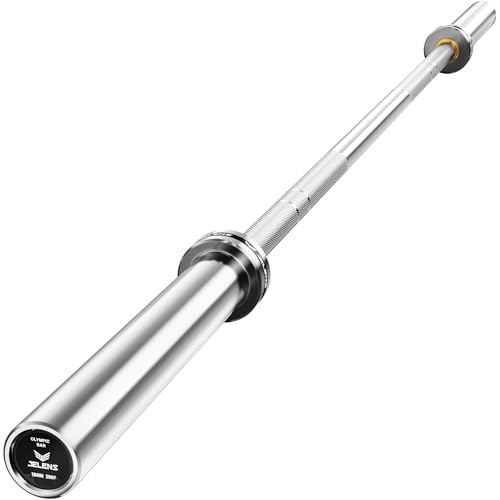
With a 45-pound weight and 1,000-pound claimed capacity, this bar offers a high stated load limit among these options. It is made from high-grade steel with a 150,000 PSI tensile strength and hard chrome coating, and the maker says it is compatible with power racks, cages and Smith machines. Its 7-foot length suits lifters seeking a full-size bar for strength training. The features do not give a shaft diameter, so confirm that dimension if it matters for your grip or equipment.
Bottom line: Pick this if you want a 45-pound bar with a 1,000-pound claimed capacity.
PAPABABE 7ft Olympic Barbell
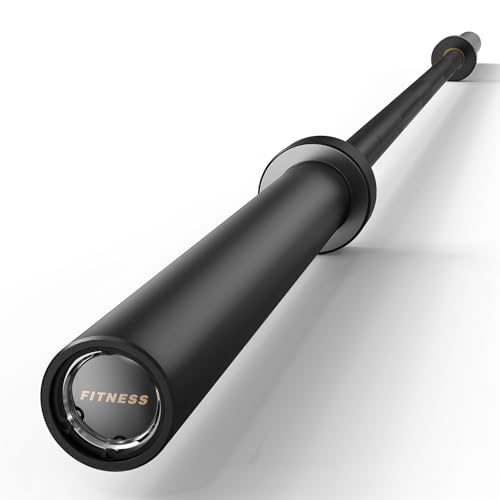
This bar combines a 1,000-pound claimed capacity with a 30 mm grip diameter, distinguishing it from the other options with a grip measurement. The maker describes a 190,000 PSI steel core, 2-inch sleeves and hybrid needle bearings and bushings. At about 45 pounds, it suits lifters who want a standard-weight training bar for home or light commercial use. Its 30 mm grip is thicker than many common Olympic bar shafts, so consider hand comfort before choosing it for high-repetition work.
Bottom line: Choose this for a 30 mm grip and a 1,000-pound claimed capacity.
CAP Barbell 44 lb Olympic Bar

The 44-pound weight and 750-pound capacity make this a middle-ground option between the lighter bar and the 1,000-pound models. It has a 28 mm grip diameter, bronze bushings and volcano-style knurling with center knurling. The maker says it is compatible with standard Olympic racks, benches and power cages. Those grip and knurl features may appeal to lifters who want a conventional feel for squats and presses. Its capacity is lower than the two 1,000-pound options, which matters if your planned loads approach that limit.
Bottom line: Pick this if you prefer a 28 mm grip and do not need a 1,000-pound capacity.
CAP 35 lb 7ft Olympic Barbell

At 35 pounds, this is the lightest full-length option here, making it the clearest choice for lifters who want a lighter bar rather than a 44- or 45-pound model. It has chrome finish, bronze bushing sleeves and volcano-style knurling with a center knurl. The maker gives it a 500-pound capacity and describes it for home strength training, including squats, bench press and deadlifts. That capacity is the lowest among these choices, so it is less suitable for lifters whose training loads may exceed 500 pounds.
Bottom line: Choose this if lower bar weight matters more than maximum capacity.
How to Choose a 7 Foot Olympic Bar
Start with the bar’s weight and capacity, then check the grip diameter and sleeve fit against your training needs. A common full-size Olympic bar weighs 45 pounds and has sleeves sized for 2-inch plates, but lighter 7-foot bars also exist, as these options show. Capacity figures are manufacturer claims, not a substitute for checking the bar’s construction or your setup. If you expect to load more than 500 pounds, choose a bar whose claimed capacity exceeds that load; among these options, only the 750- and 1,000-pound models do. Grip diameter also affects feel: 28 mm is a common Olympic bar shaft size, while 30 mm feels thicker.
Olympic Bar Fit and Plate Compatibility
Olympic weight plates use a nominal 2-inch center hole, so match them to sleeves intended for Olympic plates. A 7-foot overall bar length does not guarantee the same shaft length, sleeve length or spacing between collars; those dimensions affect fit in a rack and how many plates the bar can hold. Measure the inside width of your rack’s J-cups and verify the bar’s collar-to-collar spacing before ordering if your rack fit is tight. Standard 7-foot bars are commonly around 86 inches long, but the exact length varies by model. Do not confuse a bar’s overall length with the usable space for plates.
Bar Weight, Grip and Capacity Differences
Bar weight changes how much load you lift before adding plates, while grip diameter changes how the shaft feels in your hands. A 45-pound bar is a common full-size standard, but a 35-pound model can suit lifters who specifically prefer less unloaded weight. Capacity is a separate limit: a higher figure does not mean the bar is heavier or thicker. Use this comparison to narrow the choice by the measured facts that differ.
| Need | Choice to consider | Why |
|---|---|---|
| Lighter bar | 35 lb option | Lowest bar weight here |
| 28 mm grip | 44 lb option | Grip diameter is given |
| 30 mm grip | 45 lb option with hybrid bearings and bushings | Thicker grip measurement is given |
| Capacity above 500 lb | 750 or 1,000 lb option | Higher claimed capacity |
Safe Loading and Bar Care
Keep the total load within the bar’s capacity and use collars to keep plates from sliding during lifts. A barbell can roll or shift when plates are unsecured, creating a pinch or impact hazard; secure both sleeves before lifting and unload the bar evenly. Store a steel bar dry and wipe away sweat after training, since moisture can contribute to corrosion even on coated surfaces. Inspect the shaft, sleeves and collars for damage or looseness before each session, especially after a bar has been dropped. Stop using a bar with a bent shaft or sleeves that no longer rotate or retain plates properly.
Frequently Asked Questions
How much does a standard 7 foot Olympic bar weigh?
A common full-size Olympic bar weighs 45 pounds, though 7-foot bars can weigh less. Check the bar weight before calculating the total load on the sleeves.
Will Olympic plates fit every 7 foot bar?
Olympic plates are made for sleeves around 2 inches in diameter, but confirm the bar’s sleeve size before use. Overall bar length alone does not establish plate compatibility.
What grip diameter is common for an Olympic bar?
A 28 mm shaft is common on many Olympic bars, while some models use a thicker grip such as 30 mm. Grip feel changes with diameter, so consider the measurement if you have a preference.
How much weight can I safely put on a barbell?
Do not exceed the bar’s capacity, and count the plates and collars in the total load. Choose a bar rated above your intended maximum rather than training at its limit.