
9 Volt Lithium Batteries: 3 Options Compared by Use

For a single 9-volt lithium battery for household devices, Energizer Ultimate Lithium 9V stands out for its temperature range and compact one-battery pack. Choose Energizer Industrial Lithium 9V LN522 instead for a 12-pack intended for workplace stocking, or Amazon Basics 9V Lithium 4-Pack for a four-pack for compatible electronics.
These are single-use batteries, so verify that your device accepts lithium 9V batteries and never try to recharge them.
We earn a commission if you buy through links on this page. As an Amazon Associate I earn from qualifying purchases. Products are compared on manufacturer specifications, not hands-on testing.
- Best overall: Energizer Ultimate Lithium 9V – A one-battery pack with a claimed storage life of up to 10 years and operation from -40°F to 140°F.
- Best for bulk stocking: Energizer Industrial Lithium 9V LN522 – A 12-pack with a claimed storage life of up to 20 years.
- Best for a four-pack: Amazon Basics 9V Lithium 4-Pack – A four-pack intended for devices including handheld games and outdoor surveillance systems.
| Product | Best for | Pack count | Claimed storage life | Temperature range | Shop |
|---|---|---|---|---|---|
| Energizer Ultimate Lithium 9V | Single-battery needs | 1 | Up to 10 years | -40°F to 140°F | Check Price on Amazon |
| Energizer Industrial Lithium 9V LN522 | Workplace stocking | 12 | Up to 20 years | -40°C to 60°C | Check Price on Amazon |
| Amazon Basics 9V Lithium 4-Pack | Four-battery supply | 4 | Up to 10 years | -40°F to 140°F | Check Price on Amazon |
9 Volt Lithium Batteries Compared
Compare pack size and intended use before choosing a lithium 9V battery for a compatible device.
Energizer Ultimate Lithium 9V

For a one-battery purchase, this Energizer Ultimate Lithium pack avoids buying multiple spares. Energizer says it lasts up to 20% longer in toys than Energizer MAX batteries, and its leak-resistant construction and stated -40°F to 140°F operating range suit devices used across varied conditions. The battery is lightweight and has a claimed storage life of up to 10 years. Its limitation is the pack size: buyers stocking several alarms or devices will need additional units rather than a bulk pack.
Bottom line: Choose this for one compatible device or as a single replacement.
Energizer Industrial Lithium 9V LN522
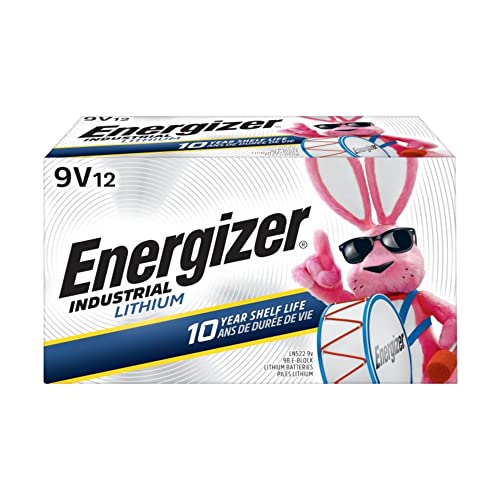
The distinguishing choice here is a 12-count industrial pack, suited to facilities that keep spare batteries on hand. Energizer describes the LN522 as designed for professional and high-drain applications, including security systems, medical devices and wireless microphones. The maker claims up to 20 years of storage life and operation from -40°C to 60°C; it also says the battery weighs 33% less than alkaline 9V batteries. A dozen units may be more than a household needs, and device compatibility still depends on the equipment maker’s requirements.
Bottom line: Pick this when you need multiple compatible batteries for workplace devices.
Amazon Basics 9V Lithium 4-Pack

The four-count pack offers a middle ground between a single replacement and a dozen batteries. Amazon Basics lists digital cameras, handheld games, smart-home devices and outdoor surveillance systems as intended uses. The maker says the batteries retain power for up to 10 years in storage and operate from -40°F to 140°F. They are single-use, not rechargeable, so this option does not fit buyers who specifically need rechargeable 9V cells; check a device’s manual before substituting a different battery chemistry.
Bottom line: Choose this for several compatible electronics that use disposable 9V batteries.
How to Choose a 9 Volt Lithium Battery
Start with the device’s required battery type, then compare the number of batteries you need and how long you expect spares to sit in storage. A 9V battery has a snap-terminal connection, but matching the shape alone does not establish that a device accepts every chemistry. Lithium 9V batteries in these options are single-use, not rechargeable. For alarms, check the alarm manufacturer’s battery requirements and replacement guidance rather than assuming that a longer storage claim means a longer installed service interval.
Pack size is a practical decision rule: choose a one-pack for one replacement, a four-pack for a few devices, and a 12-pack when many compatible units need spares. Storage life is also a maker claim, not a guarantee of runtime in a particular device; current draw and temperature affect how long a battery operates.
Check 9V Fit and Battery Compatibility
A 9V lithium battery is a fit only when both its connector and chemistry meet the device requirements. The familiar snap connector uses two differently sized terminals, so align the positive and negative contacts rather than forcing the connection. Device manuals may specify alkaline, lithium, or a particular battery type; follow that specification, especially for smoke and carbon monoxide alarms.
Temperature and power demand can change battery performance: high-drain devices place a greater load on a battery than low-drain electronics, while very cold or hot environments can affect operation. Before installing a replacement, check the device’s battery compartment and manual for the required type and polarity. Do not mix old and new batteries or different chemistries in a multi-battery device, since the cells can discharge unevenly.
Lithium 9V Battery Packs Compared
Pack count and claimed storage life distinguish these three lithium 9V choices; intended use is another useful divider. The table gives the counts and claims so a buyer can match a pack to the number of compatible devices that need batteries.
| Need | Pack choice | Why it fits |
|---|---|---|
| One replacement | 1 battery | A single unit avoids extra spares. |
| Several household electronics | 4 batteries | A smaller multi-pack covers multiple devices. |
| Workplace or facility spares | 12 batteries | A larger count supports broader stocking. |
Storage claims describe how long batteries can retain power before use, not how long they will run every device once installed. For an alarm or other critical device, use the battery type specified by its manufacturer and maintain the device according to its instructions.
Use and Store Single-Use 9V Batteries Safely
Never recharge a battery marked single-use or nonrechargeable; charging can cause leakage, overheating, or rupture. Keep spare batteries in their packaging or another way that prevents the terminals from contacting metal objects, because a short circuit can generate heat. Store batteries away from children, pets, and extreme heat, and avoid carrying loose 9V batteries with keys or coins.
When a battery reaches the end of its service life, follow local battery disposal or recycling rules; requirements vary by community. Do not mix old and new cells or lithium and alkaline cells in one device. For smoke or carbon monoxide alarms, use the specified battery and test the alarm after replacement, since a correctly fitting battery does not confirm that an alarm is functioning.
Frequently Asked Questions
Can I recharge a 9 volt lithium battery?
No, the three options here are single-use batteries, not rechargeable cells. Use only a battery specifically labeled rechargeable with a compatible charger; do not charge a disposable lithium battery.
Do lithium 9V batteries fit every alarm?
No, the snap connector does not guarantee chemistry compatibility. Check the alarm manual for the permitted battery type, and test the alarm after replacing its battery.
How long can a lithium 9V battery be stored?
The storage-life claims for these options range from up to 10 years to up to 20 years. Actual retention can be affected by storage conditions, so keep spare batteries away from extreme heat.
Can I mix lithium and alkaline 9V batteries?
Do not mix chemistries in a device, and do not combine old and new batteries. Different discharge behavior can lead to uneven operation or leakage.
How should I store loose 9V batteries safely?
Keep terminals from contacting metal, since a short circuit can create heat. Store batteries in packaging or an organizer, away from children, pets, and extreme heat.