
XtremepowerUS Pool Pumps: 3 Models Compared

XtremepowerUS SuperFlow Variable Speed 2.2 HP is the strongest fit for most in-ground pool owners seeking programmable speed control, while its 2.2-horsepower label alone does not establish flow capacity. Choose XtremepowerUS 2 HP Dual-Speed Pump or XtremepowerUS 1.15 HP Dual-Speed Pump instead if you need a dual-speed motor, or if your plumbing uses 1.5-inch NPT connections.
We earn a commission if you buy through links on this page. As an Amazon Associate I earn from qualifying purchases. Products are compared on manufacturer specifications, not hands-on testing.
- Best overall: XtremepowerUS SuperFlow Variable Speed 2.2 HP – Variable speed control and a built-in timer suit owners who want programmed pump speeds.
- Best for dual-speed flow: XtremepowerUS 2 HP Dual-Speed Pump – A 2 HP motor offers high- and low-speed operation with 2-inch fittings.
- Best for 1.5-inch plumbing: XtremepowerUS 1.15 HP Dual-Speed Pump – Its 1.5-inch NPT inlet and outlet match a smaller connection size.
| Product | Best for | Motor type | Horsepower | Connections | Shop |
|---|---|---|---|---|---|
| XtremepowerUS SuperFlow Variable Speed 2.2 HP | Programmable speed | Variable speed | 2.2 HP | 1.5- and 2-inch adapters | Check Price on Amazon |
| XtremepowerUS 2 HP Dual-Speed Pump | High-flow dual-speed | Dual speed | 2 HP | 2-inch inlet | Check Price on Amazon |
| XtremepowerUS 1.15 HP Dual-Speed Pump | Smaller plumbing | Dual speed | 1.15 HP | 1.5-inch NPT inlet/outlet | Check Price on Amazon |
XtremepowerUS Pool Pumps Compared
Compare speed control, motor rating and connection size before matching a pump to your pool plumbing and circulation needs.
XtremepowerUS SuperFlow Variable Speed 2.2 HP

Variable speed control and a built-in timer distinguish this in-ground model from the two dual-speed pumps. The maker says it can be programmed for tasks such as filtering, cleaning and heating, and describes it for pools and spas. Its adapters fit 1.5- and 2-inch plumbing, so it offers more connection flexibility than the other models here. The limitation is that the maker gives no flow rate or pool-volume ceiling; owners who need to size a pump by GPH or gallons should verify those requirements before choosing.
Bottom line: Choose it for programmable operation and broad adapter compatibility.
XtremepowerUS 2 HP Dual-Speed Pump
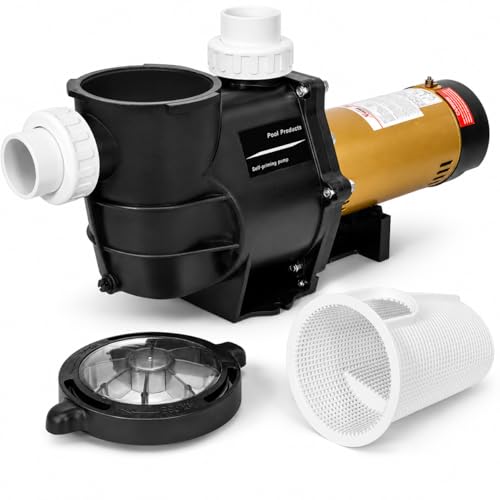
The 2 HP rating and high-speed capacity set this model apart from the smaller dual-speed option. The maker gives a maximum flow of 5,850 GPH and lists high and low motor speeds of 3,450 and 1,720 RPM, respectively. A 2-inch inlet makes it the better match when the existing plumbing uses that connection size. The pump is specified for 230V power and both in-ground and above-ground pools; its 2-inch inlet may make it a poor match for plumbing built around 1.5-inch connections without a compatible adapter.
Bottom line: Choose it when 2-inch plumbing and higher stated flow are priorities.
XtremepowerUS 1.15 HP Dual-Speed Pump

The 1.5-inch NPT inlet and outlet make this dual-speed model the clearest fit for plumbing that uses those threaded connections. Its 1.15 HP motor runs at 3,450 RPM on high and 1,720 RPM on low; the maker gives a maximum flow of 5,280 GPH and a suitable pool capacity up to 32,000 gallons. That capacity ceiling helps narrow fit more concretely than the other options. The tradeoff is lower horsepower and maximum flow than the 2 HP model, which matters when a pool system requires greater circulation.
Bottom line: Choose it for a compatible 1.5-inch setup and pools within its capacity.
How to choose an XtremepowerUS pool pump
Start with the pool’s plumbing size and required flow, not horsepower alone. Pump flow depends on the resistance of the whole circulation system: pipe diameter, filter, heater, fittings and elevation all affect the result. A pump’s advertised maximum flow is not the same as its flow after installation. Variable speed pumps let owners select operating speeds for different jobs; dual-speed pumps offer two fixed settings. A practical decision rule is to favor a model whose connection size matches the existing pipes and whose documented capacity covers the pool. Before replacing a pump, compare the current pump’s voltage, wiring and plumbing connections with the new unit.
| Need | Model type to consider | Reason |
|---|---|---|
| Programmed operating speeds | Variable speed | Speed and timer control |
| Two preset speeds | Dual-speed | High and low RPM settings |
| Smaller threaded plumbing | 1.5-inch NPT connections | Match connection size |
Variable speed and dual-speed pumps
Variable speed pumps allow a range of motor speeds, while dual-speed pumps switch between two settings. Lower pump speed can reduce energy use because pump power demand falls sharply as speed drops, but the actual savings depend on the system and how long it runs. A variable speed controller can tailor speed to filtering or other equipment needs; a dual-speed unit is simpler, with high and low settings instead of continuous adjustment. Pool owners should also consider minimum flow requirements for heaters, salt systems and cleaners, since those devices can require a specific operating rate. Confirm equipment compatibility rather than assuming that any low-speed setting will support every connected component.
Pool pump fittings, voltage and sizing
Connection diameter and thread type both matter: a 1.5-inch NPT connection is not interchangeable with a 2-inch slip fitting without suitable plumbing changes or adapters. The models here are specified for 230V, so verify that the pool circuit and existing wiring are compatible before purchase. Horsepower is not a standalone sizing method; a larger motor can still perform poorly if its flow does not suit the filter and plumbing. For pool volume, turnover is commonly planned around roughly 8 hours, but local requirements and equipment limits vary. Use the system’s required flow and filter rating alongside pool volume when choosing a replacement.
Safe pool pump installation and operation
Pool pump electrical work combines water and mains voltage, so installation should comply with local electrical codes and be handled by a qualified professional when wiring or bonding is involved. Pool equipment generally requires grounding and bonding, and a ground-fault circuit interrupter may be required depending on the circuit and location. Never open a pump or touch electrical components while energized. Keep the strainer basket clear because debris can restrict flow, and never run a pump dry: water lubricates and cools the seal, while dry operation can damage components. Prime the pump and check for leaks before returning the system to normal operation.
Frequently Asked Questions
Can a variable speed pool pump run at low speed all day?
Many pool systems can circulate at a lower speed for longer periods, but the required flow of connected equipment sets the floor. Heaters, cleaners and chemical systems may need more flow than basic filtration.
How often should a pool pump basket be cleaned?
Check the strainer basket at least weekly during normal use and more often when leaves or debris are heavy. Switch off power before opening the lid, and refill or prime the housing as required before restarting.
What does 1.5-inch NPT mean on a pool pump?
NPT refers to tapered pipe threads, so the connection must match both the nominal size and thread type of the plumbing. Do not force a threaded fitting onto a slip connection; use a correctly sized compatible adapter.
What voltage does a pool pump replacement need?
These pump models are specified for 230V, but verify the supply and wiring at the installation site before replacement. Pool equipment wiring and bonding must comply with local code, so use a qualified electrician when unsure.
Can a pool pump be run without water in the strainer housing?
No; a pool pump should not run dry because water helps cool and protect its seal. Prime the housing before startup and stop the pump if it loses prime or flow.