
35mm Film 400 ISO: Compare 5 Color Negative Options

For most 35mm shooters, Kodak Ultramax 400, 36-Exposure 3-Pack is the most flexible pick because its three 36-exposure rolls provide 108 frames total. ISO 400 color-negative film suits changing light, while Kodak Ultramax 400, 24-Exposure 3-Pack is a 24-exposure option if you prefer shorter rolls.
The Kodak Ultramax 400 model specifically is not the only choice here: Fujifilm 400, 36-Exposure 3-Pack is Fujifilm 400, so choose it if you want that film instead.
We earn a commission if you buy through links on this page. As an Amazon Associate I earn from qualifying purchases. Products are compared on manufacturer specifications, not hands-on testing.
- Best overall: Kodak Ultramax 400, 36-Exposure 3-Pack – Three 36-exposure rolls provide 108 frames total.
- Best for shorter rolls: Kodak Ultramax 400, 24-Exposure 3-Pack – Three 24-exposure rolls provide 72 frames total.
- Best for Fujifilm: Fujifilm 400, 36-Exposure 3-Pack – Three Fujifilm 400 color-negative rolls have 36 exposures each.
| Product | Best for | Exposures per roll | Total exposures | Shop |
|---|---|---|---|---|
| Kodak Ultramax 400, 36-Exposure 3-Pack | Longer rolls | 36 exposures | 108 exposures | Check Price on Amazon |
| Kodak Ultramax 400 DX 135-36, 3-Pack | DX-coded cameras | 36 exposures | 108 exposures | Check Price on Amazon |
| Fujifilm 400, 36-Exposure 3-Pack | Fujifilm preference | 36 exposures | 108 exposures | Check Price on Amazon |
| Kodak Ultramax 400, 24-Exposure 3-Pack | Shorter rolls | 24 exposures | 72 exposures | Check Price on Amazon |
| Kodak UltraMax 400, 24-Exposure 3-Pack | Daylight shooting | 24 exposures | 72 exposures | Check Price on Amazon |
35mm 400 ISO Film Options
Compare roll length and pack total first, then choose the film brand and format that fit your camera and shooting plans.
Kodak Ultramax 400, 36-Exposure 3-Pack

Among these Kodak options, this three-roll pack gives the most frames per roll: 36, for 108 exposures altogether. The film is ISO 400 color negative in DX-coded 135-36 format, and the product says it works with 35mm cameras. Its 36-frame rolls suit travel or longer shooting stretches when changing rolls less often matters. The product describes vivid color and fine grain, but those are maker claims rather than guaranteed results; exposure, lighting, and processing affect the final image. Choose another option if you specifically want 24-exposure rolls or Fujifilm.
Bottom line: Choose this if you want three 36-exposure Kodak rolls in DX-coded 135-36 format.
Kodak Ultramax 400 DX 135-36, 3-Pack
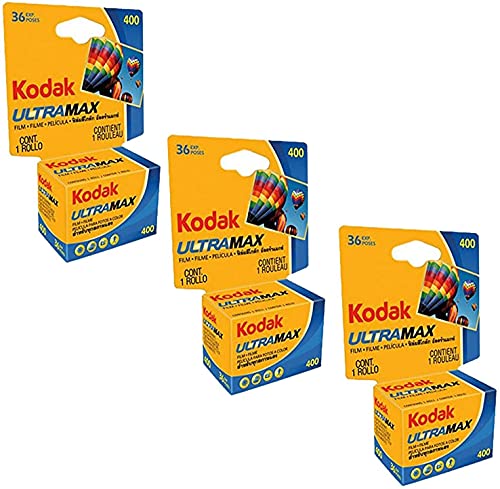
This Kodak pack is identified as DX 400 135-36 and supplies 108 exposures across three 36-frame rolls. DX coding can help a compatible camera read the film speed automatically; cameras without DX reading may require manual ISO setting. The pack is a straightforward fit for someone seeking Kodak Ultramax 400 in the 36-exposure format. The specifications give no separate image-performance features to distinguish it from other Ultramax 400 choices, so its clearest point of difference is the explicit DX 135-36 designation. Check your camera’s film-speed setting method if it does not read DX codes.
Bottom line: Pick this if the explicit DX 135-36 format matches your camera and you want 36-frame rolls.
Fujifilm 400, 36-Exposure 3-Pack

Unlike the Kodak choices, this is Fujifilm 400: three color-negative 35mm rolls with 36 exposures each, or 108 total. The product describes vibrant color, rich contrast, and natural skin tones as intended results, but actual rendering depends on exposure and processing. Its 36-frame format makes it a fit for photographers who want longer rolls and prefer Fujifilm rather than Kodak. The bundle also includes a microfiber cleaning cloth, but that accessory does not change the film’s speed or exposure count. Choose a Kodak option if Ultramax 400 is the specific film you want.
Bottom line: Choose this when you want Fujifilm 400 in three 36-exposure rolls.
Kodak Ultramax 400, 24-Exposure 3-Pack

These three Kodak Ultramax 400 rolls are shorter than the 36-frame choices, with 24 exposures apiece and 72 total. The product identifies the film as ISO 400 daylight-balanced color negative film for standard 135 cameras, including point-and-shoot, reusable, and vintage SLR types. Shorter rolls can suit occasional shooting when you would rather finish a roll sooner, but they mean more frequent reloads during a long outing. The product describes vibrant color and fine grain across varied lighting; those results are not guaranteed. Choose a 36-exposure option if you want more frames between reloads.
Bottom line: Pick this if you prefer 24-frame rolls and a 72-exposure total.
Kodak UltraMax 400, 24-Exposure 3-Pack

This bundle combines three 24-exposure Kodak UltraMax 400 rolls with a microfiber cloth, for 72 frames total. The film is ISO 400 daylight-balanced color negative film; the product describes it for daylight, overcast scenes, and flash photography. It suits someone who wants the shorter-roll format and values the included cloth for cleaning camera surfaces or lenses. The cloth is an accessory, not a film feature, and it does not increase the exposure count. For longer stretches between reloads, select one of the 36-exposure packs instead.
Bottom line: Choose this for 24-frame Kodak rolls plus an included cleaning cloth.
How to Choose 35mm ISO 400 Film
Start with roll length, then choose the brand and format your camera accepts. A 24-exposure roll gives fewer frames before reloading; a 36-exposure roll gives 12 more frames, a one-third increase. Across three rolls, that is 72 versus 108 exposures. ISO 400 is two stops more sensitive than ISO 100: at the same light level, a meter can allow four times as much light by using a shutter speed four times faster or an aperture two stops smaller. That flexibility helps when light changes, but it does not make every dim scene hand-holdable. Motion, lens aperture, and camera shake still affect exposure choices.
| Need | Choose |
|---|---|
| More frames before reloading | 36 exposures per roll |
| Finish rolls sooner | 24 exposures per roll |
| Specific film brand | Kodak Ultramax 400 or Fujifilm 400 |
35mm Film Format and DX Compatibility
Standard 35mm still-camera film is commonly called 135 film, and the 24- or 36-exposure count describes the number of frames on a roll. A DX-coded cartridge carries film-speed information for cameras equipped to read it; a camera without DX reading may need its ISO set manually. ISO 400 is the speed to set for these rolls when setting exposure by hand. Before loading, verify that the camera accepts 35mm/135 cartridges rather than 120 medium-format film or a different cartridge format. Never force a cartridge into a camera that does not accept it, and follow the camera’s loading path to avoid exposing the film.
What ISO 400 Changes in Exposure
ISO 400 provides two stops more sensitivity than ISO 100 and one stop more than ISO 200. A one-stop increase lets you use twice the shutter speed or half the light through the aperture at the same exposure, which can help with handheld photos in cloudy daylight or indoor scenes with flash. Film speed is not a promise of sharp pictures: a moving subject may still blur if the shutter is too slow, and a wide aperture gives less depth of field. Use the camera’s meter when available, and avoid assuming that ISO 400 removes the need for flash or a tripod in very low light.
Storage and Handling for Color Negative Film
Keep unexposed film cool, dry, and away from prolonged heat; warm storage can speed unwanted changes in color film. Leave rolls in their packaging until needed, and avoid storing them in a hot car or direct sun. Load and unload in shade when possible, because opening a camera back with film outside the cartridge can expose frames to light. After the roll is finished, have color-negative film processed using the C-41 process; do not open the cartridge yourself. If a roll has been exposed to heat or has been stored for a long time, results may shift, so use a fresh roll when consistent color matters.
Frequently Asked Questions
How many pictures are on a 35mm film roll?
A 24-exposure roll provides 24 frames, while a 36-exposure roll provides 36. Check the roll’s exposure count before loading if you want to estimate how often you will need to reload.
Is ISO 400 film good for indoor photos?
ISO 400 is one stop more sensitive than ISO 200, which gives more exposure flexibility indoors. In dim rooms, a flash, wider aperture, or slower shutter may still be necessary.
Can I use DX-coded film in a camera without DX reading?
Usually, if the camera accepts 35mm/135 film and lets you set ISO manually. Set the camera to ISO 400; DX coding only helps cameras that can read the code.
What does 135-36 mean on film?
135 refers to the standard 35mm still-camera cartridge format, and 36 indicates 36 exposures. Confirm that the camera accepts 35mm/135 cartridges before loading.
How should I store unused 35mm color film?
Store unused film in a cool, dry place away from prolonged heat and direct sun. A hot car is a poor storage spot because heat can affect color film.