
Cacao Therapy Dark Chocolate Covered Almonds Compared

Cacao Therapy dark chocolate covered almonds are not among these options, so Yupik 60% Dark Chocolate Almonds is the closest match by its 60% dark chocolate coating on whole almonds. Choose another option if a different package size or a specific dietary claim matters more to you.
We earn a commission if you buy through links on this page. As an Amazon Associate I earn from qualifying purchases. Products are compared on manufacturer specifications, not hands-on testing.
- Best overall: Yupik 60% Dark Chocolate Almonds – A 60% dark chocolate coating and whole almonds make it a close match to the requested snack.
- Best for sharing: Wellsley Farms Dark Chocolate Almonds – Its package is identified as 2 pounds 13 ounces, the largest weight among these alternatives.
- Best for a smaller pack: Trader Joe’s Dark Chocolate Almonds – The 16-ounce package is the smallest size among the covered-almond options.
| Product | Best for | Package weight | Chocolate or cocoa | Dietary claim | Shop |
|---|---|---|---|---|---|
| Yupik 60% Dark Chocolate Almonds | Chocolate percentage | 35.2 oz | 60% dark chocolate | Kosher dairy | Check Price on Amazon |
| Trader Joe’s Dark Chocolate Almonds | Smaller package | 16 oz | Dark chocolate | No gluten ingredients | Check Price on Amazon |
| Wellsley Farms Dark Chocolate Almonds | Family-size container | 45 oz | Dark chocolate | Kosher; gluten-free | Check Price on Amazon |
| Nuts.com Dark Chocolate Almonds | Resealable bag | 32 oz | Semi-sweet dark chocolate | Kosher pareve | Check Price on Amazon |
Dark Chocolate Covered Almond Alternatives
These options differ in chocolate percentage, package size and the dietary claims provided.
Yupik 60% Dark Chocolate Almonds

Yupik 60% Dark Chocolate Almonds is the only option here with a chocolate percentage: whole almonds coated in 60% dark chocolate. The 35.2-ounce pack is a substantial quantity for sharing or adding to brownies, cookies and other baked goods. The product is identified as a source of fiber and iron, and it carries a kosher dairy claim. Choose it when a defined cocoa percentage matters more than having a smaller bag. Its dairy designation may not suit someone seeking a dairy-free snack, so check the package if dairy avoidance is essential.
Bottom line: Pick this if a 60% dark chocolate coating is your deciding factor.
Trader Joe’s Dark Chocolate Almonds

Trader Joe’s Dark Chocolate Almonds comes in a 16-ounce pack, making it the smallest package among these covered-almond choices. Its name identifies crunchy California almonds drenched in dark chocolate, and it is labeled as having no gluten ingredients. That wording is not the same as a gluten-free certification, so shoppers who need to avoid gluten strictly should verify the package. This pick is suited to someone who wants a smaller quantity rather than a bulk-size bag. The specifications do not give a chocolate percentage, so it cannot be compared with a specific cocoa level.
Bottom line: Choose this when a 16-ounce pack is a better fit than a larger quantity.
Wellsley Farms Dark Chocolate Almonds

Wellsley Farms Dark Chocolate Almonds is presented as a large container of whole roasted almonds coated in dark chocolate, with the package identified as 2 pounds 13 ounces. The maker also describes it as kosher and gluten-free, and suggests using it as a snack or topping for ice cream and yogurt. That combination suits households that want a larger quantity and value those dietary claims. The specifications also include a 12-single-serves size detail, which conflicts with the bulk weight; confirm the actual package format if portioning matters to your purchase.
Bottom line: Pick this for the large package and its kosher and gluten-free claims.
Nuts.com Dark Chocolate Almonds
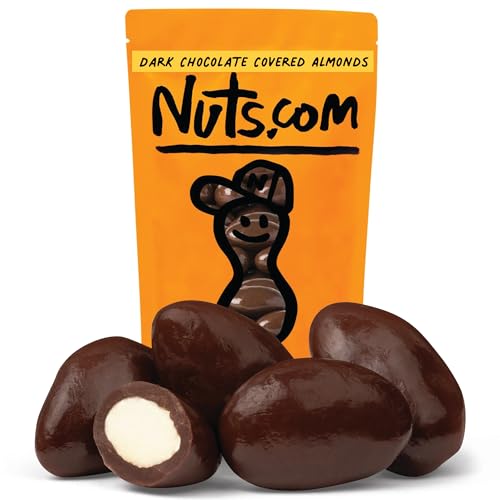
Nuts.com Dark Chocolate Almonds pairs dry-roasted whole almonds with semi-sweet dark chocolate in a 32-ounce resealable bag. The kosher pareve claim distinguishes it from the option identified as kosher dairy, which may matter when selecting snacks for meals or households with dietary rules. It is also described as a source of protein, fiber, iron, calcium and potassium; those claims do not establish a particular amount per serving. Choose this bag when resealability and a pareve designation are useful.
Bottom line: Choose this if a resealable 32-ounce bag and pareve designation suit your needs.
How to choose dark chocolate covered almonds
Start with coating and package size: a cacao percentage allows a more direct comparison of chocolate intensity, while package weight helps you avoid buying more than you will use. These products range from 16 to 45 ounces by their weights. For a smaller household or occasional baking, a 16-ounce bag is easier to use up; for sharing or frequent recipes, a larger package may make sense. Check whether a dietary label says kosher dairy, kosher pareve, or gluten-free, since those claims are not interchangeable. Also distinguish “no gluten ingredients” from a gluten-free claim if gluten avoidance is important.
What dark chocolate percentage tells you
A percentage such as 60% refers to the proportion of chocolate made from cocoa ingredients, not the proportion of the finished almond snack that is chocolate. A higher percentage generally means a less-sweet, more cocoa-forward chocolate, though recipes and coating thickness also affect flavor. Only one covered-almond choice here gives a percentage, so compare its 60% figure only with products that provide the same kind of number. For a reliable serving comparison, use the package nutrition panel: serving weights and nutrition can vary with the ratio of almond to coating. Do not assume “dark chocolate” alone means a specific cocoa percentage.
How to store chocolate covered almonds
Store chocolate covered almonds in a tightly closed container in a cool, dry place, away from direct sunlight and strong odors. Warm conditions can soften the coating, while moisture can change its texture; a cool pantry is usually a better choice than a warm counter. If the room is hot enough that chocolate softens, refrigeration can help, but seal the snack well and let it warm while still sealed to reduce condensation on the chocolate. Almonds are tree nuts, and some chocolate coatings can contain milk, so keep the package label available for anyone with food allergies. Never serve them to someone whose allergen safety you cannot confirm.
Ways to use chocolate covered almonds
Use whole chocolate covered almonds as a snack or chop them into smaller pieces for brownies, cookies, muffins or a topping for yogurt and ice cream. For baking, add chopped pieces near the end of mixing or use them as a topping; prolonged oven heat can melt the coating and alter its appearance. A simple rule is to reserve intact pieces for garnish and use chopped pieces where a melted chocolate coating is acceptable. Keep portions separate from plain nuts when serving guests, since the chocolate may add ingredients such as milk and the almond remains a tree-nut allergen. Check the ingredient panel before adapting a recipe for dietary restrictions.
Frequently Asked Questions
Does dark chocolate percentage mean the coating amount?
No. A percentage such as 60% describes the cocoa proportion of the chocolate, not how much of the finished snack is coating. Coating thickness and almond size also affect the chocolate-to-nut balance.
Are chocolate covered almonds safe for nut allergies?
No, these snacks contain almonds, which are tree nuts. Anyone with a tree-nut allergy should avoid them unless their clinician has advised otherwise and the specific package is confirmed safe.
Can I use chocolate covered almonds in brownies?
Yes, chopped chocolate covered almonds can add crunch to brownies and other baked goods. Add them near the end of mixing or use them as a topping because oven heat melts the coating.
How should I keep chocolate covered almonds from melting?
Keep them sealed in a cool, dry place out of sunlight and away from heat. If refrigeration is needed in a hot room, seal the container and let it return toward room temperature before opening to limit condensation.
Is no gluten ingredients the same as gluten-free?
No. “No gluten ingredients” describes ingredients, while a gluten-free claim is a different package statement. If you need to avoid gluten strictly, verify the label and any applicable allergen guidance before eating.