
Buddy Guard for Dogs: Mushroom Chews and Powder Compared

For Buddy Guard for dogs, Buddy Guard 9-Blend Mushroom Powder is the closest match to the named product, with a 9-mushroom powder blend and food-sprinkle format. Choose a chew instead if your dog is more likely to take a chew than powder mixed into food; these supplements are not a substitute for having a lump examined by a veterinarian.
We earn a commission if you buy through links on this page. As an Amazon Associate I earn from qualifying purchases. Products are compared on manufacturer specifications, not hands-on testing.
- Best overall: Buddy Guard 9-Blend Mushroom Powder – The 9-mushroom formula is explicitly named Buddy Guard and comes as a food-sprinkle powder.
- Best for 170-count chews: Buddy Immune Support Guard 170 Chews – This chew option identifies a 170-chew count and includes glucosamine and vitamins in its name.
- Best for a larger chew count: Buddy Lumps & Bumps Mushroom Chews, 250 Count – The 250-chew format has the largest count among the chew options.
| Product | Best for | Form | Count or size | Mushroom blend | Shop |
|---|---|---|---|---|---|
| Buddy Guard 9-Blend Mushroom Powder | Powder mixing | Powder | 2.12 oz | 9-mushroom blend | Check Price on Amazon |
| Buddy Immune Support Guard 170 Chews | Chew format | Chews | 170 chews | Turkey tail, reishi, lion’s mane | Check Price on Amazon |
| Guard Buddy Multivitamin Mushroom Chews, 170 Count | Mushroom chews | Chews | 170 chews | Turkey tail, reishi, lion’s mane, shiitake | Check Price on Amazon |
| Buddy Lumps & Bumps Mushroom Chews, 250 Count | Higher chew count | Chews | 250 chews | Turkey tail, reishi, lion’s mane, shiitake | Check Price on Amazon |
Buddy Guard for Dogs Powders and Chews
Compare the named powder with related chew formats by serving form, stated count, and blend.
Buddy Guard 9-Blend Mushroom Powder

Buddy Guard 9-Blend Mushroom Powder is the named Buddy Guard powder in this group, rather than a chew. Its 2.12-ounce container uses a 9-mushroom blend and is meant to be sprinkled over food; the feature claims include immune, digestive, and age-related eye-health support. That format may suit dogs who reliably eat their regular meals. The limitation is that a powder mixed into food can be hard to administer if a dog leaves food behind or refuses changes to a meal. The maker describes the formula as patent-pending.
Bottom line: Pick this if you want the named Buddy Guard powder and your dog accepts powder on food.
Buddy Immune Support Guard 170 Chews
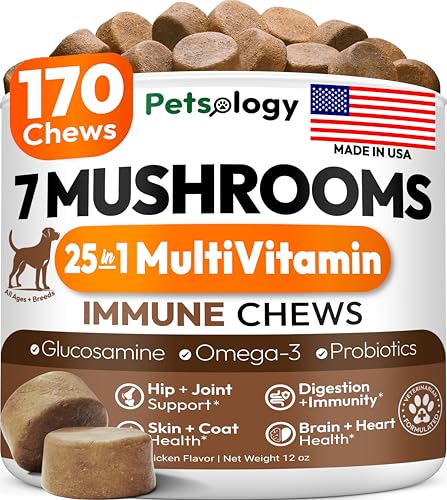
Buddy Immune Support Guard 170 Chews separates itself from the powder by offering 170 chews and naming glucosamine, vitamins, and a mushroom blend. The mushrooms include turkey tail, reishi, and lion’s mane, while its feature claims also mention digestive, skin, joint, and cognitive support. It may fit a household that prefers a counted chew over sprinkling powder onto meals. The name presents it as a multivitamin, so buyers seeking only a single-mushroom ingredient should compare the full label before choosing. The maker says it is made in the USA in an FDA-registered facility.
Bottom line: Choose this if a counted chew and a multivitamin-style blend fit your routine.
Guard Buddy Multivitamin Mushroom Chews, 170 Count
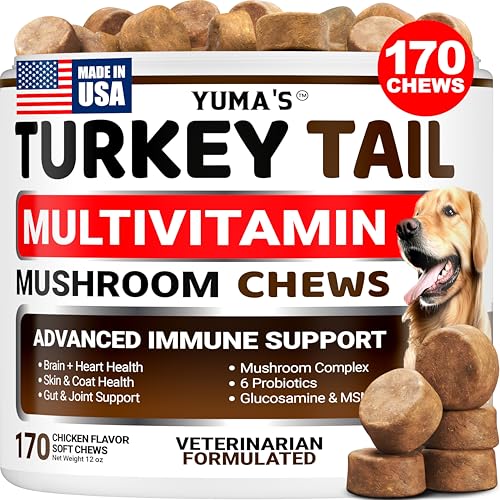
Guard Buddy Multivitamin Mushroom Chews, 170 Count also comes in a 170-count chew format, but its feature set specifically names turkey tail, reishi, lion’s mane, and shiitake. The maker says it is veterinarian formulated and made in the USA, and its claims focus on immune, digestive, skin, joint, cognitive, and energy support. Consider it if you want those four named mushrooms in a chew rather than the powder format. Its count matches Buddy Immune Support Guard 170 Chews, so count alone does not distinguish the two; compare the complete ingredient panels and serving directions for your dog.
Bottom line: Pick this if the four named mushrooms and chew form match your preferences.
Buddy Lumps & Bumps Mushroom Chews, 250 Count

Buddy Lumps & Bumps Mushroom Chews, 250 Count offers 250 chews, the highest count among these chew options. Its maker names turkey tail, reishi, lion’s mane, and shiitake, and also describes probiotic support and suitability for dogs of all ages and sizes. That makes the count and age-and-size positioning its main distinctions from the 170-count choices. The product name includes “lumps and bumps,” but a supplement cannot identify what a lump is; arrange a veterinary exam for a new or changing growth rather than relying on a supplement claim.
Bottom line: Choose this if you prefer the 250-chew count and its named mushroom blend.
How to choose a Buddy Guard mushroom supplement
Choose the serving form your dog will reliably take: powder mixes into food, while a chew is a separate treat-like format. Mushroom supplements vary by species and ingredient combination; turkey tail, reishi, lion’s mane, and shiitake are distinct mushrooms, not interchangeable names for one ingredient. A blend’s mushroom count alone does not tell you the amount of each ingredient or how it is processed, so compare the full ingredient panel and serving directions. These products make support claims, not a diagnosis or treatment. If the goal is to address a lump, schedule veterinary evaluation rather than choosing by a “lumps and bumps” label. Ask your veterinarian before adding a supplement if your dog takes medication or has a medical condition.
Powder versus chew for dogs
Powder is mixed with food, while chews are given as a separate item; the practical choice is whether your dog finishes meals or readily takes chews. A powder can remain uneaten when a dog leaves part of the meal, so do not assume the intended amount was consumed. For chews, follow the product’s own serving directions rather than treating the container count as a daily dose. The products here range from 2.12 ounces of powder to chew counts of 170 and 250; ounces measure weight, while counts measure pieces, so they do not indicate equal servings. When changing a dog’s routine, introduce only one new supplement at a time and watch for digestive upset; stop and contact your veterinarian if a concerning reaction occurs.
When a dog’s lump needs a veterinarian
A new lump, a lump that grows or changes, or one that bleeds or becomes painful warrants veterinary attention; appearance alone cannot establish whether a growth is harmless. Arrange an exam rather than waiting to see whether a mushroom supplement changes it. Before the visit, note where the lump is and when you first noticed it, and measure its width in inches with a ruler so you can report a baseline. Do not squeeze or cut a lump at home. Mushroom supplements are not a substitute for diagnosis or care, and claims about supporting lumps do not establish that a product can identify or remove one. If your dog seems unwell or the lump is rapidly changing, call the veterinary clinic promptly for guidance.
Frequently Asked Questions
Can a mushroom supplement diagnose a dog’s lump?
No; a supplement cannot determine what a lump is. A veterinarian needs to examine a new or changing growth, especially if it bleeds, grows, or becomes painful.
Should I mix mushroom powder into every meal?
Use the serving directions for the specific product rather than assuming every meal needs powder. If your dog leaves food behind, ask your veterinarian how to administer the intended serving reliably.
Can dogs take mushroom supplements with medication?
Ask your veterinarian before combining a supplement with medication. Bring the product’s full ingredient panel and the medication names so the veterinarian can assess the combination.
What should I compare on a dog mushroom label?
Compare the named mushroom species, the amount per serving, and the serving directions. A blend naming several mushrooms does not by itself show how much of each one a dog receives.
What should I do if my dog refuses a supplement?
Do not force a powder or chew into your dog’s mouth. Ask your veterinarian about an alternative form, particularly if the supplement is being used alongside care for a health concern.